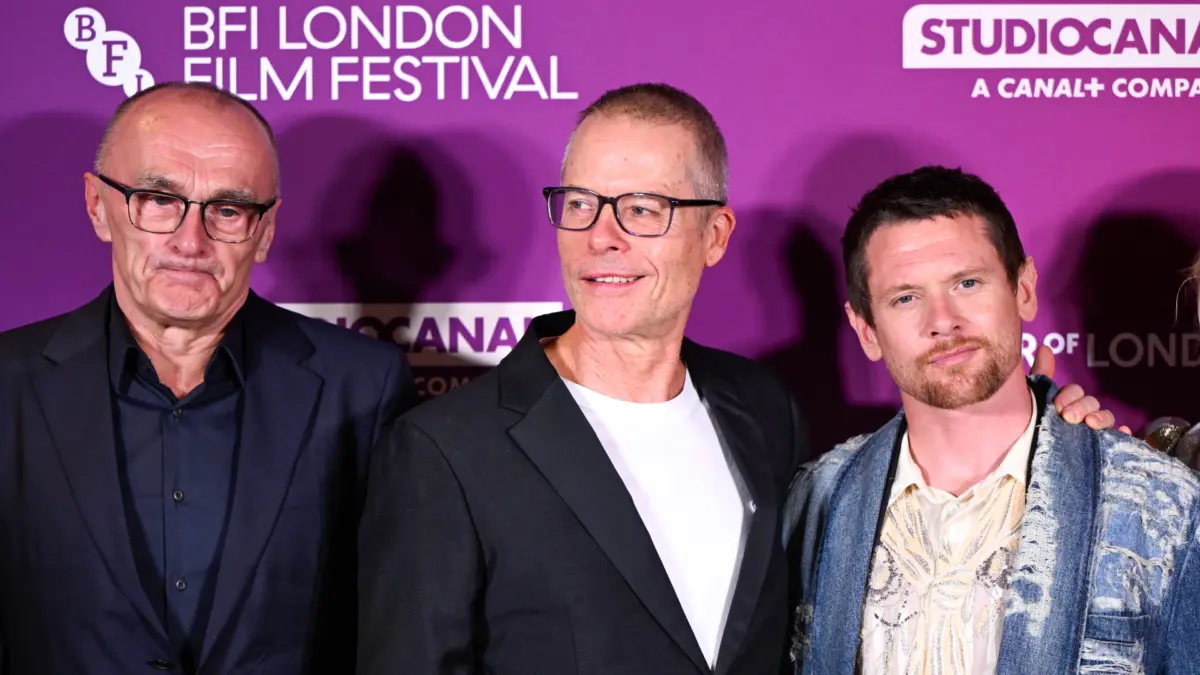
The BFI London Film Festival hosted a landmark moment this past Monday as the U.K. premiere of Ink took center stage. Directed by Danny Boyle, the film—an adaptation of James Graham’s celebrated stage play—transports audiences back to the smoky, ink-stained corridors of 1969 London. Following its successful opening at the Venice Film Festival last month, the film’s arrival in the British capital serves as a homecoming for a narrative deeply rooted in the city’s journalistic history.
The production features Guy Pearce as a young Rupert Murdoch and Jack O’Connell as Larry Lamb, the editor tasked with transforming the struggling tabloid The Sun into a media juggernaut. The film chronicles the pivotal period when Murdoch’s acquisition of the paper laid the groundwork for a global media strategy defined by populist fervor and aggressive political positioning.
A Chronology of Disruption
The narrative arc of Ink centers on the 1969 acquisition of The Sun, then a failing broadsheet that was losing its grip on the British public. Murdoch’s intervention was not merely a business transaction; it was a fundamental shift in the editorial philosophy of British print media. By hiring Larry Lamb, Murdoch effectively dismantled the traditional hierarchies of the newspaper industry.
The timeline of this transition is critical to understanding the film’s premise. Throughout the late 1960s, Fleet Street was characterized by a specific concentration of power, with newspapers physically located in a narrow corridor of central London. This geographic density allowed for a unique ecosystem of competitive reporting, late-night editorial meetings, and a symbiotic—often adversarial—relationship between journalists, politicians, and the public.
The film captures the 1969 pivot point: the moment The Sun moved from a stagnant entity to a disruptor that challenged the dominance of established papers like The Daily Mirror. By implementing a strategy that prioritized sensationalism and the "attention economy," Murdoch and Lamb successfully captured the working-class demographic, eventually creating a template that would later be exported to the United States via The New York Post and the eventual launch of Fox News.
The Dynamics of Ambition
Jack O’Connell, who portrays the complex and often polarizing figure of Larry Lamb, offered insight into the mindset required for such a radical shift in media culture. Addressing the press on the festival carpet, O’Connell rejected the notion of Lamb as a traditional antagonist. Instead, he framed the character as an individual consumed by an obsession with the mechanics of the press.
"I think he was just perhaps overly ambitious," O’Connell noted. "His obsession was newspapers, and he broke a few rules along the way. It wasn’t victimless, but I don’t consider him an out-and-out bad guy." This portrayal highlights the film’s focus on the human cost of ambition and the fine line between journalistic innovation and the erosion of standards.
Guy Pearce’s interpretation of Rupert Murdoch brings a different dimension to the story. The actor acknowledged the weight of playing one of the most influential figures in modern media history. During the premiere, Pearce alluded to the potential reaction from the Murdoch family, noting that while feedback had been cautiously optimistic, the true test remains the public reception in a city that lived through the real-world consequences of these editorial decisions.
Director’s Perspective: The Genesis of the Clickbait Era
For Danny Boyle, Ink is more than a historical period piece; it is a diagnostic tool for understanding the present. Boyle, whose filmography includes Trainspotting and 28 Days Later, views the 1969 transformation of The Sun as the "big bang" of the modern information age.
"You can argue about whether they introduced this entirely or whether they nurtured something that was latent within us," Boyle told The Hollywood Reporter. "But it is the beginnings of the attention economy, of the clickbait economy."
Boyle’s analysis suggests that the tactics employed by Lamb and Murdoch on Fleet Street were the precursors to the digital "swipe-and-move-on" culture that dominates contemporary discourse. He categorized the current state of media as a "bushfire" that originated with the competitive, high-speed reporting culture of the late 1960s. By examining the origins of this fire, Boyle hopes the audience can better grasp the structural challenges facing modern journalism and the consumption of information in an era of algorithmic influence.
Industry Implications and Cultural Context
The playwright, James Graham, emphasized that the film’s "Englishness" is precisely what makes it a global story. He drew direct parallels between the 1960s newspaper wars and the current disruptive culture of Silicon Valley.
"People will link that to what’s happening at the moment in tech and that culture of breaking things, disrupting things, challenging things," Graham remarked. The film serves as a cautionary tale about the cycles of disruption. Just as Murdoch turned a failing paper into the world’s largest, contemporary tech entities are utilizing similar strategies of mass-market acquisition and behavioral manipulation.
The film also serves as a poignant reminder of the physical and cultural geography of Fleet Street. Before the mass migration of newspapers to digital-first models and decentralized offices, Fleet Street acted as the nerve center of British democracy and public opinion. The film’s attention to this detail—the proximity of the pubs, the printers, and the editors—reinforces the idea that media power is not abstract; it is built on interpersonal relationships and proximity.
The Broader Festival Landscape
The 70th BFI London Film Festival, which runs from October 7 through October 18, has positioned Ink as a centerpiece of its gala selections. The festival has already seen significant buzz surrounding other projects, such as the European premiere of Andrew Scott’s Elsinore and the high-profile drama Wild Horse Nine.
These films, including Ink, are contributing to a broader conversation about the role of media, the weight of history, and the evolution of the entertainment industry. The festival’s inclusion of diverse voices—ranging from Ava DuVernay to Sofia Coppola—underscores a commitment to exploring the power dynamics that define modern culture.
As Ink prepares for its wider release, the discourse surrounding it is likely to intensify. The film poses uncomfortable questions about the nature of truth in a populist media environment. By returning to the genesis of these practices, Boyle and Graham force the audience to confront the legacy of an era that redefined how we process information.
Conclusion: A Mirror to Modernity
The premiere of Ink in London underscores the enduring relevance of the 1969 media revolution. As Jack O’Connell noted, "It’s a London film. If it doesn’t work here, it’s not going to work anywhere." By grounding the story in the specificities of British history, the production manages to reach a universal truth about the nature of power, ambition, and the transformation of the public sphere.
As the industry grapples with the transition from traditional print to the digital frontier, the story of The Sun serves as a vital case study. It is a reminder that the tools of media, once ignited, can transform from a contained editorial project into a global force that shapes the political and social reality of generations. Whether audiences will view this origin story as a triumph of industry or a catalyst for current crises remains a point of debate, yet the film successfully ensures that the conversation continues.
The festival continues through October 18, with Ink standing as one of the most significant contributions to the year’s slate of biographical and historical cinema. Through meticulous research and a willingness to engage with the darker aspects of journalistic legacy, Boyle has delivered a film that is as much about the future of media as it is about the past.