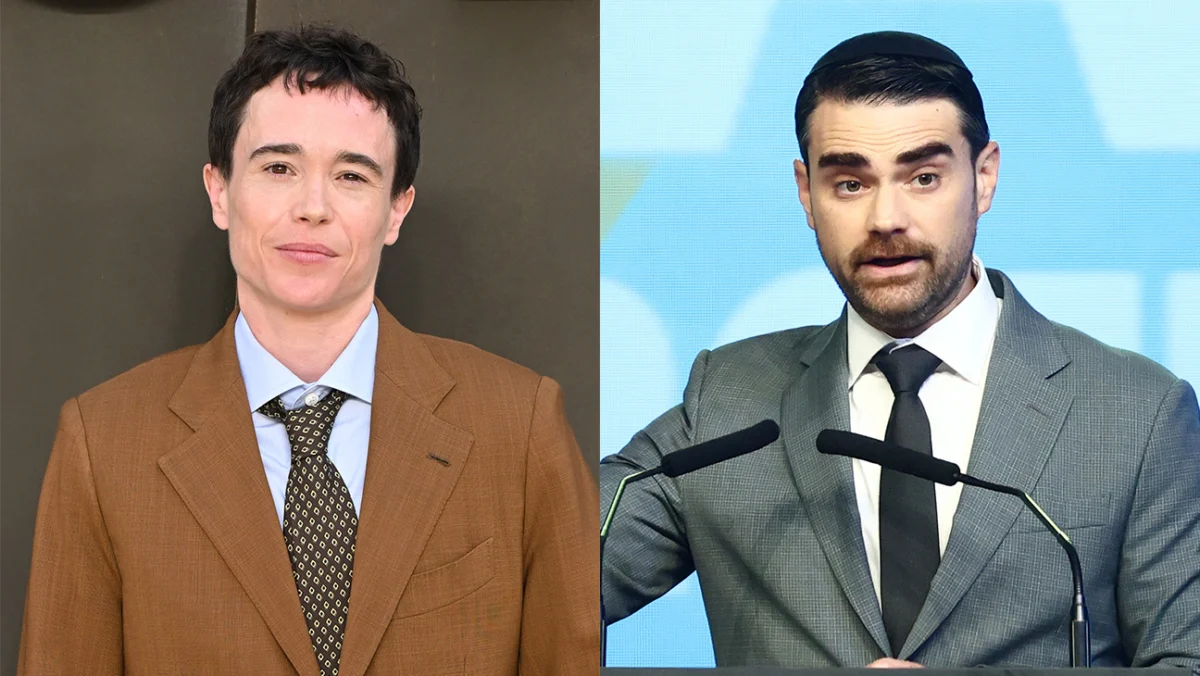
The highly anticipated release of Christopher Nolan’s cinematic adaptation of Homer’s epic poem, The Odyssey, has ignited a fervent discussion across cultural and political spectrums, particularly concerning its casting choices. Despite a noticeable wave of pre-release criticism emanating from certain segments of the "MAGA-verse," a prominent figure in conservative media, Ben Shapiro, has surprisingly lauded the film as a “masterpiece.” His detailed review, shared across his influential platforms, offers a nuanced perspective that both aligns with and diverges from typical conservative critiques, specifically regarding the inclusion of transgender actor Elliot Page. This unexpected endorsement from a key right-wing influencer underscores the complex interplay between artistic expression, political ideology, and audience reception in contemporary Hollywood.
The Genesis of Controversy: Nolan’s The Odyssey and Pre-Release Scrutiny
Christopher Nolan, celebrated for his intricate narratives and visually stunning blockbusters like Inception, Dunkirk, and Oppenheimer, ventured into the realm of classical epic with The Odyssey. The announcement of his involvement alone generated immense anticipation, given his reputation for delivering ambitious and thought-provoking cinema. However, the initial excitement soon intertwined with a growing chorus of discontent as details of the film’s casting began to emerge.
The casting process for high-profile adaptations of classical texts frequently becomes a flashpoint for debates surrounding "authenticity" and representation. For The Odyssey, a narrative deeply embedded in Western cultural consciousness, any deviation from perceived traditional portrayals was bound to attract scrutiny. While Nolan is known for his innovative approach to storytelling, the decision to cast a diverse ensemble, including actors of various ethnic backgrounds in roles traditionally depicted by white European actors, immediately drew the ire of certain online communities. These communities, often characterized by a strong emphasis on cultural traditionalism and a vocal skepticism towards modern progressive trends, voiced concerns about what they perceived as "woke" casting—a term frequently deployed to criticize diversity initiatives in media that they believe prioritize identity politics over narrative integrity or historical accuracy.
Specific criticisms focused on actors like Zendaya as Athena and Lupita Nyong’o as Helen of Troy. Helen, in particular, often conjures images based on classical Greek sculpture and later European art, making Nyong’o’s casting a prominent target for those arguing against non-traditional interpretations. The core of this pre-release backlash centered on the argument that such casting choices were not merely artistic decisions but rather ideological statements imposed upon a beloved cultural artifact, potentially alienating audiences who sought a more "faithful" or "traditional" rendition.
Ben Shapiro’s Unconventional Praise: A "Masterpiece" with Reservations
Amidst this brewing storm, Ben Shapiro, a conservative pundit whose media empire, The Daily Wire, has become a significant voice in right-wing discourse, released an 18-minute YouTube review that largely championed Nolan’s work. Shapiro, known for his incisive critiques and often contrarian takes within his own political sphere, declared The Odyssey a "masterpiece," assigning it an impressive 8.5 out of 9 on a 10-point scale. This high praise immediately set his review apart from the prevailing negative sentiment within parts of the conservative online community.
Shapiro’s commendation extended to the performances of the lead actors. He lauded Matt Damon’s portrayal of Odysseus, Robert Pattinson as Antinous, and Tom Holland as Telemachus, finding little fault with their interpretations. More surprisingly, he largely dismissed the ethnically diverse casting choices that had fueled much of the pre-release outrage. Addressing the criticism surrounding Lupita Nyong’o as Helen of Troy, Shapiro quipped, "I know a lot of people were like, ‘Oh my God, Lupita Nyong’o is supposed to look like Diane Kruger.’ I don’t know. Diane Kruger doesn’t look very Greek. She’s German." This pragmatic, almost dismissive, stance on racial casting diverged sharply from the "authenticity" arguments of many within the MAGA-verse, suggesting a prioritization of performance and narrative over strict adherence to perceived historical or mythological racial profiles. Similarly, he found Zendaya’s casting as Athena unproblematic, stating, "Casting Zendaya in that role doesn’t change anything… Zendaya does a fine job, doesn’t bother me at all." Even the casting of rapper Travis Scott as Bard, which he found "a bit jarring," was downplayed due to the role’s minor significance.
The Singular Exception: Elliot Page’s Portrayal of Sinon
However, Shapiro’s broad approval hit a significant roadblock with the casting of Elliot Page as Sinon, the Greek warrior whose deception leads to the Trojan Horse’s entry into Troy. This particular casting choice became the sole, yet profound, point of contention in Shapiro’s otherwise glowing review.
Shapiro’s criticism of Page’s casting was stark and unambiguous. He stated, "It’s stupid to cast Elliot Page as a dude. It’s just stupid." He elaborated on his discomfort, asserting that Page’s physical attributes and vocal qualities—describing Page as "about five foot two inches and 105 pounds, soaking wet, and has the voice of a woman"—created an insurmountable barrier to immersion in the film’s narrative. For Shapiro, the perceived incongruity between Page’s physical presence and the role of a male warrior was an "unforced error" that actively detracted from the cinematic experience.
This critique delves into a sensitive area surrounding transgender representation and the public perception of gender identity. Elliot Page publicly came out as transgender in December 2020, sharing his journey of transition. His casting in The Odyssey, a reunion with Nolan after their collaboration on Inception, marked a significant moment for trans visibility in mainstream cinema. Shapiro’s comments, however, reflect a viewpoint that often surfaces in discussions about trans actors in gender-affirming roles: a focus on biological sex characteristics over gender identity, particularly in roles that traditionally demand specific physical archetypes. His remarks—"Elliot Page was a woman with mental issues who believes that she is a man and has had surgeries to make her appear more man-like"—were a direct and personal criticism of Page’s identity, framing his transition in terms often used by those who do not affirm transgender identities.
Shapiro went further, speculating on Nolan’s motivations for casting Page. While initially stating he wouldn’t "speculate," he then posited theories ranging from personal friendship and sympathy for Page to the cynical pursuit of "Oscar bait." These conjectures, while presented as possibilities, tapped into broader conservative anxieties about Hollywood’s alleged ideological motivations behind diversity and inclusion initiatives, suggesting that such choices are driven by political correctness or awards-season ambitions rather than purely artistic merit.
The Broader "Culture War" and Cinematic Experience
Shapiro’s review, particularly its dual nature of high praise for the film generally and pointed criticism for Page’s casting, encapsulates a microcosm of the ongoing "culture war" within entertainment. On one hand, he demonstrated a willingness to appreciate artistic quality regardless of some diverse casting choices, suggesting that not all "wokeness" is a deal-breaker for conservative audiences if the core product is strong. This contrasts with the more absolutist stance of some in the MAGA-verse who might dismiss a film entirely for any perceived ideological transgression.
However, his unyielding stance on Elliot Page’s casting highlights a specific ideological red line for many conservatives concerning gender identity. This issue often evokes stronger reactions than racial diversity in casting, as it touches upon deeply held beliefs about biological sex, gender roles, and the perceived challenges to traditional social structures. For Shapiro, Page’s presence was not merely a matter of personal preference but a fundamental narrative disruption that challenged his ability to suspend disbelief.
This debate also underscores the evolving expectations of audiences and the film industry. While Hollywood has increasingly embraced diverse casting as a reflection of global audiences and a commitment to social progress, these decisions are not universally welcomed. Data from recent years indicates a growing divide in audience reception, with some viewers actively seeking out films that align with their progressive values, while others express fatigue or even hostility towards what they perceive as politically motivated casting. Box office performance, while complex, sometimes reflects these divisions, with films that lean heavily into identity politics either finding niche success or facing boycotts from segments of the audience.
Implications for Film Industry and Audiences
Shapiro’s concluding advice to his conservative audience was a call to look beyond the single casting choice he found problematic. He urged them not to "wish it a death at the box office with Page in the cast," arguing that the film’s overall quality and its "broader theme… very much in line with many things that conservatives think" should take precedence. "No, the movie’s not going to bomb because of that. It turns out that when people are willing to be entertained, they’re willing to entertain even bad flaws in the teeth, if it turns out the smile is nice," he reasoned. This pragmatic approach suggests that for a significant portion of the conservative audience, artistic excellence and compelling storytelling can, at times, override ideological objections, particularly if the film’s overarching message resonates.
The implications of such a prominent review are manifold. For Christopher Nolan and the film’s producers, Shapiro’s endorsement, despite its caveat, could serve to temper some of the conservative backlash and encourage a wider audience to see the film. For Elliot Page, it highlights the continued scrutiny and often harsh criticism faced by transgender individuals in the public eye, particularly when their identities intersect with deeply held societal norms. For the broader film industry, it reinforces the delicate balance required when navigating cultural sensitivities, artistic freedom, and commercial viability.
In an era where film criticism is increasingly intertwined with political commentary, The Odyssey serves as a potent example of how a single cinematic work can become a battleground for competing worldviews. Shapiro’s nuanced, albeit controversial, take on Nolan’s epic illustrates that the lines of ideological alignment are not always clear-cut, even within seemingly monolithic political blocs. Ultimately, the film’s reception, both critically and commercially, will provide further insight into the evolving relationship between Hollywood, its diverse audiences, and the persistent "culture wars" that continue to shape contemporary discourse.