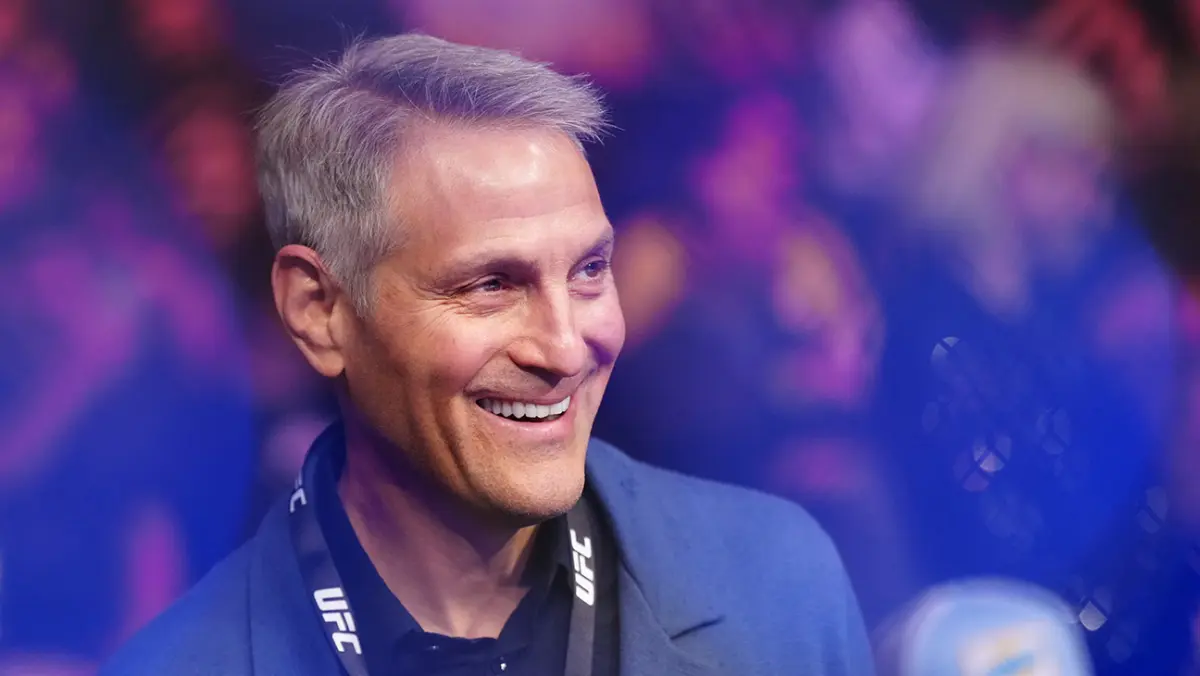
Ari Emanuel, the high-octane architect of modern entertainment consolidation and current CEO of TKO Group Holdings, recently took to the stage in London for a career-spanning retrospective that highlighted the intersection of institutional power, technological disruption, and shifting political landscapes. The event, hosted by the discourse organization Intelligence Squared and moderated by veteran media executive Tina Brown, served as a formal promotion for Emanuel’s newly released memoir, Roll the Calls, published by Penguin Random House. Throughout the evening, titled An Evening With the Dealmaker Who Reshaped Hollywood, the WME Group executive chairman offered a candid assessment of the industry’s evolution, his strategic maneuvers in the sports-media complex, and the existential threat—or opportunity—posed by artificial intelligence.
From Mailroom Ambition to Global Power Broker
Emanuel’s trajectory remains a cornerstone of Hollywood lore. Beginning his career in the humble surroundings of the Creative Artists Agency (CAA) mailroom, he eventually moved to establish the Endeavor agency, which later merged with the William Morris Agency to form WME. His ascent is marked by an aggressive, often disruptive approach to talent representation and corporate acquisition. Throughout the 1990s and 2000s, Emanuel cultivated a client roster that included some of the most influential figures in contemporary culture, from Martin Scorsese and Larry David to Oprah Winfrey. This persona became so pervasive in the industry’s consciousness that it served as the primary inspiration for the character Ari Gold in the HBO series Entourage.
In his conversation with Brown, Emanuel emphasized that his longevity in a notoriously volatile industry rests on a foundation of blunt honesty. "You pay me 10 percent for my opinion," he remarked, noting that his willingness to provide unfiltered advice has occasionally resulted in his termination. However, he framed these professional ruptures as inherent to the advisory process, noting that he has successfully re-signed clients who had previously fired him, underscoring that the value proposition of a high-level agent is rooted in the courage to speak truth to power.
The AI Paradigm and the Sovereignty of Taste
Addressing the technological shift currently roiling the creative industries, Emanuel offered a nuanced perspective on artificial intelligence. He rejected the notion that AI could replace the essential human elements of entertainment—specifically taste and judgment. He characterized AI as an "average," albeit a sophisticated one, capable of synthesizing existing data but incapable of the intuitive leaps required for genuine innovation.
"AI doesn’t have taste, and taste only comes with time and knowledge of situations," Emanuel asserted. He argued that as algorithms become more prevalent in content creation, the scarcity of human perspective will increase its value. For creators like Martin Scorsese, Emanuel believes AI will function as a tool for implementation rather than a replacement for creative vision. He likened this to his wife’s experience as a fashion designer, where AI provides technical support, but the conceptual framework and aesthetic direction remain strictly human domains. However, he acknowledged that the industry has yet to resolve the tension between the efficiency of AI and the "absence of morality" inherent in automated systems, suggesting that a framework for ethical implementation remains a critical, albeit unsolved, industry challenge.
Corporate Strategy: The UFC Acquisition
The discussion provided a rare, granular look at the complexities of Emanuel’s most challenging corporate maneuvers. Central to this was the acquisition of the Ultimate Fighting Championship (UFC). Emanuel, who had represented the organization for two decades, initially expected a straightforward acquisition by a strategic partner, such as Fox. When that failed to materialize and other potential bidders like Warner Bros. signaled retrenchment, the deal faced a series of macro-economic hurdles.
The acquisition was further complicated by the geopolitical and economic volatility following the 2016 Brexit referendum. Emanuel described the collapse of global banking confidence during that period as a primary obstacle, forcing his team to navigate a precarious financial landscape to finalize the purchase. This deal served as the foundation for the eventual formation of TKO Group Holdings, which combined the UFC with WWE, creating a dominant global entity in combat sports and live entertainment. By securing these assets, Emanuel effectively diversified his portfolio beyond traditional talent management, moving into the high-growth sector of live, experiential events.
Politics and the Search for Common Ground
Emanuel’s commentary on politics was marked by a desire to distance himself from the current ideological polarization. When asked about the rise of the MAGA movement and the influence of the Democratic Socialists of America (DSA), he expressed a clear preference for centrist, pragmatic governance. He argued that sports and live events represent a unique, non-partisan space where diverse segments of the population can converge, a philosophy he applies to his leadership at TKO.
Regarding the current political climate, he maintained a degree of pragmatic engagement, noting that he remains in communication with various political figures, including Donald Trump. He characterized his approach as an effort to keep lines of communication open, despite personal or ideological disagreements. He expressed specific concern regarding current foreign policy, particularly concerning Ukraine, and indicated a plan to engage in direct dialogue with political leaders as Congress reconvenes.
The Case for Rahm Emanuel
One of the most notable segments of the evening involved Emanuel’s assessment of his brother, Rahm Emanuel, the current U.S. Ambassador to Japan and former Mayor of Chicago. Ari Emanuel positioned his brother as an ideal candidate for the presidency, characterizing him as a rare combination of intellectual rigor, empathetic policy-making, and a willingness to engage in the "fight." He argued that the political landscape is in desperate need of a candidate who can bridge the gap between radicalized poles, and he placed Rahm Emanuel firmly in that centrist, effective-governance category.
Implications for the Future of Entertainment
The implications of Emanuel’s tenure and his current strategic focus are significant. As WME and TKO continue to consolidate control over both talent and intellectual property, the industry is moving toward a model that prioritizes global, live-event dominance. The "dealmaker" model, which relies on personal relationships and high-stakes negotiation, is being augmented by a reliance on technological scalability.
However, the industry faces a transition period. The skepticism toward AI, while tempered by an acknowledgment of its utility, suggests that legacy power players are wary of delegating the "curation" of culture to software. Furthermore, Emanuel’s focus on the "common ground" of sports suggests that he views the fragmentation of media not as a threat, but as an opportunity to double down on properties that still command mass-market, cross-demographic attention.
As the entertainment landscape continues to evolve, Emanuel’s influence remains tied to his ability to anticipate shifting market conditions. His career reflects a broader transition in Hollywood from a decentralized network of agencies to a consolidated, corporate-driven infrastructure. Whether the current strategy—a blend of human-centric taste and algorithmic efficiency—will sustain the industry through the next decade remains to be seen. What is clear, however, is that Emanuel remains a central, and often polarizing, figure in the architecture of modern media, continuing to exert influence by positioning himself at the nexus of technology, politics, and culture.