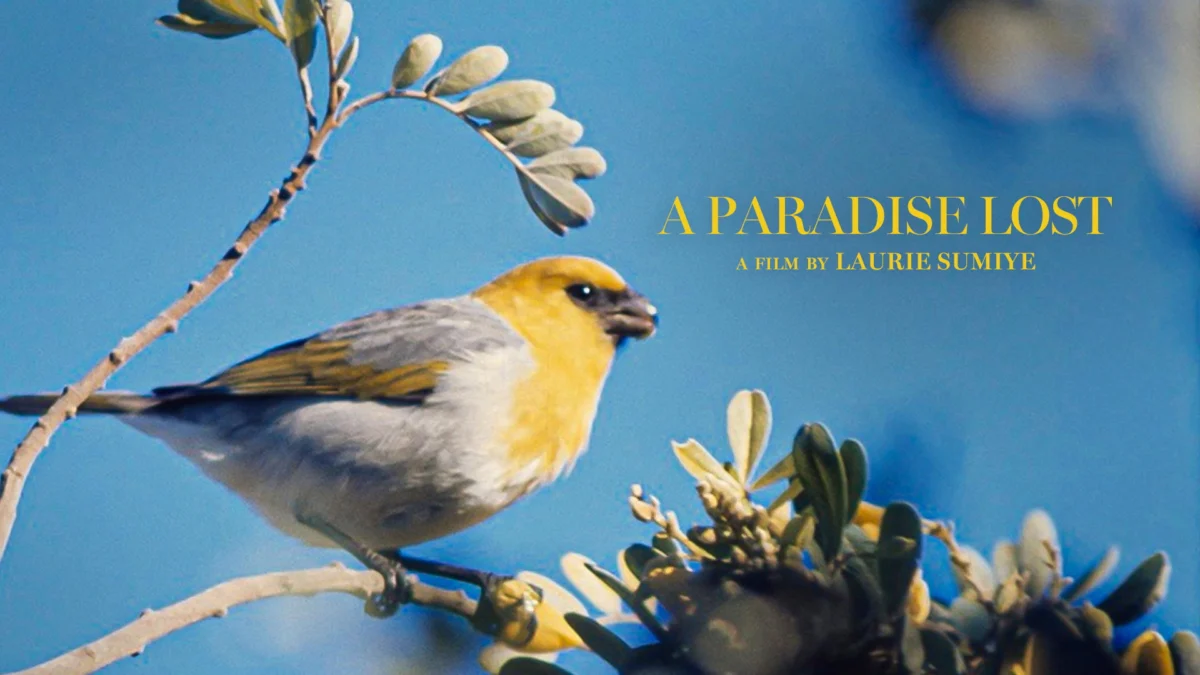
A Paradise Lost, the highly anticipated documentary by artist and filmmaker Laurie Sumiye, has released its official trailer, offering a profound look into the intersection of environmental law, indigenous ecology, and the desperate fight for species survival. The film, which centers on a rare Hawaiian honeycreeper known as the Palila, chronicles the historic legal battle where an endangered animal effectively sued the government to protect its habitat. This cinematic exploration arrives at a critical juncture for global biodiversity, as the "Bird Extinction Capital of the World" continues to grapple with the devastating impacts of climate change, invasive species, and habitat loss. Scheduled for a theatrical release on July 31, 2026, the documentary will also make its television debut on PBS later this year, following its successful premiere at the 2025 Hawai’i Film Festival.
The Landmark Case: Palila v. Hawaii Department of Land and Natural Resources
At the heart of the documentary is the 1979 landmark lawsuit Palila v. Hawaii Department of Land and Natural Resources. This case remains a cornerstone of environmental jurisprudence, representing one of the first instances where a non-human species was named as a lead plaintiff in a federal court. The Palila (Loxioides bailleui), a small, yellow-headed bird endemic to the high-elevation dry forests of Mauna Kea, was pitted against the state’s management policies, which favored the maintenance of feral sheep and goats for recreational hunting.
The lawsuit was filed on behalf of the bird by the Sierra Club, the National Audubon Society, and other conservation groups. The central argument was that the state’s failure to remove these invasive ungulates constituted a "taking" under the Endangered Species Act (ESA) of 1973. Because the sheep and goats destroyed the Māmane trees—the Palila’s primary source of food and nesting—their presence was argued to be a direct cause of the bird’s decline toward extinction. In a historic ruling, U.S. District Judge Samuel P. King found in favor of the bird, famously stating that the Palila "has a right to its habitat." A stuffed specimen of the Palila was even present in the courtroom, serving as a silent, symbolic representative of its species.
Biological and Ecological Context: The Struggle for Survival on Mauna Kea
The documentary provides an in-depth look at the Palila’s unique biology and its absolute dependence on the Māmane-Naio forest. The Palila is a finch-billed honeycreeper that has evolved to consume the seeds of the Māmane tree, which are toxic to most other animals. This specialized diet makes the bird exceptionally vulnerable to any fluctuations in the health of the forest.

Hawaii has long been referred to by biologists as the "Extinction Capital of the World." Since the arrival of humans, over 70 species of Hawaiian birds have gone extinct, and many of the remaining native species are currently listed as endangered. The Palila’s population has seen a precipitous decline; once ranging across the islands of Oahu and Kauai, the species is now restricted to a small patch of sub-alpine forest on the slopes of Mauna Kea on the Island of Hawai’i.
A Paradise Lost highlights the multifaceted threats facing the bird today. Beyond the historical damage caused by feral ungulates, the Palila faces modern challenges including:
- Climate Change: Rising temperatures and changing precipitation patterns affect the flowering and seeding cycles of the Māmane trees.
- Avian Malaria: Carried by invasive mosquitoes, this disease has decimated honeycreeper populations at lower elevations, pushing the Palila into a narrow band of high-altitude habitat where temperatures are too cool for mosquitoes to thrive.
- Wildfires: Increased drought conditions have made the dry forest of Mauna Kea susceptible to catastrophic fires that could wipe out the remaining population in a single event.
Cinematic Narrative and the Voice of the Non-Human
Director Laurie Sumiye, a native Hawaiian nature artist, spent a decade developing the project. Her approach blends traditional documentary techniques—such as intimate interviews and cinéma vérité—with expressive animation. This stylistic choice is intended to bridge the gap between the human experience and the avian perspective.
The film features the character of Ānuenue, voiced by Kaipo Schwab, an animated representation of the Palila. Through this character, the film explores the concept of the "timely fable," weaving a narrative that allows the bird to tell its own story of resilience and recovery. The production includes appearances by key figures in the conservation movement, including Kalā Lindsey-Asing, Michael Sherwood, and Marjorie Ziegler, the late executive director of the Conservation Council for Hawai‘i, who was a fierce advocate for the Palila.
Sumiye’s background as a visual artist is evident in the film’s stunning cinematography of Mauna Kea’s misty sub-alpine landscapes. The documentary seeks to showcase a side of Hawaii often unseen by tourists—a rugged, high-altitude wilderness that is both beautiful and precariously fragile.

Chronology of the Palila’s Legal and Conservation Timeline
To understand the weight of the documentary, one must look at the decades-long timeline of events that A Paradise Lost encapsulates:
- 1967: The Palila is officially listed as an endangered species by the U.S. Fish and Wildlife Service.
- 1978: Conservation groups file the initial lawsuit against the Hawaii Department of Land and Natural Resources (DLNR).
- 1979: Judge Samuel King rules in favor of the Palila, ordering the removal of feral sheep and goats from the bird’s critical habitat.
- 1987: The 9th Circuit Court of Appeals affirms the ruling, solidifying the legal precedent that habitat destruction constitutes a "taking" of an endangered species.
- 1990s-2000s: Ongoing conflicts persist between the state, local hunters, and conservationists regarding the management of game animals on Mauna Kea.
- 2010-2020: Population surveys show a continuing decline in Palila numbers despite habitat restoration efforts, leading to intensified emergency conservation measures.
- 2025: A Paradise Lost premieres at the Hawai’i Film Festival, receiving critical acclaim for its blend of art and activism.
- 2026: The film begins its national theatrical rollout and prepares for a broadcast on PBS.
Official Responses and Stakeholder Perspectives
The documentary does not shy away from the complexities of the conflict. It explores the perspectives of local hunters who view the feral sheep and goats as a cultural resource and a source of food security. This tension between "game management" and "species preservation" has defined Hawaiian land-use policy for half a century.
Representatives from the Hawaii DLNR have historically faced the difficult task of balancing these competing interests. While the court mandate requires the protection of the Palila, the political pressure from hunting advocates has often slowed the implementation of fence-building and animal removal programs. Conservationists interviewed in the film emphasize that the Palila is a "sentinel species"—its health is a direct reflection of the health of the entire watershed and ecosystem.
"The Palila case wasn’t just about a bird," notes one legal expert in the film. "It was about whether we, as a society, acknowledge that other forms of life have a legal standing that we are bound to respect. It challenged the notion that nature is merely a backdrop for human activity."
Broader Impact and Global Implications
The release of A Paradise Lost comes at a time when the "Rights of Nature" movement is gaining traction globally. From the granting of legal personhood to the Whanganui River in New Zealand to constitutional protections for nature in Ecuador, the legal philosophy first tested by a small yellow bird in a Hawaii courtroom is now a worldwide phenomenon.

The film’s focus on the Palila serves as a microcosm for the global extinction crisis. By highlighting the interconnectedness of life, death, and rebirth, Sumiye’s work prompts viewers to reconsider their relationship with the natural world. The documentary argues that the survival of the Palila is not just a local environmental issue, but a moral imperative that tests the limits of human empathy and legal ingenuity.
As the film prepares for its July 31 release, environmental organizations are planning screening events to coincide with renewed calls for habitat restoration funding. A Paradise Lost is more than a retrospective on a legal case; it is a call to action to protect the remaining fragments of Hawaii’s unique evolutionary heritage before they vanish forever.
Produced by Anne Misawa, the documentary is expected to be a significant contender in the upcoming awards season within the documentary and animation categories. For those invested in the future of conservation, A Paradise Lost offers a poetic yet unflinching look at what it takes to save a species from the brink of silence.