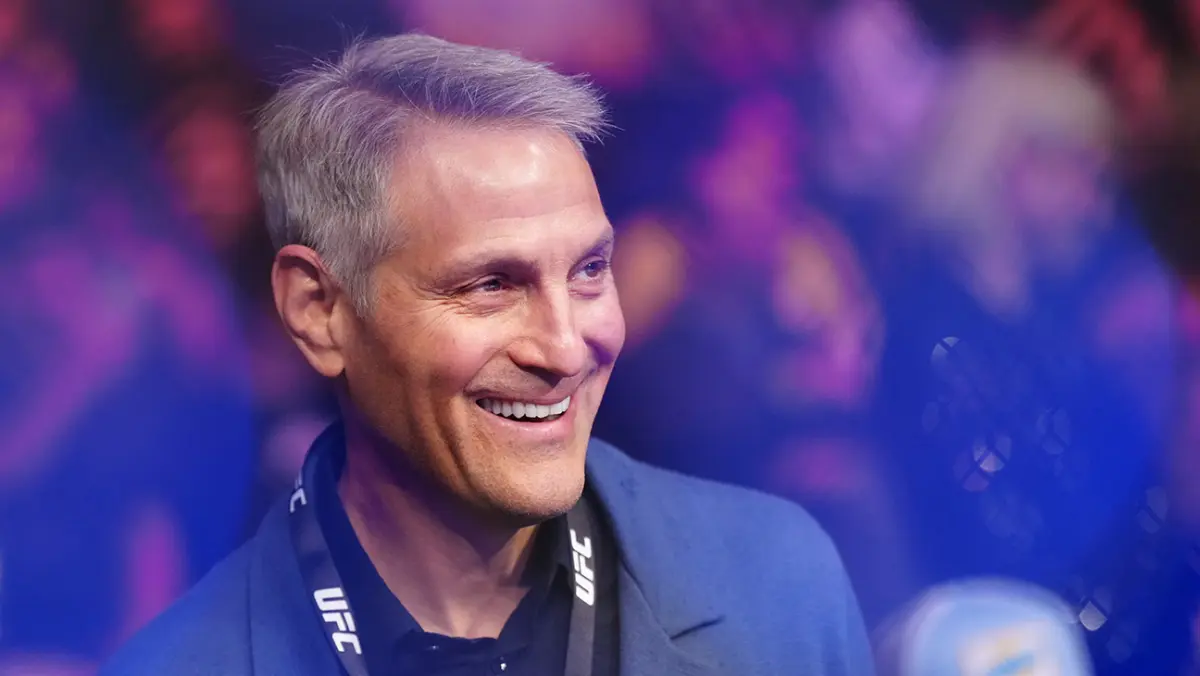
Ari Emanuel, the high-profile CEO of TKO Group Holdings and executive chairman of WME, took to the stage in London this past Saturday to offer a candid reflection on his decades-long career in the entertainment industry. The event, held in conjunction with the release of his new memoir, Roll the Calls, published by Penguin Random House, served as both a retrospective of his ascent from the mailroom of Creative Artists Agency (CAA) to the pinnacle of global talent management and a forum for his views on the current state of technology, global politics, and the future of the media landscape.
The discussion, moderated by veteran journalist and former editor-in-chief of Vanity Fair and The New Yorker, Tina Brown, drew a crowd of industry insiders and observers eager to hear from one of Hollywood’s most influential power brokers. Throughout the evening, Emanuel addressed the evolution of his professional philosophy, the complexities of his most high-stakes business acquisitions, and his outlook on the intersection of human intuition and artificial intelligence.
From CAA Mailroom to Global Power Broker
Emanuel’s career trajectory is often cited as a masterclass in aggressive deal-making and talent representation. Having represented cultural icons ranging from Larry David and Quentin Tarantino to Martin Scorsese and Oprah Winfrey, Emanuel’s influence extends far beyond traditional talent management. His reputation for a relentless, no-nonsense approach served as the loose inspiration for the character Ari Gold in the HBO series Entourage, a portrayal that, while dramatized, captured the intensity of his negotiation style.
During the London event, Emanuel reinforced the core principle that has guided his career: the value of honest counsel. "You pay me 10 percent for my opinion," he stated, addressing the nature of the client-agent relationship. "You’ll listen to my opinion. You don’t want to follow it, don’t follow it. Now, I have gotten fired for giving my 10 percent. I’m OK with that. I’ve re-signed the people that have fired me, a couple of them, but you’re paying me for my opinion."
This philosophy of unvarnished feedback, he argued, is more relevant than ever in an era increasingly dominated by automated systems.
The Human Element in the Age of AI
A significant portion of the conversation focused on the rapid integration of artificial intelligence into the creative economy. While many industry leaders express concern regarding job displacement, Emanuel offered a nuanced perspective, distinguishing between technical output and the "taste" required to curate successful projects.
"AI is just an average, a very good average," Emanuel remarked. "There is something so important that people are missing here. It is not the answer. Curiosity is important, judgment is important, taste is very important. It [AI] has no taste."
He suggested that for elite creative minds—such as his client Martin Scorsese—AI serves as a tool for implementation rather than a replacement for vision. By utilizing AI to handle the logistical or technical aspects of production, creators can theoretically focus more energy on the subjective, human elements of storytelling. However, Emanuel did acknowledge the ethical vacuum inherent in current AI development, noting that while the technology poses clear moral questions, the mechanism for regulating those issues without stifling innovation remains elusive.
A Chronology of the UFC Acquisition
Emanuel’s most grueling professional challenge remains the acquisition of the Ultimate Fighting Championship (UFC). The process, which culminated in the creation of TKO Group Holdings, was defined by a series of geopolitical and economic hurdles that nearly derailed the deal.
Reflecting on the 2016 acquisition, Emanuel detailed the volatility of the period. After representing the UFC for 25 years, the objective was to facilitate a sale to a major media entity. Early efforts focused on Fox and Warner, both of which faced internal strategic shifts that made a purchase unviable. The situation was further complicated by the emergence of well-capitalized Chinese investors looking to enter the entertainment space, a path that UFC leadership, including Dana White, resisted.
The situation reached a breaking point during the fallout of the 2016 Brexit referendum. The subsequent disruption to the banking sector and the global financial markets created a "perfect storm" of instability, forcing Emanuel and his team to navigate a precarious acquisition environment. Despite these obstacles, the deal closed, marking a pivotal moment in the professionalization of mixed martial arts and its integration into the broader Endeavor portfolio.
Politics, Polarization, and the Public Square
Beyond entertainment, the conversation transitioned into the polarized landscape of American politics. As a prominent Democrat, Emanuel articulated a desire for bipartisan engagement, suggesting that sports and live experiences provide a necessary "common ground" in an increasingly fractured society.
Addressing the political association between the UFC and the Donald Trump era, Emanuel remained steadfast in his belief that the sport’s appeal transcends current political affiliations. "I think it’s going to outlast me," he said, dismissing the notion that the organization’s trajectory is inextricably linked to any single political figure.
Emanuel also touched on his personal connection to the political sphere, specifically referencing his brother, Rahm Emanuel, the current U.S. Ambassador to Japan and former Chicago Mayor. When asked about his brother’s potential for a presidential run, Ari Emanuel offered a strong endorsement, framing him as a centrist capable of bridging domestic divides. "All kidding aside, I don’t think there’s a better candidate in the world who could be president and cares more about the world, the United States, helping kids and will fight the fight," he said.
Economic and Industry Implications
The broader implications of Emanuel’s commentary point toward a shifting strategy for major entertainment conglomerates. By focusing on live events and the "human" aspects of taste, companies like TKO Group are attempting to insulate themselves against the volatility of the digital transition.
Market analysts have noted that the consolidation of sports and entertainment assets into single holding companies is a response to the fragmentation of traditional media audiences. By owning the IP, the distribution channels, and the live experience, entities like TKO aim to maintain premium pricing power.
However, the challenges remain significant. The ongoing debate over AI regulation and the potential for shifts in global trade policies—as hinted at by Emanuel’s concerns regarding Ukraine and international diplomacy—suggest that the entertainment industry will continue to face external pressures that are increasingly difficult to manage.
Conclusion
Ari Emanuel’s appearance in London underscored the duality of his role: he is both a creature of the industry’s past, built on high-touch relationships and individual judgment, and a primary architect of its future, defined by massive corporate consolidation and technological adaptation. As he looks toward the future of the WME and TKO groups, his focus remains on the qualities he considers uniquely human—curiosity, judgment, and the ability to navigate the "headaches" of a globalized, often unpredictable, market. Whether these traditional strengths will be sufficient to navigate the next decade of political and technological disruption remains the central question for the industry he has spent his life reshaping.