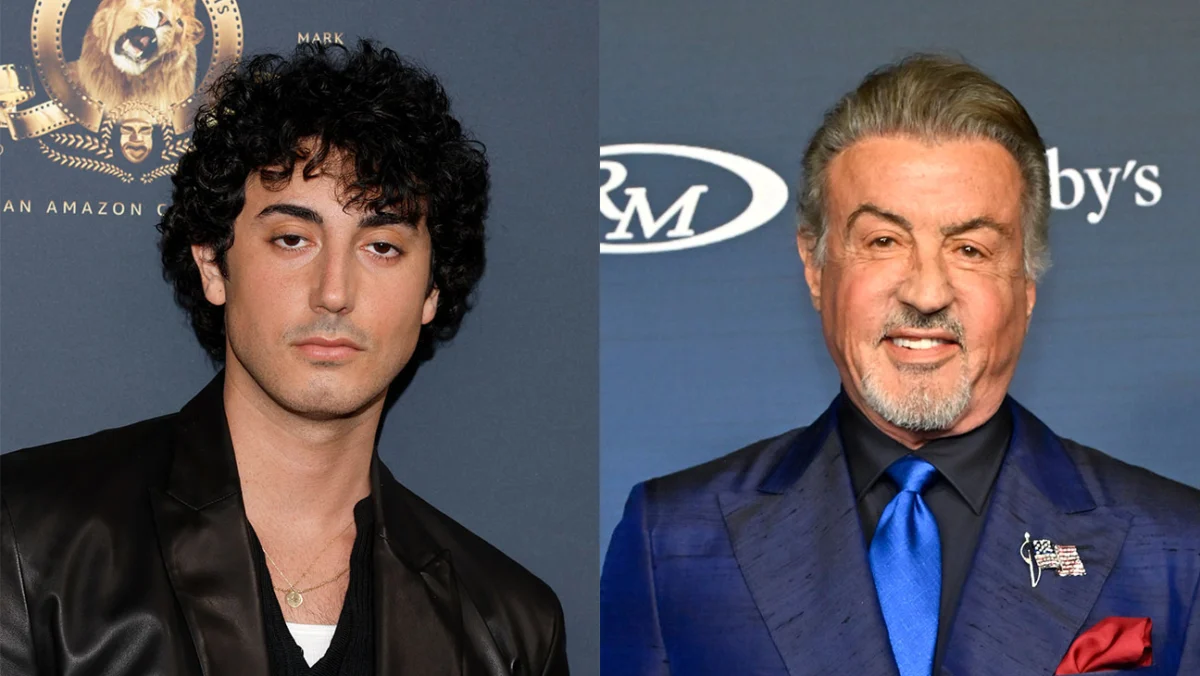
The production of the 1976 boxing masterpiece Rocky remains one of the most improbable success stories in the history of American cinema. Now, director Peter Farrelly is bringing that turbulent, high-stakes journey to the screen with I Play Rocky, a film that explores the grit and defiance of a young Sylvester Stallone. As the project prepares for its theatrical debut, star Anthony Ippolito, who portrays the legendary actor and writer, has offered deep insights into the process of inhabiting a man whose real-life struggle mirrored the fictional underdog story that would eventually define his career.
The Weight of Legacy: Preparing for the Role
At the Toronto International Film Festival, held at the 1 Hotel under the auspices of the THR Studio, Ippolito detailed the profound psychological preparation required to step into Stallone’s shoes. Having spent over a year meticulously studying the nuances of Stallone’s speech patterns, physical mannerisms, and internal motivations, Ippolito described his direct conversations with the Hollywood icon as a transformative experience.
For Ippolito, the challenge was not merely mimicking the physicality of a 1970s-era action star, but understanding the vulnerability inherent in Stallone’s early life. During their discussions, Stallone provided firsthand accounts of the systemic hurdles he faced, most notably the facial paralysis resulting from a birth injury that severed a nerve. This medical complication, which significantly impacted the early stages of his acting career, eventually became a defining element of his screen presence—a hallmark of his unique vocal cadence and facial expressions.
Ippolito noted that the experience of hearing these stories firsthand was both "overwhelming and daunting." He emphasized that while the world views Rocky Balboa as the ultimate underdog, it is imperative to recognize that Stallone himself navigated a professional and personal landscape that was equally unforgiving.
A Chronology of Struggle: The Road to 1976
The narrative of I Play Rocky focuses on the volatile production period of the original film. To understand the gravity of the story, one must look back at the historical context of the mid-1970s. Stallone, then an obscure actor struggling to find consistent work in New York City, penned the screenplay for Rocky with the express stipulation that he would portray the titular character.
The studio system of the era was notoriously skeptical of this demand. Executives at United Artists, who eventually distributed the film, were initially resistant to the idea of an unproven actor anchoring a major sports drama. The production timeline was fraught with tension:
- 1975: Stallone completes the script, inspired by the Muhammad Ali-Chuck Wepner fight. He begins shopping the project, facing widespread rejection from studios that want the script but refuse to cast him in the lead.
- 1976: Production commences on a shoestring budget of roughly $1 million. The studio remains skeptical throughout filming, creating an environment where, as director Peter Farrelly noted, they were effectively waiting for an excuse to replace their lead actor.
- November 1976: Rocky is released in theaters.
- 1977: The film defies industry expectations, grossing over $225 million worldwide and securing three Academy Awards, including Best Picture and Best Director.
Behind the Scenes: The Director’s Perspective
Peter Farrelly, the filmmaker behind the biopic, has been vocal about the importance of depicting the studio-level friction that Stallone endured. During the TIFF panel, Farrelly explained that while modern audiences associate the Rocky brand with global dominance and a $1.7 billion franchise, the reality of the 1976 production was one of precarious instability.
"I think a lot of people know bits of the story, but I didn’t know the big picture," Farrelly stated. He highlighted that the studio’s efforts to undermine the production were not merely passive; they were active maneuvers to keep the project on a knife’s edge. By ensuring the budget remained tight and the schedule rigid, the studio created a "fail-safe" mechanism that would have allowed them to recast the role had Stallone faltered. Farrelly’s film aims to capture this tension, framing the creation of the film as a desperate, all-or-nothing gamble.
Artistic Approval and the Burden of Authenticity
Perhaps the most critical aspect of the production was securing the blessing of the subject himself. For a biopic about a living legend, the approval of the central figure serves as the ultimate validation of the film’s integrity. Farrelly revealed that Stallone has viewed the finished cut of I Play Rocky and provided his approval, a moment the director described as a "massive relief."
The director admitted to a high level of anxiety regarding the screening, noting that Stallone viewed the film in solitude. Given the deeply personal nature of the material—specifically the scenes depicting Stallone’s early, "down-and-out" years in New York—Farrelly was concerned about how the star would react to such a raw depiction of his formative struggles. The fact that the film resonated with Stallone suggests that Ippolito and Farrelly have successfully balanced the narrative, avoiding the pitfalls of hagiography in favor of a more grounded, honest portrayal.
The Broader Impact: A Cultural Phenomenon
The legacy of Rocky extends far beyond its initial financial success. It fundamentally altered the landscape of sports cinema, moving away from the "heroic" tropes of the time to focus on the grit of the working class. When examining the broader implications of I Play Rocky, industry analysts point to the resurgence of the "making-of" biopic genre, which prioritizes the behind-the-scenes drama as much as the final product.
The film serves as a reminder of the "auteur" spirit that characterized the New Hollywood era of the 1970s. Stallone’s insistence on his own vision, despite being a relative unknown, is often cited as a quintessential example of creative persistence. As the film prepares for its November 20 release, following a limited run on November 13, it is expected to draw interest not only from film history enthusiasts but also from audiences interested in the intersection of personal adversity and creative triumph.
Production Data and Commercial Expectations
The Rocky franchise remains one of the most lucrative intellectual properties in Hollywood history. With the original film spawning multiple sequels and the successful Creed spinoff series, the total global box office for the franchise stands at over $1.7 billion.
I Play Rocky enters the market with significant anticipation. By focusing on the "pre-fame" era of the franchise, the film occupies a unique space in the current cinematic landscape. It is not merely an extension of the boxing series, but a period piece that examines the labor, anxiety, and eventual victory inherent in the filmmaking process. For Anthony Ippolito, the project represents a career-defining opportunity to channel a figure whose narrative arc—from the streets of New York to the steps of the Philadelphia Museum of Art—remains a cornerstone of the American cultural identity.
As the industry looks toward the release of I Play Rocky, the consensus remains that the film’s success will hinge on its ability to maintain the balance between the historical realities of 1976 and the mythic status that Sylvester Stallone has achieved over the subsequent five decades. By grounding the narrative in the physical and emotional challenges of its protagonist, the production seeks to honor the man behind the gloves, ensuring that the story of how Rocky was built is as compelling as the film itself.