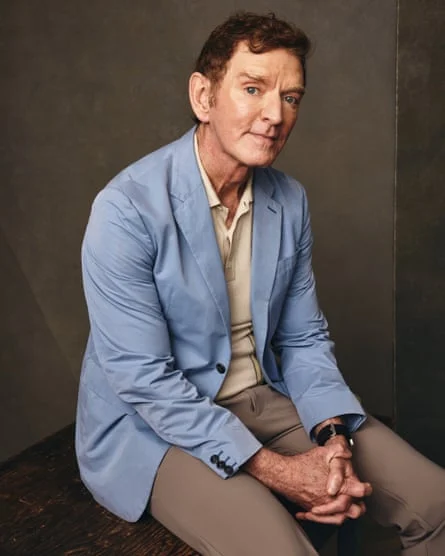
The landscape of modern television and theatre has shifted dramatically over the past few decades, transitioning from grueling 26-episode network broadcast seasons to tightly focused, serialized streaming models. Few actors have navigated this entire evolutionary arc quite like Anthony LaPaglia. In a candid retrospective surrounding the release of his new memoir, the veteran Australian actor has opened up about the unglamorous realities of Hollywood rejection, the psychological toll of network television production, his most treasured cinematic collaborations, and his candid assessments of contemporary geopolitical shifts.
Throughout his expansive career, LaPaglia has cultivated a reputation as a pragmatic craftsman who treats acting not as an exercise in ego, but as a profession governed by clear rules and boundary lines. This pragmatic ethos defines his approach to both the successes and the missed opportunities that characterize a lifelong career in the performing arts.
Navigating Hollywood Rejection and the Reality of Casting
While LaPaglia’s new memoir reveals that he was nearly cast in the iconic role of Tony Soprano—a character that ultimately became career-defining for the late James Gandolfini in HBO’s groundbreaking series The Sopranos—the actor harbors no lingering resentment over the parts that slipped through his fingers. When evaluating roles that ultimately went to other performers, LaPaglia maintains a strict four-hour rule for grievance before moving on entirely.
This stoic perspective stems from a realistic understanding of how the casting process actually functions behind closed doors. Rather than internalizing a rejection as a personal indictment of his talent, LaPaglia recognizes that casting decisions are frequently dictated by logistical necessities, visual balance on screen, or pre-existing studio negotiations. Directors and producers often have a specific aesthetic blueprint in mind, such as balancing a cast’s demographic or physical traits.
Furthermore, LaPaglia has expressed frustration with the industry practice of keeping secondary actors on a revolving wheel of possibility while waiting for an A-list star to officially accept an offer. In his view, treating working actors as placeholders disrespects their time and professional standing. By establishing firm personal boundaries against this practice, LaPaglia protects his own schedule and mental well-being, reinforcing the notion that longevity in the entertainment industry requires emotional detachment from elements beyond an actor’s control.
The Brunt of Broadcast Burnout: Lessons from Without a Trace
Before the current era of prestige television dominated by eight-to-ten-episode seasons, network television demanded an exhaustive physical and mental commitment from its stars. During his tenure leading the CBS procedural drama Without a Trace, which ran from 2002 to 2009, LaPaglia experienced firsthand the relentless grind of network television production, where crews frequently generated 24 to 26 episodes per single broadcast season.
Reflecting on that high-pressure era, LaPaglia admits that the sheer volume of work often proved counterproductive to achieving artistic excellence, occasionally forcing him to perform on autopilot. The continuous cycle of shooting current scenes while editing scripts and preparing for upcoming episodes created a fragmented work environment. Even when LaPaglia took on writing duties for two episodes of the series, gaining a newfound appreciation for the immense difficulty of structuring television narratives around commercial breaks, he ultimately realized that the grueling schedule yielded diminishing returns regarding the show’s overall success.
If given the opportunity to step into a similar long-form network television project today, LaPaglia insists his approach would change fundamentally. He would bypass excessive quality-control anxieties, alter dialogue that failed to resonate naturally, and prioritize personal well-being over the impossible demands of a relentless weekly production calendar.

Cinematic Fulfurilment and Collaborative Dynamics on Stage and Screen
Despite his extensive resume in American television and film, LaPaglia’s most personally fulfilling project remains the critically acclaimed 2001 Australian drama Lantana. Directed by Ray Lawrence and written by Andrew Bovell, the film represents a rare instance where the final cinematic product matched the initial script nearly word for word.
LaPaglia’s preparation for his role as a Sydney police detective involved deep immersion alongside real-life law enforcement officers, blending moments of levity with the heavy psychological realities of criminal investigations. The tight, suspenseful structure of Bovell’s screenplay provided a solid foundation that contrasted sharply with the chaotic rewrites often encountered in studio filmmaking.
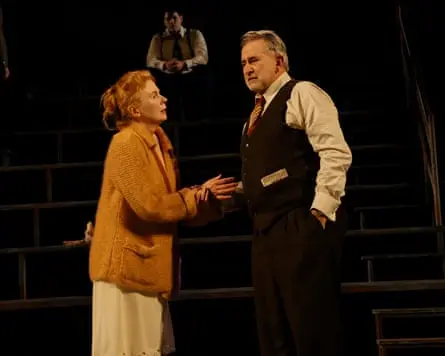
In the realm of theatre, LaPaglia emphasizes that the strength of classic dramatic works often relies heavily on the supporting ensemble. Discussing his experiences performing Arthur Miller’s plays, such as A View from the Bridge on Broadway and Death of a Salesman, LaPaglia credits his phenomenal female co-stars—including Allison Janney, Kerry Armstrong, and Alison Whyte—as the emotional anchor that sustains the entire production. Without strong anchoring performances from co-stars, LaPaglia argues, even a central character study cannot carry a theatrical narrative alone.
Reflections on Adelaide, Career Longevity, and Financial Realities
Born and raised in Adelaide, South Australia, LaPaglia has frequently spoken about the distinctive, low-frequency unease he associates with his hometown. However, recent theatrical engagements performing Death of a Salesman before Adelaide audiences provided a renewed appreciation for local theatregoers. He notes that while the city retains its dark, satirical edge, the audiences proved to be remarkably receptive, expressive, and appreciative of complex dramatic material.
As he approaches his late sixties, LaPaglia remains grounded in his professional outlook, identifying primarily as a working actor available for hire rather than an artist obsessed with self-generating passion projects. Drawing from past experiences where he invested his own capital into independent film projects—only to face opaque accounting practices and financial losses—LaPaglia cautions against the financial perils of self-financing in the independent film sector, particularly within the Australian film industry, where securing transparent financial returns remains a notorious challenge for independent creators.
Guiding Principles and Industry Perspectives
Adhering to time-tested wisdom, LaPaglia holds fast to the golden rule of acting imparted by Hollywood legend Spencer Tracy: "Know your lines and don’t hit the furniture." This straightforward philosophy underscores a career built on discipline, professionalism, and mutual respect among peers.
Looking toward the broader cultural landscape, LaPaglia maintains a characteristically unfiltered viewpoint on contemporary politics and international affairs. Expressing concern over the potential for political unrest in the United States following the ongoing cycles of polarization, the actor has openly considered relocating to Mexico to ride out potential societal disruptions. His observations extend to public figures and industry veterans alike, reflecting a lifetime of observing human behavior both on and off the stage.
Ultimately, Anthony LaPaglia’s reflections offer a grounded, unromanticized look at the realities of the entertainment industry. By stripping away Hollywood artifice and focusing on craftsmanship, collaboration, and personal resilience, he continues to navigate a storied career with clarity, humor, and unwavering pragmatism.