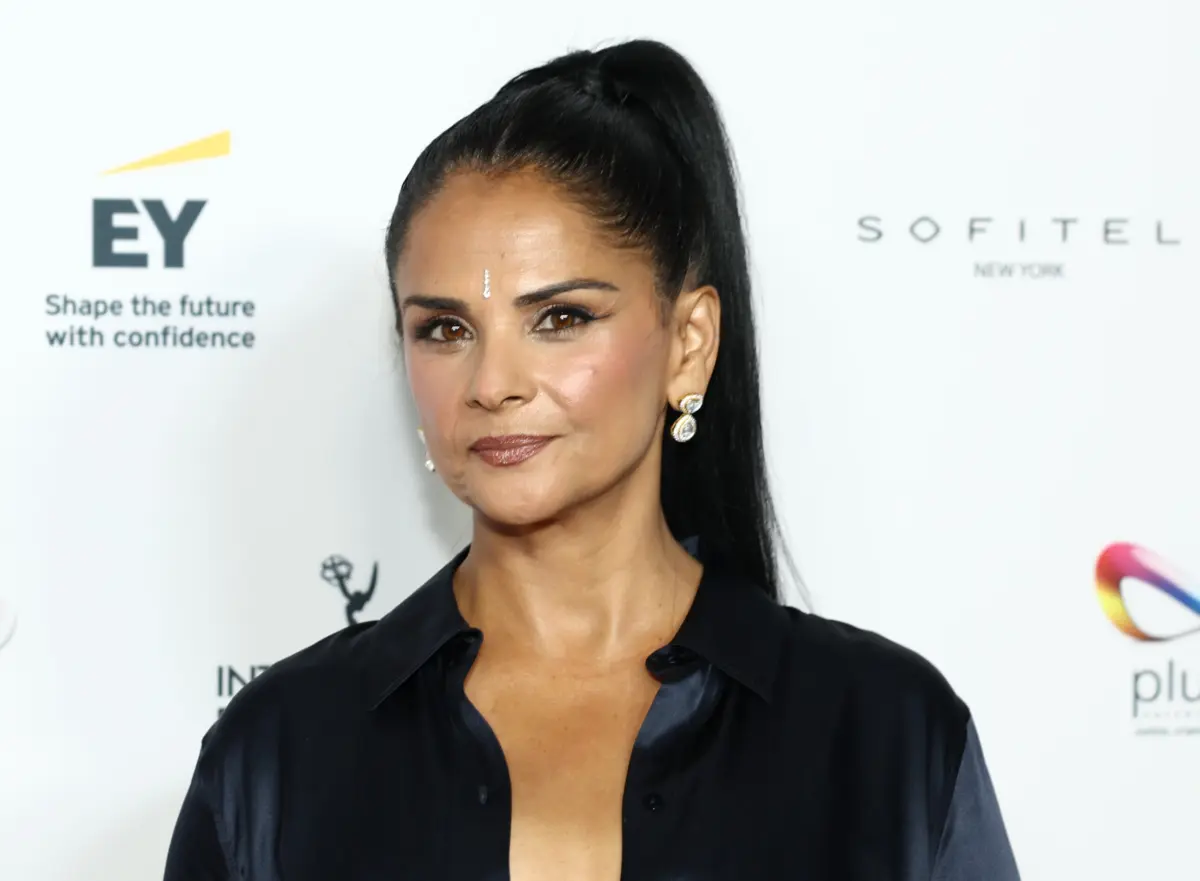
In her first public remarks since her abrupt exit from Netflix last month, former Chief Content Officer Bela Bajaria has characterized her decade-long tenure at the streaming giant as a transformative chapter, signaling a reflective yet forward-looking stance on her professional future. Speaking from the red carpet of the 2026 International Emmys in New York, where she was honored with the prestigious Founders Award, Bajaria offered a glimpse into her current transition, emphasizing a period of intentional rest following years of relentless global travel and high-stakes content strategy.
The departure of Bajaria on October 15, 2026, marked a significant pivot point in Netflix’s leadership structure. Her exit coincided with a broader wave of organizational restructuring that saw the streamer part ways with approximately 1,000 employees—roughly six percent of its total workforce—as the company grapples with shifting subscriber metrics and the imperative to maintain its dominance in an increasingly crowded streaming marketplace. The appointment of veteran executive Peter Rice, formerly of Fox and Disney, to fill the void left by Bajaria underscores a deliberate recalibration of the streamer’s content hierarchy.
A Career Defined by Global Expansion
Bajaria’s tenure at Netflix was defined by an aggressive push toward international content production and the cultivation of local hits that resonated globally. Before her elevation to Chief Content Officer, she served as a key architect of the platform’s international strategy, overseeing the greenlighting of breakout hits that bridged cultural divides. Her career, which spans three decades, began long before the rise of the streaming era, having served as president of Universal Television at NBCUniversal, where she navigated the traditional broadcast landscape.
Industry analysts suggest that Bajaria’s impact was most visible in the "Netflix-ization" of local narratives. By prioritizing shows that were culturally specific yet narratively universal, she helped shift the streamer from a platform that exported Hollywood content to one that successfully imported global storytelling. Her departure, while sudden, is viewed by market observers as part of a cyclical correction as Netflix pivots from a growth-at-all-costs model to one prioritized by efficiency, profitability, and, as noted by Co-CEO Ted Sarandos, a renewed focus on large-scale domestic hits within the United States and Canada.
The International Emmys Acceptance and Industry Reflection
The atmosphere at the 2026 International Emmys served as a poignant backdrop for Bajaria to contextualize her departure. Accepting the Founders Award from Keri Russell, star of the Netflix original series The Diplomat, Bajaria utilized the platform to address the "season of change" currently enveloping her professional life. In a speech that balanced vulnerability with characteristic industry savvy, she alluded to the cliffhanger nature of her current status, stating, "I’ve never been more excited for the next season. You know I love to surprise an audience. So stay tuned."
Russell’s introduction of Bajaria provided a rare, humanizing look at the executive, recounting an anecdote from a Netflix party where the two danced for hours. Russell described Bajaria as "lightning in a bottle," a sentiment that reflects the high regard in which she is held by talent, producers, and creative partners. This camaraderie stands in contrast to the cold optics of corporate layoffs, highlighting the divide between the personal relationships forged in Hollywood and the bottom-line decisions necessitated by corporate restructuring.
Broader Implications for Female Leadership in Media
The conversation surrounding Bajaria’s exit is inextricably linked to a wider trend of turnover among high-ranking female executives in the entertainment industry. Recent months have seen the departure of figures such as Pam Abdy at Warner Bros. and Cindy Holland at Paramount, sparking intense debate regarding the stability and advancement of women in C-suite positions.
When asked about these shifts, Bajaria adopted a measured, systemic perspective. "I think in general, in every industry, we just have to make sure that you have leaders that are doing a great job and really care about the group," she stated. She emphasized that the background and perspectives of those in leadership roles directly influence the content being produced. "It matters who is in those roles, and I think we should always just be aware of that."
This perspective is particularly relevant as studios face pressure to diversify their slates. The decision-making process at the greenlight stage—the moment a project is approved for production—is where the influence of diverse leadership is most acutely felt. Bajaria’s tenure was marked by a commitment to fostering a more inclusive range of voices, and her absence leaves a visible gap in the executive landscape regarding who is tasked with shaping the future of global entertainment.
A Timeline of Transition and Corporate Realignment
The chronology of the current Netflix restructuring began in earnest in the late third quarter of 2026, as the streamer signaled a need for a "reset" following periods of stagnant viewership growth. The layoff list was extensive, affecting various arms of the business, including high-profile exits such as film executive Doug Belgrad and film boss Dan Lin, the latter of whom departed shortly after news of Bajaria’s exit became public.
For Netflix, these departures are intended to streamline the decision-making process. By consolidating leadership under executives like Peter Rice, the company is betting on a more centralized, potentially more conservative approach to content acquisition. However, critics of the move argue that the loss of leaders like Bajaria—who had deep-seated relationships with international production houses—could potentially weaken the streamer’s competitive advantage in overseas markets, where local competition from regional players continues to escalate.
Leadership Philosophy and Future Outlook
During her remarks, Bajaria offered a clear articulation of her leadership philosophy, which she described as rooted in "integrity, selflessness, and courage." She noted that a leader’s primary responsibility is to "champion the group," a role she performed through the immense pressures of rapid scaling.
Reflecting on her personal history, she spoke eloquently about her journey as an immigrant child in the United States and how television served as a vital bridge to understanding American culture. Her anecdote about her family’s transition from the traditions of London and Zambia to the adoption of American Thanksgiving—complete with turkey and NFL viewing—provided a human dimension to the executive who once held the reins of the world’s largest content engine.
"As a young immigrant kid, TV opened a window into American culture and made me feel less weird," she said. "That connection is why I got into our industry."
As Bajaria moves into this period of post-Netflix transition, her professional future remains a subject of intense speculation. Given her track record, she is widely expected to be a primary target for legacy media companies looking to modernize their streaming strategies or for private equity firms seeking to build new media entities.
Analysis: The End of an Era
The exit of Bela Bajaria serves as a barometer for the state of the streaming industry at large. The "Golden Age" of expansion, characterized by massive budgets and the mandate to capture global market share at any cost, appears to be giving way to an era of consolidation. Executives who were hired to build and scale are now, in many cases, being replaced or sidelined by those tasked with optimizing operations and extracting profit from existing infrastructures.
For Netflix, the challenge remains balancing the creative risks that made them famous with the financial discipline now demanded by shareholders. The departure of Bajaria is not merely a change in personnel; it is a signal that the company’s internal culture is undergoing a fundamental shift. Whether this new phase will result in the "next level" of content that Ted Sarandos envisions or a loss of the creative spark that defined Bajaria’s tenure remains to be seen.
Ultimately, Bajaria’s public appearances at the Saban Community Clinic Gala and the International Emmys suggest an executive who is at peace with the transition. Her emphasis on gratitude, her acknowledgment of the "struggle and success" of the industry, and her closing promise to "stay tuned" suggest that while her time at Netflix has concluded, her influence on the trajectory of television and film is far from finished. As she herself noted, "Nothing is guaranteed and nothing can be taken for granted"—a philosophy that seems to define both her past successes and her approach to the uncertain, but clearly anticipated, next season of her career.