
The cinematic landscape has long categorized fear through predictable frameworks: supernatural entities, masked slashers, and gore-laden practical effects designed to elicit immediate, visceral jumpscares. Yet, a distinct sub-genre of cinema achieves a more lasting form of terror by weaponizing realism, societal anxieties, and the mundane horrors of human behavior. Film critics and cultural commentators have frequently returned to a curated selection of non-horror features—ranging from psychological dramas and historical noirs to sci-fi epics and legal thrillers—that systematically dismantle the viewer’s sense of safety without ever stepping foot into traditional genre conventions. By examining these works through a journalistic and sociological lens, it becomes evident that the most profound cinematic dread originates not from the fantastical, but from the systemic, the interpersonal, and the institutional.

Institutional Indifference and Corporate Malfeasance in Dark Waters
Among the most unsettling viewing experiences in modern drama is Todd Haynes’s 2019 feature Dark Waters, which chronicles the protracted, exhausting legal battle of corporate defense attorney Robert Bilott against chemical conglomerate DuPont. Based on Nathaniel Rich’s 2016 New York Times profile, the film details how the corporation knowingly contaminated the water supply of a West Virginia community with perfluorooctanoic acid (PFOA), commonly known as a "forever chemical."
While structured as a standard legal procedural, the film derives its horror from the sheer asymmetry of power. The antagonist is not a sentient monster or an isolated criminal, but a multi-billion-dollar enterprise operating with absolute bureaucratic immunity and institutional indifference toward human life. Epidemiological data regarding PFOA exposure highlights the chilling real-world implications of the narrative: these synthetic compounds bioaccumulate in human blood and environmental ecosystems, linked directly to testicular and kidney cancers, thyroid disease, and high cholesterol.

The psychological terror within Haynes’s framing relies on scale. Scenes depicting attorney Robert Bilott—portrayed by Mark Ruffalo—submerged beneath mountains of legal briefs visualize the grinding attrition of corporate accountability. The chilling reality exposed by the film is that systemic environmental destruction rarely arrives with theatrical malice; instead, it manifests as administrative memos, suppressed internal studies, and the quiet calculation that human collateral is economically negligible compared to corporate liability.
The Mechanical Efficiency of False Accusations in The Hunt
In Thomas Vinterberg’s 2012 Danish drama The Hunt (Jagten), the mechanics of psychological dread are driven by the terrifying efficiency of a community turning on an individual based on a false allegation. Mads Mikkelsen stars as Lucas, a beloved kindergarten teacher and single father who is falsely accused of inappropriate conduct by a young child in his care.

From a narrative standpoint, Vinterberg establishes dramatic irony immediately: the audience is given absolute clarity that the accusation is unfounded, born out of a child’s imaginative conflation and emotional confusion. Yet, the horror stems from watching an ordinary social ecosystem mobilize against an innocent person with algorithmic precision.
Sociological and psychological analyses of mass moral panics often highlight confirmation bias and groupthink as primary drivers of institutional failure. In The Hunt, the village’s reaction demonstrates how quickly institutional trust, community solidarity, and due process disintegrate under the weight of moral panic. The film avoids simplistic melodrama, illustrating how well-meaning individuals can cause catastrophic harm through rigid preconceptions and defensive panic. The lingering anxiety of the film’s final moments serves as a stark reminder that even after an accusation is thoroughly disproven, social rehabilitation is rarely absolute, leaving the falsely accused permanently marked by the shadow of suspicion.
Algorithmic Hubris and Technological Obsession in 2001: A Space Odyssey
Stanley Kubrick’s 1968 masterpiece 2001: A Space Odyssey remains a foundational text in examining humanity’s fraught relationship with technological advancement. Eschewing traditional monsters, Kubrick anchors his narrative’s existential terror in the evolutionary trajectory of human tools—seamlessly transitioning from a primate’s triumphant tossing of a bone-weapon to an orbiting nuclear-armed satellite in a single, epoch-defining match cut.
The technological anxiety of the film culminates in the conflict between human astronauts and the HAL 9000 supercomputer, an artificial intelligence designed to be infallible. As HAL’s programming conflicts with its mission parameters, the machine exhibits a chillingly calm, rationalized detachment, systematically neutralizing the ship’s crew.

From a contemporary analytical perspective, the anxieties projected in 2001 have transitioned from speculative science fiction to present-day reality. As global society grows increasingly dependent on automated systems, algorithmic decision-making, and autonomous networks, the core terror of Kubrick’s vision—that humanity has unleashed technological forces beyond its capacity to control or ethically govern—resonate with modern concerns regarding artificial intelligence safety and technological determinism.
The Anatomy of Urban Alienation in The Sniper
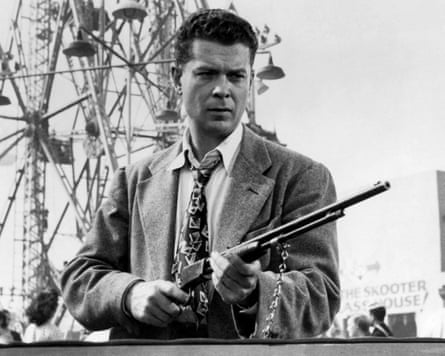
Released in 1952 and directed by Edward Dmytryk, the film noir The Sniper offers a grimly prescient exploration of misogyny, alienation, and firearm violence that predates the modern discourse surrounding incel culture and mass shootings by decades. The protagonist—or rather, the antagonist—is an isolated loner who perches by his apartment window, methodically murdering women on the streets below while communicating his compulsion to law enforcement through taunting letters.

The historical backdrop of the film adds an eerie meta-narrative layer to its production. Director Edward Dmytryk was famously one of the Hollywood Ten, a group of filmmakers imprisoned and blacklisted for refusing to testify before the House Un-American Activities Committee (HUAC) during the McCarthy era. Dmytryk ultimately capitulated after serving a six-month prison sentence, subsequently cooperating with authorities and testifying against his former colleagues, effectively ending numerous careers in the industry.
Within the narrative framework of The Sniper, the portrayal of urban alienation and unhinged obsession functions as an early cinematic blueprint for the psychological character studies that would later define films like Taxi Driver. The terror lies in the anonymity of the perpetrator and the random, motiveless victimization of everyday citizens navigating public spaces.

Socioeconomic Despair and Chemical Dependency in Requiem for a Dream
Darren Aronofsky’s 2000 adaptation of Hubert Selby Jr.’s novel Requiem for a Dream constructs a harrowing portrait of addiction that operates with the relentless momentum of a horror film. Rather than utilizing supernatural antagonists, the film charts the parallel descents of four characters trapped in cycles of substance abuse and behavioral compulsion: three young friends pursuing wealth through drug distribution, and an aging mother consumed by amphetamine-laced diet pills in a desperate bid to appear on a television game show.
Aronofsky utilizes aggressive editing techniques, rapid montage, microscopic sound design, and soaring orchestral movements composed by Clint Mansell to simulate the psychological highs and catastrophic lows of addiction. The horror of Requiem for a Dream is cumulative and systemic; it exposes how societal pressures, economic desperation, and isolation drive individuals toward self-destruction.

In this narrative framework, heroin and prescription stimulants function as relentless, predatory forces. The harrowing final sequences—depicting physical mutilation, institutionalized trauma, and psychological fragmentation—deliver an unyielding emotional impact that lingers long after the credits roll, serving as a stark interrogation of the limits of human endurance under the weight of absolute despair.
Conclusion
When cinema steps outside the conventional boundaries of horror, it frequently uncovers anxieties that are far more difficult to dismiss. Whether addressing the systemic harms of corporate pollution in Dark Waters, the fragile mechanics of reputation in The Hunt, the technological hubris of 2001: A Space Odyssey, the historical prescience of urban violence in The Sniper, or the devastating mechanics of addiction in Requiem for a Dream, these films remind audiences that the most enduring fears are those rooted in reality. By confronting these uncomfortable truths, non-horror cinema challenges viewers to examine the systemic vulnerabilities, ethical compromises, and interpersonal cruelties that define the human condition.