The annual migration of pop culture enthusiasts to the Javits Center for New York Comic Con brings both excitement and logistical challenges, highlighting perennial concerns regarding public health during mass gatherings. While attendees navigate the sprawling convention floor amidst costumed crowds and publisher booths, health officials and seasoned convention-goers frequently reiterate basic hygiene protocols to mitigate the rapid transmission of seasonal illnesses, colloquially known as "con crud." Medical professionals emphasize that high-touch environments—where thousands of individuals handle shared merchandise, promotional materials, and display pieces—serve as primary vectors for rhinovirus, influenza, and other upper respiratory pathogens. Epidemiological data from major convention events consistently indicate a post-event spike in mild respiratory infections, prompting veteran attendees to implement strict preventative measures, such as hand sanitization, avoiding direct contact with communal surfaces, and maintaining distance from high-density bottlenecks.
Beyond the convention floor, the broader entertainment and literary landscapes present a diverse array of cultural developments, ranging from long-overdue international publishing debuts to upcoming television and cinematic premieres.
Literary Milestones: Tove Jansson’s Illustrated Hobbit Debuts in the United States
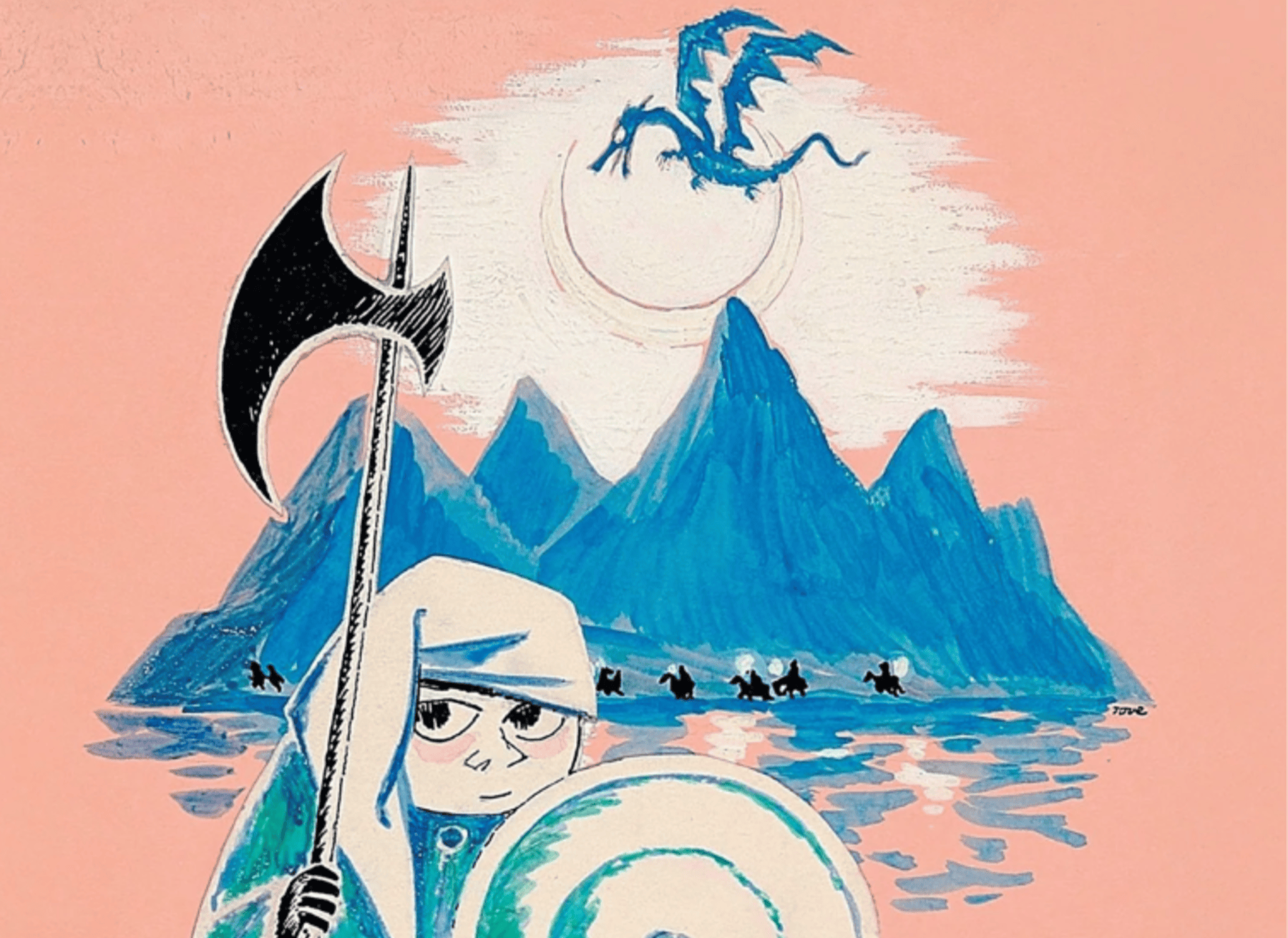
After decades of exclusive availability to Scandinavian readers, Finnish author and illustrator Tove Jansson’s iconic visual interpretations of J.R.R. Tolkien’s The Hobbit have officially been published in the United States by William Morrow, an imprint of HarperCollins. The release marks a significant milestone for Tolkien scholarship and children’s literature illustration, bridging a geographical gap that has persisted since the mid-20th century.
The historical genesis of Jansson’s involvement dates back to an editorial initiative spearheaded by Astrid Lindgren, the renowned Swedish creator of Pippi Longstocking, who was working as a children’s book publisher at the time. Recognizing the transformative cultural trajectory of Tolkien’s fantasy novel following its 1937 publication, Lindgren corresponded with Jansson to commission a dedicated set of illustrations. In her historical correspondence, Lindgren accurately predicted the enduring legacy of the text, noting that the work would emerge as the defining children’s book of the century.
Jansson, internationally celebrated for her creation of the distinct, melancholic, and whimsical Moomin series, brought her characteristic surrealism and avant-garde aesthetic to Middle-earth. Unlike the pastoral, medievalist illustrations provided by Tolkien himself or the later romantic realism of artists like Alan Lee and John Howe, Jansson’s depictions—featuring angular dwarves, stylized landscapes, and an unconventional dragon—offer a starkly idiosyncratic perspective. Literary critics and publishing analysts note that bringing this translated visual interpretation to the North American market diversifies the established iconography of Tolkien adaptations, providing contemporary readers with a rare intersection of two titans of European children’s literature.
Television Adaptations and the Resurgence of Classic Maritime Fiction
The television landscape continues to expand its catalog of maritime and adventure dramas with the upcoming premiere of MGM+’s adaptation of Robert Louis Stevenson’s classic adventure novel, Treasure Island. Scheduled for release on October 11, the series features a high-profile ensemble cast including David Oyelowo and Hayley Atwell. Industry observers have noted the curious marketing trajectory of the project, which has maintained a relatively low profile despite its principal casting caliber.
The premiere arrives within a crowded subgenre of maritime storytelling. Jonathan E. Steinberg and Robert Levine’s critically acclaimed Starz series Black Sails, which functioned as a narrative precursor to Stevenson’s novel, established a high-water mark for complex political intrigue and character-driven historical fiction within a pirate setting. Despite its critical acclaim and four-season run, Black Sails frequently occupies a niche status in contemporary television discourse, raising questions among critics regarding the broader audience capture for high-budget nautical dramas.
Furthermore, the announcement of an upcoming feature film adaptation of Treasure Island directed by Ridley Scott, slated for 2027, indicates a renewed corporate interest in classic adventure intellectual property. Entertainment industry analysts suggest that studios are increasingly turning toward established, public-domain literary properties to mitigate the financial risks associated with original franchise development. However, the commercial viability of these high-concept literary adaptations depends heavily on international streaming performance and viewer retention, metrics that MGM+ aims to bolster through its expanding original content strategy.
Critical Discourse and Speculative Nonfiction in Contemporary Publishing
In the realm of contemporary essay and cultural criticism, poet and writer Franny Choi has released We Radiant Things: Notes on Being Alien and Becoming Cyborg, published via HarperCollins. Building upon the thematic foundation of her 2019 poetry collection Soft Science, Choi’s new essay collection investigates the intersections of technology, systemic racism, identity, and popular culture through a series of close analyses of speculative media.
The collection opens with an examination of Alex Garland’s 2014 science fiction film Ex Machina, utilizing the cinematic narrative as a springboard to explore broader societal dynamics surrounding artificial intelligence, bodily autonomy, and the gaze. Subsequent chapters pivot toward other foundational texts of speculative fiction, notably Mamoru Oshii’s seminal anime Ghost in the Shell.
Literary critics have praised Choi’s stylistic approach, which merges rigorous intellectual analysis with lyrical vulnerability. By framing critical discourse not as an objective, detached evaluation, but as an intimate and politically conscious engagement with cultural artifacts, We Radiant Things exemplifies a shift in contemporary nonfiction toward deeply personal, identity-informed criticism. Industry sales figures for essay collections by marginalized poets indicate a growing readership appetite for hybrid works that blend memoir, media analysis, and speculative philosophy.
Streaming Releases and Genre Expansion: Netflix’s Below
Netflix’s latest genre entry, Below, has generated mixed to positive critical notices following its platform debut. Starring Josh Hartnett and Mackenzie Davis, the Newfoundland-set mystery thriller incorporates elements of creature features and psychological suspense, drawing comparisons in tone and atmosphere to classic investigative television like The X-Files.
Directed and produced within the psychological thriller framework, Below follows a narrative arc centered on isolated coastal communities and anomalous maritime phenomena. Reviews aggregated across major trade publications have characterized the series as an engaging, albeit derivative, addition to the streaming catalog. While Variety commended the production’s atmospheric tension and the central performances of Hartnett and Davis, other outlets noted structural pacing issues typical of serialized streaming mysteries.
The casting decisions—notably pairing Hartnett with co-star Charlie Heaton—have drawn mild curiosity from television analysts monitoring casting trends within prestige genre television. The series highlights Netflix’s ongoing strategy of populating mid-tier budget thrillers with recognizable film actors to drive initial algorithmic engagement and completion rates. As streaming platforms continue to test subscriber appetite for self-contained, high-concept genre mysteries, the performance of Below will likely inform future greenlight decisions regarding regional horror and suspense programming.