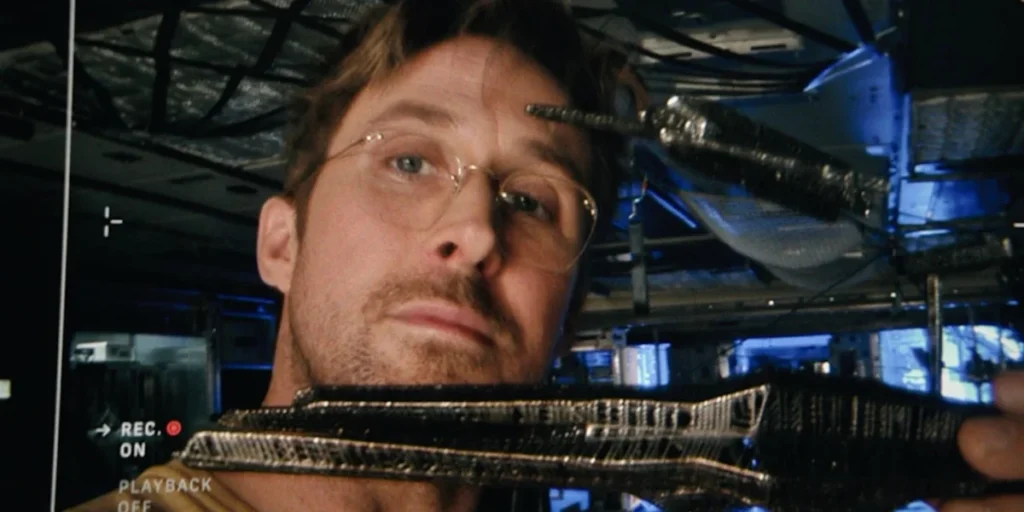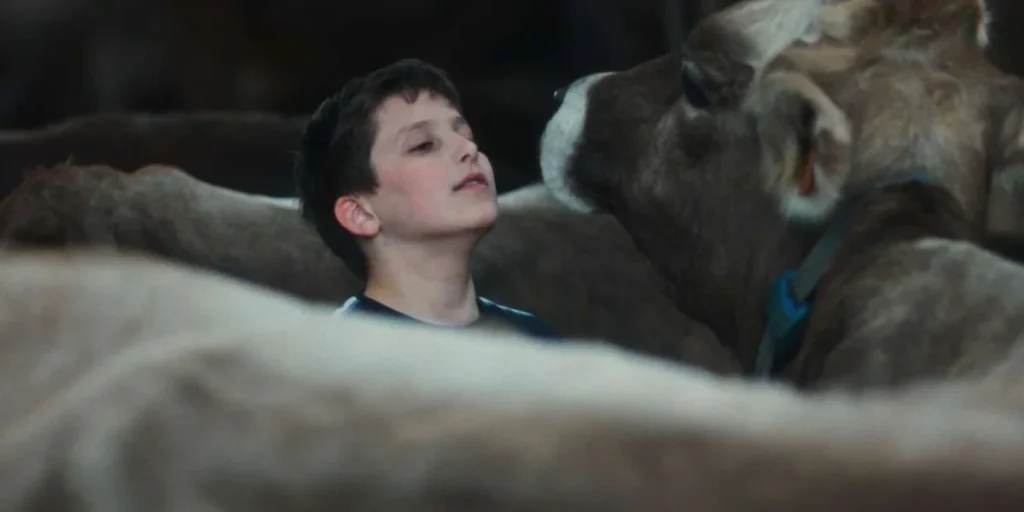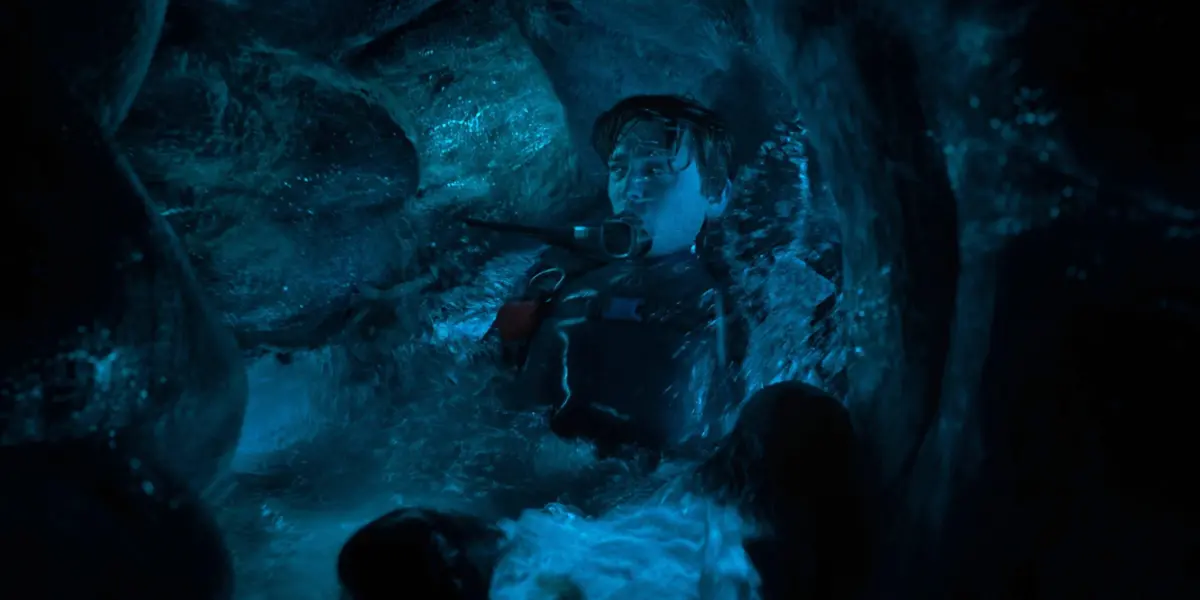
The adaptation of Daniel Kraus’s acclaimed 2023 bestselling novel Whalefall has steadily emerged as one of the most anticipated cinematic survival thrillers of the decade. Directed, co-written, and produced by Brian Duffield, the film centers on an extraordinary and terrifying premise: a young scuba diver who, while searching for the remains of his estranged father deep beneath the ocean surface, is accidentally swallowed alive by a massive sperm whale, leaving him with a critically narrow window to orchestrate his escape. Ahead of its official theatrical release by 20th Century Studios on October 16th, director Brian Duffield sat down for an exclusive discussion to unpack the monumental technical, narrative, and logistical hurdles involved in bringing such a singular, claustrophobic story to cinematic life.
Behind the Lens: The Creative Force of Brian Duffield
Brian Duffield has steadily built a reputation as one of Hollywood’s most inventive and daring genre filmmakers. Known for his work on unique, high-concept projects such as Spontaneous and No One Will Save You, Duffield possesses a distinct talent for blending intense physical survival with deeply emotional character studies. In adapting Whalefall, Duffield faced a challenge rarely seen in contemporary filmmaking: translating a narrative that takes place almost entirely within the pitch-black, acidic confines of a marine mammal’s stomach into a visually arresting and emotionally resonant feature film.
Rather than relying entirely on conventional green-screen environments, Duffield and his production team prioritized a tactile, immersive approach to filmmaking. Early critical responses have already begun to praise the film’s meticulous craftsmanship, specifically singling out its claustrophobic production design, richly layered soundscape, and seamless visual effects that ground the fantastical premise in a terrifyingly visceral reality.
An All-Star Cast Grounding High-Concept Survival
While the core of Whalefall functions as an intense, single-character survival scenario, the film boasts a powerhouse ensemble cast that elevates the narrative’s emotional stakes. Rising star Austin Abrams leads the film as the desperate scuba diver fighting for his life against insurmountable odds. Abrams, known for his compelling performances in Euphoria and Dash & Lily, delivers a physically and emotionally demanding lead performance that anchors the film’s tense narrative arc.
Veterans and acclaimed contemporaries round out the supporting cast. Academy Award-nominee Josh Brolin stars as the protagonist’s father, whose elusive remains spark the fatal dive. The production also features standout performances from Elisabeth Shue, John Ortiz, Jane Levy, and Emily Rudd. Through flashbacks and emotional echoes, the dynamic between Abrams and Brolin establishes the profound father-son reconciliation that serves as the heartbeat beneath the relentless physical peril.
Translating Daniel Kraus’s Bestselling Novel to Film
Daniel Kraus is no stranger to high-concept speculative storytelling, having co-authored the story that inspired Guillermo del Toro’s Academy Award-winning film The Shape of Water, as well as writing Trollhunters and The Living Dead. Upon its publication in the summer of 2023, Whalefall captured the imagination of readers and critics alike due to its exhaustive scientific accuracy, meticulous research into marine biology, and relentless pacing.
Adapting a novel where the protagonist is trapped inside a sperm whale presented an unprecedented screenwriting challenge. Duffield, collaborating on the script, had to balance the technical realities of deep-sea diving, cetacean biology, and human physiology with a narrative that had to remain engaging for a feature-length runtime. The resulting screenplay preserves the gripping urgency of Kraus’s original text while streamlining the narrative focus to maximize cinematic tension.

Technical Hurdles and Production Innovation
In his comprehensive interview with the Next Best Picture Podcast, Brian Duffield elaborated extensively on the grueling technical hurdles overcome by his crew. Simulating the interior of a sperm whale required a hybrid approach utilizing practical, tactile set designs augmented by cutting-edge visual effects. Sound design played an equally vital role in establishing the oppressive atmosphere; the auditory landscape relies on low-frequency rumbles, echoing liquid dynamics, and organic shifting sounds to make the creature feel genuinely alive and dangerously responsive to the protagonist’s movements.
The production design team had to construct sets that evoked the organic texture, shifting pressures, and hazardous environment of a marine stomach without losing spatial clarity for the camera operators. These innovations mirror the immersive techniques Duffield previously experimented with in his wordless alien-invasion thriller No One Will Save You, pushing the boundaries of how modern sound and visual effects can be marshaled to trap an audience alongside the protagonist.
Theatrical Distribution Strategy by 20th Century Studios
20th Century Studios has slated Whalefall for a major theatrical release on October 16th, signaling strong studio confidence in the film’s commercial and critical prospects. In an era where mid-budget original thrillers frequently find themselves relegated to streaming platforms, 20th Century Studios’ commitment to a wide theatrical window underscores the film’s cinematic scope.
Industry analysts have noted that Whalefall arrives at a time when audiences are increasingly eager for original, high-concept theatrical experiences that offer genuine thrills and spectacle outside of established superhero franchises. By positioning the film for an autumn theatrical bow, the studio aims to capture both general audiences looking for gripping genre entertainment and awards-season prognosticators tracking technical categories such as sound design, visual effects, and production design.
Broader Industry Implications and Critical Reception
The early positive reception of Whalefall points toward a broader industry trend valuing innovative genre filmmaking backed by rigorous practical craftsmanship. As studios search for fresh intellectual property beyond traditional comic book adaptations, literary works like Daniel Kraus’s novel offer a rich testing ground for visionary directors like Duffield.
Furthermore, the technical triumphs achieved during the production of Whalefall are expected to influence how filmmakers approach confined-space storytelling in the future. By proving that an entire feature film can sustain momentum, psychological depth, and visual variety within such an unorthodox setting, Duffield and his creative team have established a new benchmark for survival cinema.
Audiences and industry professionals alike can watch or listen to Brian Duffield’s complete, in-depth discussion regarding the technical challenges of Whalefall through the embedded media player provided in the original interview coverage. As the October 16th theatrical release date approaches, anticipation continues to build for what promises to be one of the most uniquely terrifying and technically accomplished cinematic journeys of the year.