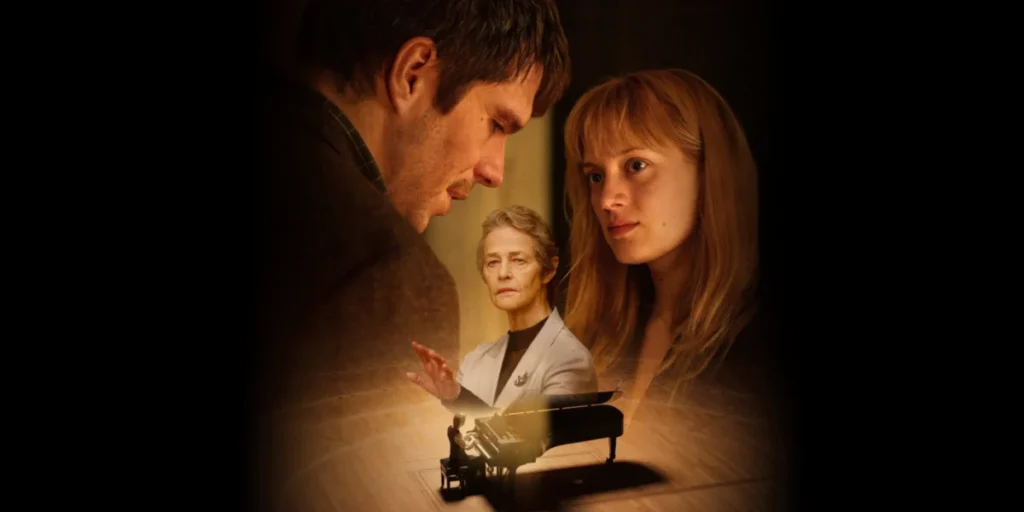
The enduring literary legacy of Jane Austen continues to captivate contemporary audiences as Focus Features officially releases its high-profile period romantic drama, Sense and Sensibility, in theaters nationwide. Directed by acclaimed filmmaker Georgia Oakley and adapted for the screen by screenwriter Diana Reid, this 2026 cinematic interpretation breathes new life into Austen’s beloved 1811 novel. The narrative chronicles the profound trials of love, societal expectations, and heartbreak experienced by the Dashwood sisters. Following the sudden death of their family patriarch and the subsequent loss of their ancestral estate, Mrs. Dashwood and her three daughters are forced to relocate from a life of relative privilege to a modest, humble cottage, setting into motion a journey of emotional resilience and personal discovery.
Boasting an ensemble cast of established international talent, the production features Daisy Edgar-Jones in the pivotal role of the pragmatic and steadfast Elinor Dashwood. She is joined by Esmé Creed-Miles as the passionate and impulsive Marianne Dashwood, and Caitríona Balfe as their grieving yet protective mother, Mrs. Dashwood. The film’s romantic and social entanglements are further brought to life by Frank Dillane as the charming yet elusive John Willoughby, Herbert Nordrum as the noble and brooding Colonel Brandon, George MacKay as the quiet and honorable Edward Ferrars, and veteran actress Fiona Shaw as the irrepressible, match-making Mrs. Jennings.
To mark the theatrical release of the film, principal creative figures and cast members have engaged in extensive promotional and discussion panels. Notably, lead actor Daisy Edgar-Jones sat down with the Next Best Picture Podcast to discuss her intricate approach to embodying Austen’s iconic heroine, the complexities of sibling dynamics, and the broader themes of love and sisterhood that anchor the story. Concurrently, director Georgia Oakley participated in an in-depth interview with critic Nadia Dalimonte, exploring the meticulous artistic choices involved in translating a nineteenth-century classic for a modern audience while preserving the sharp social satire and emotional authenticity that define Austen’s original work.
Chronology and Development of the Production
The journey of bringing this specific adaptation of Sense and Sensibility to the silver screen spans several years of careful planning, script refinement, and casting coordination. While Jane Austen’s work has seen numerous adaptations across television, film, and theater over the past century—most notably Ang Lee’s Academy Award-winning 1995 film version starring Emma Thompson and Kate Winslet—the creative team behind the 2026 project sought to establish a distinct contemporary resonance.
Development commenced when Focus Features optioned the rights for a fresh cinematic treatment. Screenwriter Diana Reid was tasked with distilling the intricate social structures of Regency-era England into a streamlined narrative that emphasizes female autonomy and familial solidarity. Director Georgia Oakley, celebrated for her perceptive character studies and nuanced visual storytelling, joined the project to helm the production. Oakley’s vision centered on stripping away the overly sanitized, picturesque tropes often associated with period dramas in favor of a raw, emotionally grounded exploration of financial precarity, grief, and the vulnerability of women navigating a patriarchal inheritance system.
Casting announcements followed in stages, generating significant anticipation among cinephiles and literary enthusiasts alike. The selection of Daisy Edgar-Jones and Esmé Creed-Miles as the Dashwood sisters was lauded by industry analysts for pairing two of the most dynamic young actors of their generation. Principal photography took place across historic estates and preserved rural landscapes in the United Kingdom, utilizing authentic period-accurate set designs and costume fabrication to establish the stark visual contrast between the grandeur of the Dashwoods’ former estate and the rustic simplicity of Barton Cottage.
Supporting Data and Literary Context
Published anonymously in 1811 under the simple attribution "by a Lady," Sense and Sensibility was Jane Austen’s first published novel. It established her literary reputation and set a template for the comedy of manners that would define her subsequent works, including Pride and Prejudice, Emma, and Persuasion. The central conflict of the novel hinges on the English legal concept of primogeniture, wherein estates were legally bound to pass down exclusively through the male lineage, leaving widowed mothers and daughters vulnerable to poverty upon the death of the male breadwinner.
In the context of the 2026 cinematic adaptation, the production team utilized contemporary demographic and cultural insights regarding period pieces. Market research within the film industry indicates a persistent and growing appetite for high-end literary adaptations, particularly those that foreground feminist perspectives and emotional introspection. By anchoring the narrative in the visceral realities of economic displacement—themes that retain a striking modern parallel—the filmmakers positioned the project to appeal not only to traditional Austen enthusiasts but also to younger demographics discovering the material for the first time.

The film’s theatrical distribution by Focus Features represents a calculated strategy to capture both specialty box office audiences and broader arthouse crowds. Period dramas of this scale typically rely on a phased rollout, beginning in major metropolitan markets before expanding wider, supported by critical word-of-mouth and extensive press engagements, such as the aforementioned podcast features and director spotlights.
Official Responses and Creative Insights
During their respective promotional appearances, both Daisy Edgar-Jones and Georgia Oakley elaborated on the thematic weight and collaborative spirit that defined the making of the film. Edgar-Jones emphasized the enduring relevance of Elinor Dashwood’s internal conflict, noting that the character’s suppression of her own grief for the sake of her family is a universal experience that transcends centuries.
"Elinor carries an immense burden of responsibility," Edgar-Jones stated during her interview discussion. "What fascinated me about exploring her character alongside Georgia [Oakley] was finding the moments where that armor cracks. It’s not just a polite historical romance; it’s a story about survival, profound heartbreak, and the unbreakable bond between sisters who are trying to anchor each other in a world that has suddenly pulled the rug out from under them."
Director Georgia Oakley, speaking with Nadia Dalimonte, focused on the aesthetic and narrative challenges of revisiting a text with such a storied cinematic history. Oakley stressed the importance of honoring Austen’s biting wit while ensuring the emotional stakes felt urgent and authentic to a twenty-first-century sensibility.
"We didn’t want to simply replicate what has been done before," Oakley remarked. "Jane Austen was a revolutionary social satirist disguised as a romance novelist. Her observations on class, gender, economic survival, and the hypocrisy of polite society are remarkably sharp. Our goal was to bring the audience right into the skin of these characters—to let them feel the cold of that cottage, the humiliation of financial dependency, and the dizzying, terrifying nature of falling in love when you have everything to lose."
Broader Impact and Industry Implications
The release of Sense and Sensibility arrives at a pivotal juncture for the theatrical landscape, where mid-budget studio films, particularly adult-skewing dramas and literary adaptations, face intense competition from franchise blockbusters and streaming platforms. Focus Features’ commitment to a theatrical-first window underscores a continuing belief in the viability of prestige cinema on the big screen.
Industry analysts are closely monitoring the box office performance and critical reception of Oakley’s adaptation to gauge the ongoing commercial viability of the Regency-era drama genre. Early indicators suggest strong engagement, bolstered by high-profile cast recognition and robust digital marketing campaigns that leverage cultural commentary podcasts and long-form creator interviews to drive awareness.
Furthermore, the film contributes to a broader cultural conversation regarding the reinterpretation of classical texts through contemporary creative lenses. By empowering female filmmakers and writers to interrogate historical power structures, productions like Sense and Sensibility redefine the boundaries of the period genre, proving that centuries-old narratives can continue to offer vital, resonant reflections on human nature, emotional endurance, and the complexities of human connection. As the film continues its theatrical run, its ultimate legacy will likely be measured not only by its box office receipts, but by its success in introducing a foundational literary masterpiece to an entirely new generation of filmgoers.