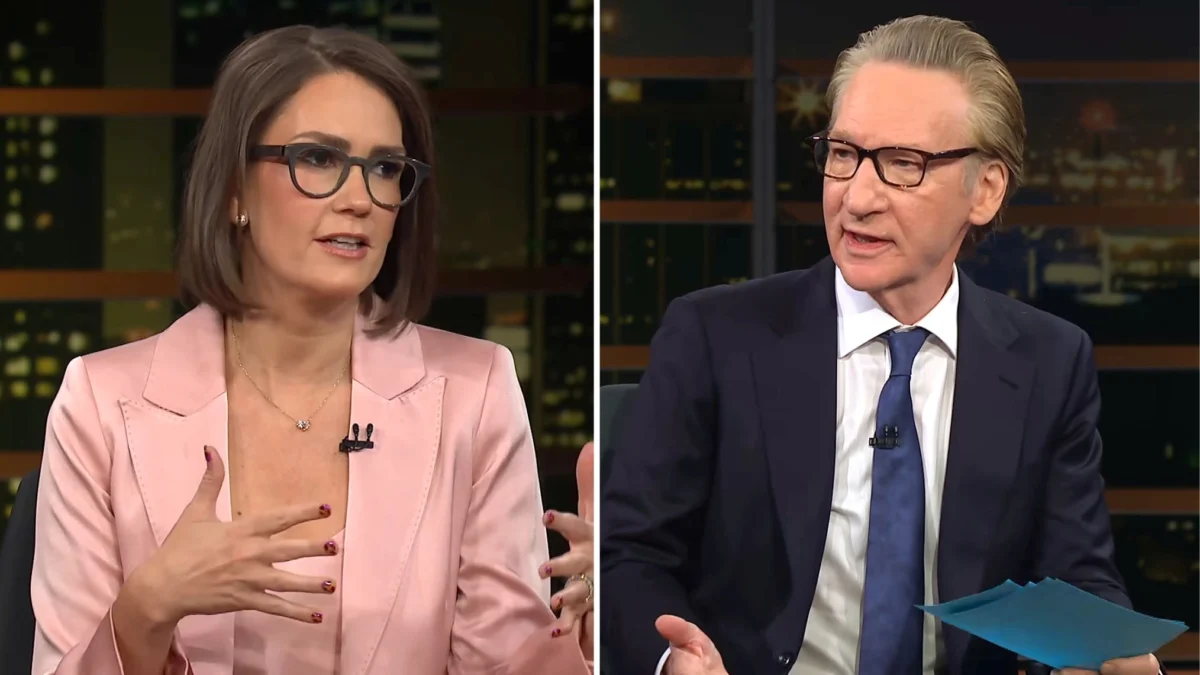
The political landscape remains intensely polarized as the 2026 midterm election cycle approaches, a reality underscored during the September 18, 2026, broadcast of HBO’s Real Time with Bill Maher. During a segment discussing voter sentiment and the current political climate, Fox News contributor and political analyst Jessica Tarlov offered a striking defense of the Democratic Party, directly challenging host Bill Maher’s assessment of which political faction currently maintains the “less crazy” mantle in the eyes of the American electorate.
The exchange began as Maher, a long-time critic of both parties but a frequent commentator on the excesses of the modern progressive movement, analyzed the current standing of President Donald Trump. Maher argued that recent electoral trends have been driven by a perception that Democrats are out of touch regarding social issues, while simultaneously noting that Trump’s own political brand is frequently characterized by volatility. Maher’s premise suggested that while the economy was once a pillar of strength for the Trump platform, the shifting economic data has complicated that narrative.
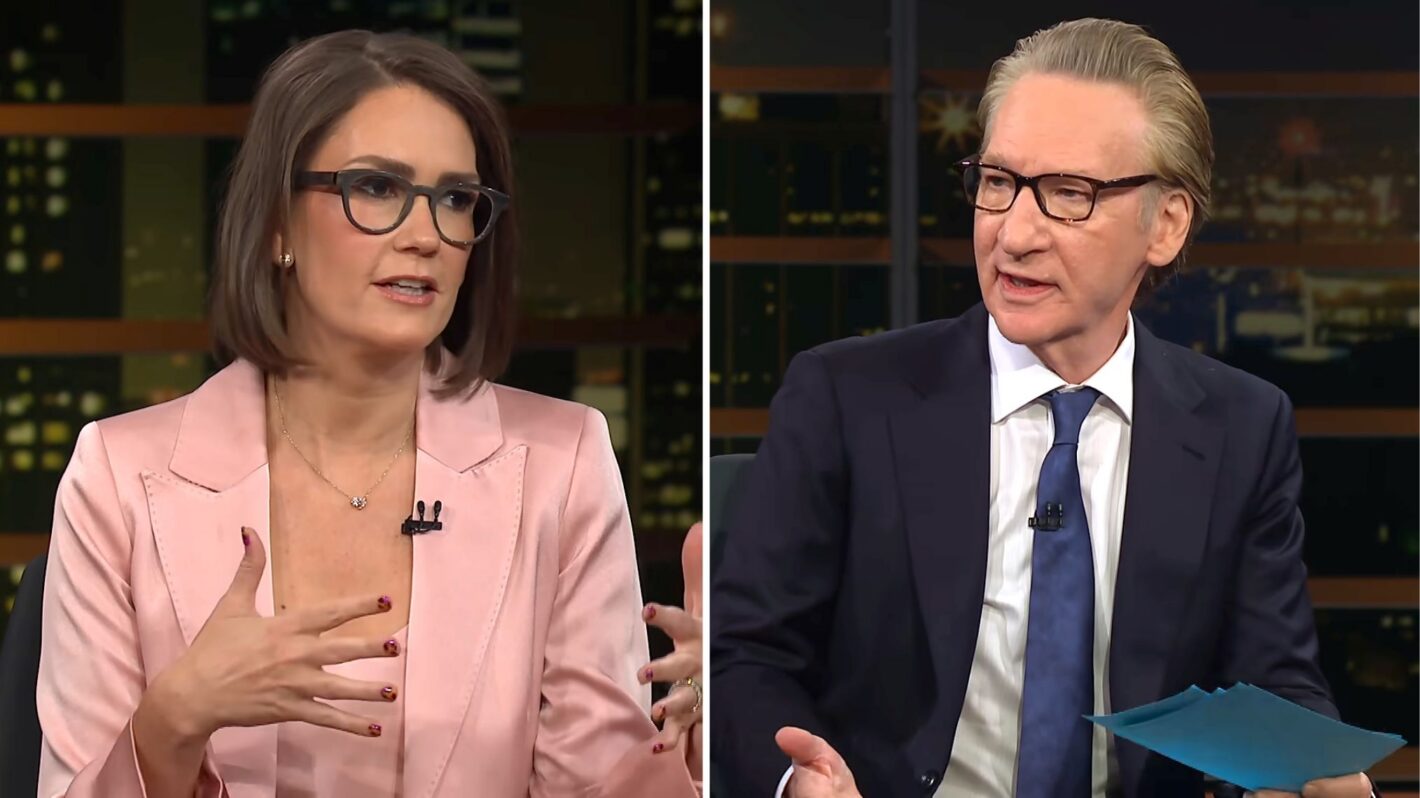
When Maher posed the rhetorical question regarding the perceived instability within the two major parties, Tarlov interjected with a definitive assertion: “And we’re less crazy.” The comment, which initially caught the host off guard, prompted a moment of genuine incredulity from Maher, who pressed Tarlov to clarify her position. Upon realizing that Tarlov was not employing sarcasm, the host questioned the validity of her stance, leading to a brief but pointed debate about the public presentation of party platforms. Tarlov qualified her argument by suggesting that while internal party dynamics may be complex, the Democratic Party’s public-facing messaging—centered on economic policy and anti-corruption—presents a more grounded alternative to the current GOP trajectory.
The Context of the Debate
This televised moment serves as a microcosm of the broader discourse currently permeating cable news and political talk shows. The divide between the two parties has been deepened by a decade of high-intensity rhetoric, social media amplification, and legislative gridlock. For Tarlov, a consistent liberal voice on Fox News’ The Five, the ability to maintain a distinct ideological identity in a conservative-leaning space is a professional cornerstone.
The appearance on Real Time coincides with the release of her new book, I Disagree: Winning Arguments Without Losing Friends, published by Random House. The work explores the viability of civil discourse in an era where political disagreement often devolves into personal animosity. Tarlov’s central thesis—that a unapologetic liberal perspective can and should exist within conservative media environments—is an attempt to bridge the widening gap in the American "echo chamber" phenomenon.
Historical Friction and Public Reactions
The tension between media figures and political leaders has reached new heights in the current cycle. Tarlov herself has been a target of high-profile criticism, most notably from former President Donald Trump. In April 2026, following Tarlov’s analysis of polling data that highlighted declining approval ratings for the former president, Trump took to his platform, Truth Social, to launch a personal attack. Labeling her as “one of the Least Attractive and Talented People on all of Television,” Trump questioned the legitimacy of the data she cited.
Tarlov’s response was immediate and focused on the empirical nature of her reporting. She addressed the incident on social media platform X, reaffirming the accuracy of the statistics and noting that the underlying polling data reflected a genuine dissatisfaction among a segment of the electorate. This incident underscores a recurring theme in modern politics: the delegitimization of data through the personal disparagement of the messenger. For analysts like Tarlov, the challenge remains to maintain a factual baseline while navigating a landscape where political leaders frequently bypass traditional journalistic scrutiny to engage in direct, often hostile, digital communication.
Analysis of Current Voter Sentiment
The “crazy” label mentioned by Maher and Tarlov touches on a significant trend in contemporary political science: the concept of negative partisanship. Studies from the Pew Research Center and Gallup have consistently shown that, for a growing number of voters, political affiliation is defined less by an enthusiastic embrace of a party’s platform and more by an intense opposition to the “other side.”
Data from the third quarter of 2026 suggests that independent voters are increasingly fatigued by the performative nature of both parties. While Republicans have historically held an advantage on economic messaging, recent fluctuations in inflation and employment metrics have created an opening for Democrats to reclaim ground. Conversely, Democrats face a hurdle in convincing suburban and moderate voters that their platform on social and cultural issues is not overly influenced by the party’s most progressive fringes.
When Tarlov argues that Democrats are “less crazy,” she is likely referencing the party’s attempts to pivot toward “kitchen table” issues—specifically inflation, healthcare accessibility, and institutional integrity—as a means of broadening their appeal. However, the efficacy of this strategy is contested. Critics within the Republican Party argue that the Democratic legislative record is fundamentally misaligned with the traditional values of the American middle class.
The Role of Media in Shaping Perception
The platforming of such debates on programs like Real Time with Bill Maher highlights the critical role of legacy media in framing political reality. Maher occupies a unique space, catering to a demographic that is often skeptical of both the establishment GOP and the modern progressive movement. By bringing guests like Tarlov onto the show, the program invites a collision of viewpoints that are rarely reconciled in the polarized cable news sphere.
The reaction to the segment—both online and among political observers—reflects the deeply entrenched nature of partisan identity. Supporters of Tarlov view her willingness to push back against Maher as a necessary defense of the party’s moderate and pragmatic wings. Conversely, her detractors argue that the Democratic Party’s policy record, particularly concerning regulatory expansion and executive overreach, makes her claim of being “less crazy” objectively false.
Implications for the 2026 Midterms
As the nation moves toward the November elections, the rhetoric observed on Friday’s episode of Real Time is expected to intensify. Both parties are currently investing record sums in digital advertising and grassroots organizing, with a heavy emphasis on defining the opposition’s perceived “craziness.”
The strategic imperative for the Democratic Party, as implied by Tarlov’s commentary, is to project stability and economic competence. If the party fails to frame the election around these pillars, it risks allowing the opposition to dominate the narrative with concerns over social issues and government overreach. For the Republican Party, the challenge remains to reconcile the influence of Trump’s populist base with the need to appeal to moderate voters who are uncomfortable with the more extreme elements of the party’s rhetoric.
The interaction between Tarlov and Maher is not merely an isolated moment of television entertainment; it is a symptom of a broader, systemic struggle to define the center of American politics. Whether voters ultimately prioritize economic performance over social concerns remains the fundamental question of the upcoming election. As both parties continue to lean into their respective bases, the middle ground—where arguments are won without losing one’s audience—is becoming increasingly narrow.
In the final assessment, the discourse surrounding “craziness” in American politics reflects a society that is struggling to find a common language for disagreement. As Tarlov’s book argues, the survival of a healthy democracy requires the ability to engage with opposing viewpoints. However, until there is a consensus on the underlying facts—whether they be economic data or the validity of polling—the political divide is likely to remain the defining feature of the American experience through 2026 and beyond.
The exchange between Tarlov and Maher serves as a reminder that even within the most sophisticated media circles, the struggle to reconcile personal conviction with the messy reality of partisan politics continues to be the primary driver of the national conversation. As the electoral clock ticks down, the ability of both parties to present a coherent, stable, and credible vision for the future will determine which narrative ultimately captures the public imagination.