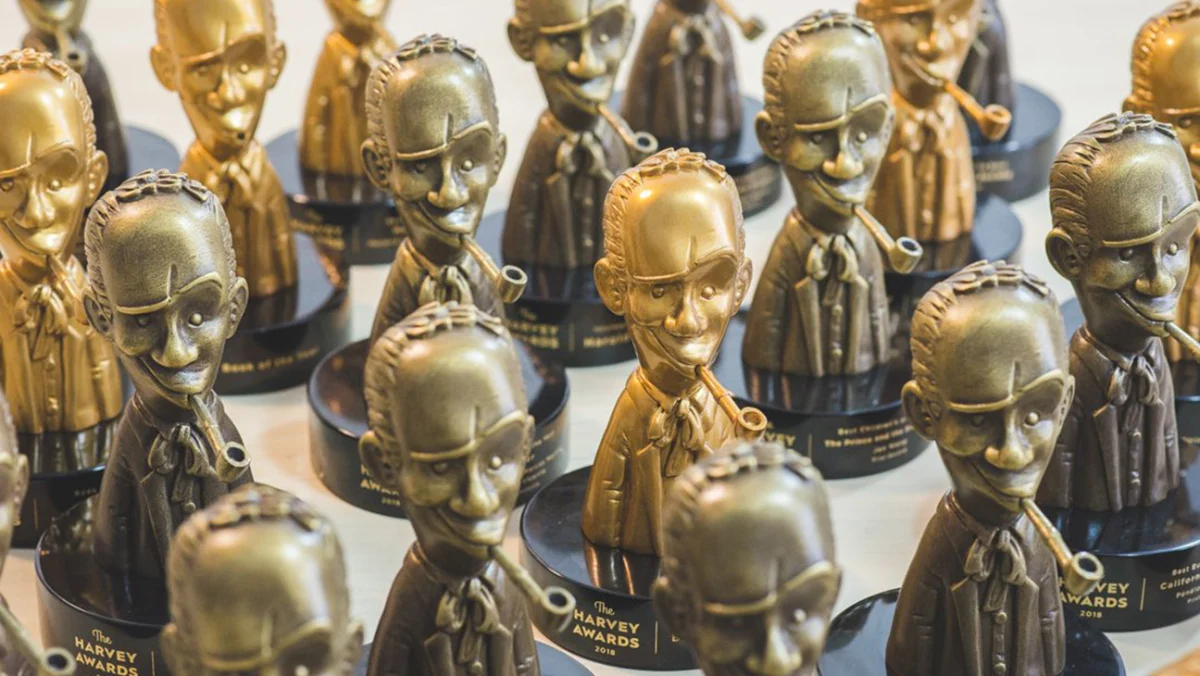
The 38th annual Harvey Awards, one of the most prestigious honors in the American comic book industry, has announced a landmark class for its Hall of Fame induction. This year’s ceremony, scheduled to take place during New York Comic Con on October 9, 2026, serves as a retrospective tribute to the creators who defined the Dark Knight’s mythology. The list of inductees reads like a definitive history of DC Comics, bridging the gap between the character’s Golden Age origins and the gritty, deconstructive narratives of the 1980s that redefined the medium.
The primary inductees include industry titan Frank Miller, alongside his frequent collaborators Klaus Janson, the inker for the seminal The Dark Knight Returns, and artist David Mazzucchelli, who co-created the definitive Batman: Year One. Joining them is Jenette Kahn, the former DC Comics president and publisher whose executive vision in the 1980s provided the creative latitude necessary for these legendary works to exist.
A Legacy in Ink: The Posthumous Honorees
Beyond the living legends being honored, the 2026 Harvey Awards will pay tribute to a group of foundational figures whose contributions to Batman and the broader comic book medium remain unparalleled. The posthumous inductees represent a cross-section of the talent that turned detective fiction into a cultural phenomenon.
The list includes Jerry Robinson, a co-creator of the Joker and Robin, whose early influence established the adversarial dynamic between Batman and his most iconic foe. Also receiving honors is Dick Sprang, the Golden Age artist whose clean, muscular style defined the visual identity of Batman for a generation of readers. Carmine Infantino, the artist behind the 1960s Batman aesthetic and co-creator of Batgirl, joins the ranks alongside Frank Robbins, the writer-artist and co-creator of the Man-Bat.
The later, more experimental era of the 1970s and 80s is represented by legendary writer Denny O’Neil, whose tenure at DC helped shift the character toward a more realistic and grounded detective tone, and inker Dick Giordano, whose meticulous line work defined the look of the Bronze Age. Jim Aparo, the artist whose work on A Death in the Family remains a watershed moment in comic book history, and Marshall Rogers, noted for his run on Detective Comics, are also being recognized. Finally, the committee has included Tim Sale, the artist behind the acclaimed Batman: The Long Halloween, representing the transition into the modern era of prestige-format storytelling.
The 1986 Paradigm Shift
The decision to highlight this specific group of creators in 2026 is rooted in the 40th anniversary of two of the most significant works in comic book history: The Dark Knight Returns and Daredevil: Born Again. Both titles, penned by Frank Miller, are credited with ending the "Silver Age" tone of superhero stories and ushering in an era of adult-oriented, psychologically complex narrative fiction.
Harvey Awards co-chair John Lind noted in a correspondence that honoring these creators as a collective was a deliberate choice. "As 2026 marks the 40th anniversary of these pivotal works, we planned to induct Frank, Klaus, and David into the Hall of Fame together," Lind stated. "These creators have won multiple Harvey Awards throughout the last 38 years, and recognizing their contributions to the industry as a cohesive unit was a natural evolution of our selection process."
The inclusion of Jenette Kahn is perhaps the most significant structural recognition of the event. Under her leadership in the mid-1980s, DC Comics moved away from traditional editorial restrictions, allowing for the publication of works like Watchmen and The Dark Knight Returns. Her role in fostering an environment where creators could push the boundaries of the medium is now being framed as an essential component of the industry’s success during the late 20th century.
Evolution of the Harvey Awards
The Harvey Awards, named after the influential EC Comics writer-editor Harvey Kurtzman, have undergone significant changes since their inception in 1988. Originally intended to provide an industry-standard peer-voted honor, the awards have evolved to mirror the changing landscape of visual storytelling.

Today, the awards focus on seven key categories, including Best YA, Best Manga, and the highly competitive Book of the Year. The inclusion of an adaptation category—which recognizes source material transitioned into film, television, and video games—highlights the reality that the comic book industry is now the primary engine for global entertainment IP.
For the first time in the event’s history, the induction ceremony will be bifurcated. An afternoon panel, accessible to all New York Comic Con badge holders, will serve as an educational deep-dive into the history of these creators. The evening ceremony, an invite-only affair, will maintain the tradition and exclusivity of the industry’s most respected gala.
Historical Context: From "Disreputable" to Distinguished
The rise of the Harvey Awards serves as a benchmark for how the public and the creative community view the comic book medium. Larry O’Neil, son of the late Denny O’Neil, provided a poignant reflection on his father’s career, noting that the profession was once viewed with suspicion by the broader public.
"When my father started writing comic books, it was viewed as a disreputable way to make a living," O’Neil said. "His blue-collar family didn’t approve, but he brought their work ethic to the task. He valued being a professional, whose first job was to make the deadline. He didn’t imagine a future where these works would be recognized in this manner."
This sentiment underscores the broader shift in how society values comic art. In the mid-20th century, comics were considered disposable entertainment. By the 1980s, creators like Miller, O’Neil, and their peers began to fight for creative ownership and artistic legitimacy. Today, that legacy is solidified by the inclusion of these figures in the Harvey Awards Hall of Fame, a move that codifies their work as essential literature.
Implications for the Future of the Medium
The induction of this specific group of creators carries significant implications for the future of comic studies and the industry at large. By grouping living legends with posthumous icons, the Harvey Awards committee is creating a narrative thread that connects the craftsmanship of the past to the commercial viability of the present.
Data from the past decade shows that the comic book industry remains a vital cultural force, with graphic novels consistently appearing on bestseller lists and acting as the primary source material for multi-billion dollar film franchises. However, the Harvey Awards focus remains strictly on the page. By prioritizing the creative work as a whole, the committee continues to distance itself from the cult of celebrity, focusing instead on the collaborative nature of the medium—an aspect that Frank Miller himself emphasized in his statement regarding the induction.
"EC Comics were a huge influence on me, and Harvey Kurtzman was a key contributor to what made those books so fantastic," Miller said. "His use of satire paved the way for entertainment as a whole. It couldn’t be more fitting to be inducted alongside the colleagues who helped me build these stories."
Conclusion
As New York Comic Con prepares to host the 38th Harvey Awards, the industry looks back on four decades of transformation. The 2026 class of the Hall of Fame represents more than just a list of names; it serves as a chronicle of the creative risks, editorial shifts, and individual talents that transformed a niche hobby into a cornerstone of contemporary art. With the guidance of the steering committee—including co-chairs John Lind, Nellie Kurtzman, and Chip Mosher—the Harvey Awards continue to serve as the ultimate arbiter of quality in the field, ensuring that the architects of the Dark Knight’s legacy remain etched in history for decades to come.