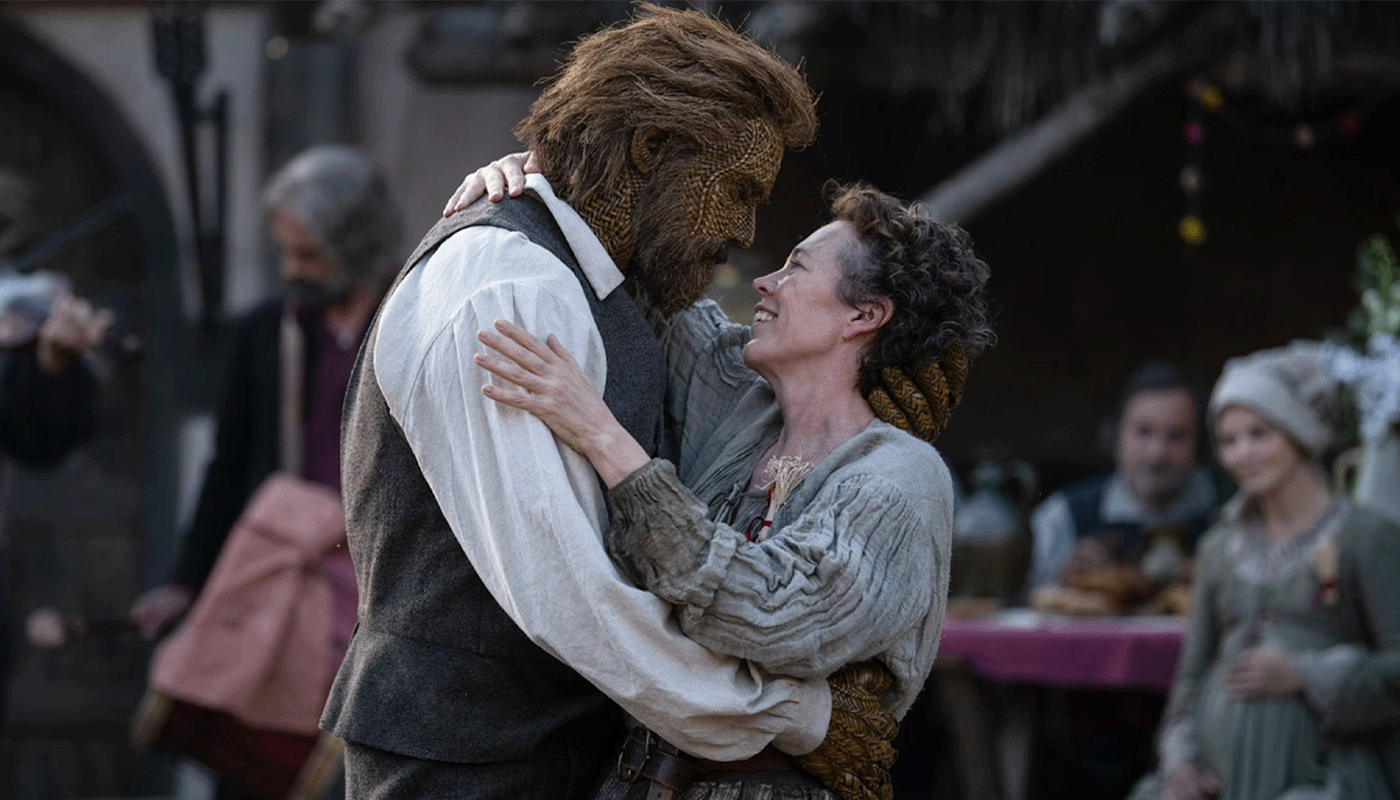
The recent release of the trailer for the upcoming romantic feature Wicker, starring Olivia Colman, Peter Dinklage, and Alexander Skarsgård as a literal wicker man, has sparked widespread online discourse regarding the cinematic normalization of artificially constructed romantic companions. While social media platforms immediately dubbed the project a "sexy Wicker Man movie," the narrative actually subverts horror conventions to explore a fairy-tale romance in which a lonely fisherwoman commissions the construction of an eager-to-please, plant-material partner. This comedic and romantic premise offers a rare cinematic entry point for a concept deeply rooted in centuries of folklore: the golem. Far from the lumbering, unfeeling clay automatons of Jewish tradition, modern media has increasingly embraced the archetype of the sentient, fabricated companion. This evolution reflects changing cultural anxieties surrounding isolation, technological autonomy, and the historic inversion of the traditional Pygmalion narrative.
Historical Origins and Traditional Folklore
In traditional Jewish folklore, particularly within the mystical frameworks of the Kabbalah, a golem is an animated anthropomorphic being fashioned entirely from inanimate matter, traditionally mud or clay. The word itself appears in the Hebrew Bible (Psalm 139:16), denoting an unformed or embryonic mass. Historical accounts of golem creation date back to the early centuries of the Common Era, though the trope gained profound cultural resonance during the Middle Ages and the Renaissance in Central Europe.
The most enduring iteration of this folklore is the legend of the Golem of Prague, attributed to the late-16th-century Rabbi Judah Loew ben Bezalel, known as the Maharal of Prague. According to the oral and written traditions that crystallized centuries later, the rabbi sculpted a guardian from the banks of the Vltava River to protect the Jewish ghetto of Prague from violent anti-Semitic pogroms. Animation was achieved through divine mysticism—specifically by inscribing the Hebrew word emet (truth) upon the creature’s forehead or placing a sacred parchment slip containing the Shem HaMephorash (the Ineffable Name of God) inside its mouth.
Unlike contemporary interpretations, traditional folkloric golems were strictly utilitarian. They possessed no independent free will, spoke little to no language, and functioned solely as literal-minded executors of direct commands. Furthermore, these entities were never designed for companionship. In the Prague legend, once the immediate threat of violence subsided, Rabbi Loew was forced to deactivate the creature by erasing the first letter of emet to spell met (death), returning the automaton to lifeless clay and concealing its remains in the attic of the Altneushul, where it supposedly slumbers until needed again.
Literary Evolution: From Servants to Sentient Beings
Over the past century, speculative fiction and fantasy literature have systematically dismantled the rigid parameters of the traditional golem, imbuing the clay and stone constructs with emotional depth, philosophical inquiry, and autonomy.
A foundational milestone in this literary transformation occurred with Terry Pratchett’s celebrated Discworld series, most notably in the 1996 novel Feet of Clay. Pratchett retained foundational elements of Jewish folklore—such as the animating scrolls and Yiddish naming conventions—while radically reimagining golems as an exploited working-class minority. In Pratchett’s universe, golems are intelligent, highly moral, and capable of theological and professional self-determination. Characters like Dorfl the golem integrate into urban society, joining the Ankh-Morpork City Watch and engaging in sophisticated philosophical debates regarding religion and existence, proving immune to conventional theological arguments simply because their physical composition renders them impervious to divine retribution via lightning.
Similarly, Helene Wecker’s critically acclaimed 2013 historical fantasy novel, The Golem and the Jinni, introduced Chava, a female golem mistakenly created in late-19th-century Poland by an unscrupulous kabbalist who dies at sea. Thrust alone into the bustling immigrant neighborhoods of lower Manhattan, Chava must navigate human society, sensory overload, and existential loneliness. Her central narrative arc revolves around a deep, complex emotional bond with a Levantine jinni named Ahmad. Wecker’s work broke new ground by shifting the golem narrative away from the safety of ghetto protectionism into the psychological realities of an outsider seeking autonomy and genuine connection in a rapidly modernizing world.
The Emergence of the "Golem Romance" Subgenre
In the 21st century, the golem archetype has transitioned from high fantasy into the realm of contemporary romance and romantic comedy, driven largely by women authors exploring themes of agency, perfection, and isolation.
Recent titles exemplify this distinct subgenre. Beth Kander’s 2024 novel, I Made It Out of Clay, blends romance and dark comedy by depicting a woman in her thirties who, driven by social pressure, constructs a handsome golem to serve as her wedding plus-one. Similarly, Jean Meltzer’s Magical Meet-Cute features a protagonist who unwittingly falls in love with a man who appears to have materialized from her late-night pottery studio creations.
These contemporary narratives reflect a broader cultural fascination with manufactured perfection. However, they also share a deep thematic lineage with the ancient Greco-Roman myth of Pygmalion, as recorded in Ovid’s Metamorphoses. In Ovid’s account, the sculptor Pygmalion becomes disillusioned with the women of his city, turns away from human romance, and carves an ivory statue of his ideal woman, Galatea. Consumed by unrequited passion, he prays to Venus, who brings the statue to life to become his wife.
The Gendered Reversal of the Pygmalion Paradigm
While both golem fiction and the Pygmalion myth deal with the artificial creation of a romantic partner, a critical sociological distinction separates the historical tradition from the modern trend. For millennia, the Pygmalion narrative has remained strictly gendered: a male creator fashions an idealized female subject. This dynamic has persisted across centuries of adaptation, from George Bernard Shaw’s play Pygmalion and its musical derivative My Fair Lady, to modern cinematic takes like Ruby Sparks, where a male author edits the personality traits of his fictional dream girl.
In contrast, modern "golem romance"—and cinematic projects like Wicker—frequently invert this power dynamic. Rather than a male creator manufacturing a passive female object, female protagonists in these contemporary stories commission or create male companions out of sheer frustration with societal expectations, transactional marriages, and the limitations of flesh-and-blood suitors. In the case of Colman’s character in Wicker, the creation of a literal wicker husband is an act of defiance against a community that mocks her refusal to enter conventional, restrictive marriages.
This gender inversion also mirrors contemporary anxieties and technological developments, particularly the rise of digital "AI boyfriends" and virtual companions. Just as Pygmalion sought refuge from human disappointment in sculpted ivory, modern consumers increasingly turn to algorithmic or fantastical constructs designed explicitly to meet their emotional and psychological specifications.
Societal Implications and Cultural Analysis
The mainstreaming of the constructed romantic partner touches upon critical contemporary issues, most notably the documented global loneliness epidemic. Sociologists and psychologists note that while fantasy narratives offer harmless escapism, the appeal of a ready-made partner—delivered on demand, devoid of independent historical baggage, and engineered solely to please—highlights a growing cultural anxiety regarding human vulnerability, compromise, and the difficulty of authentic interpersonal relationships.
Conversely, cultural critics argue that these narratives serve a valid cathartic function by democratizing the ancient fantasy of a bespoke companion. By removing the premise from exclusively male authorship and granting the created entities—whether Chava, Dorfl, or Skarsgård’s Wicker Husband—full narrative agency, these stories validate the universal human desire to be understood and valued. Furthermore, the shift allows the "creation" to speak, critique, and actively participate in the romantic dynamic, a voice historically denied to figures like Galatea.
As the entertainment landscape continues to adapt these folkloric motifs for modern audiences, the cultural legacy of the golem endures. Whether viewed as a symptom of modern isolation or a playful reimagining of ancient folklore, the awakening of the cinematic golem suggests that the fundamental human questions regarding love, creation, and companionship remain as potent today as they were in the attics of medieval Prague.