Night Nurse stands as a striking departure from the conventional programming typically showcased at the Sundance Film Festival. Premiering to considerable critical attention within the festival’s NEXT competition, director Georgia Bernstein’s feature-length debut investigates the murkier, more unsettling corners of human connection. Ahead of the film’s widespread theatrical release distributed by IFC, the project has drawn significant discourse for its fearless handling of psychosexual dynamics, tactile framing, and an aesthetic lineage tracing back to the cerebral minimalism of Atom Egoyan and David Cronenberg.
Narrative Premise and Core Conflict
The narrative unfolds within the languid, timeless environment of a memory-care unit inside an unassuming retirement community. Cemre Paksoy stars as Eleni, a newly hired nurse who begins her overnight shifts tending to Douglas, a resident played by Bruce McKenzie who is currently undergoing evaluation for early-onset Alzheimer’s disease. Rather than maintaining professional boundaries, Eleni rapidly becomes entangled in Douglas’s orbit, evolving from his caregiver into a willing accomplice.
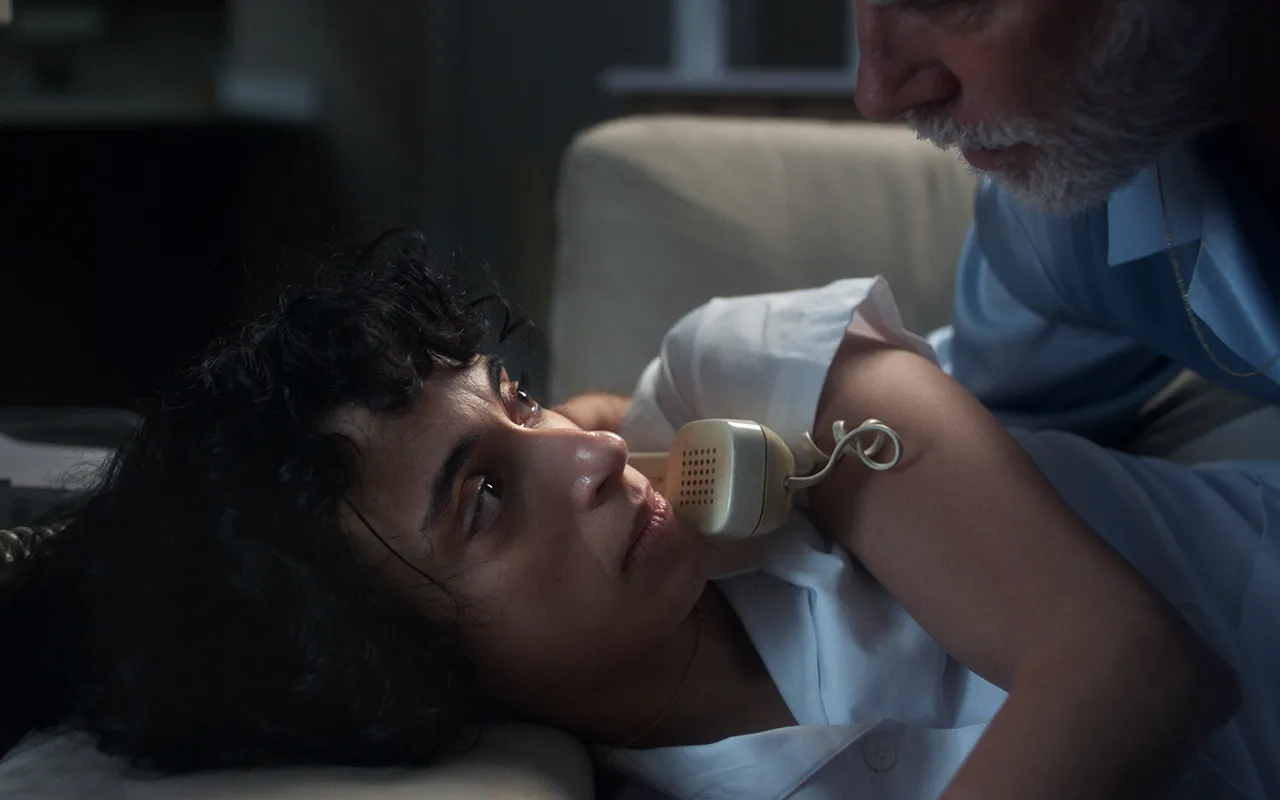
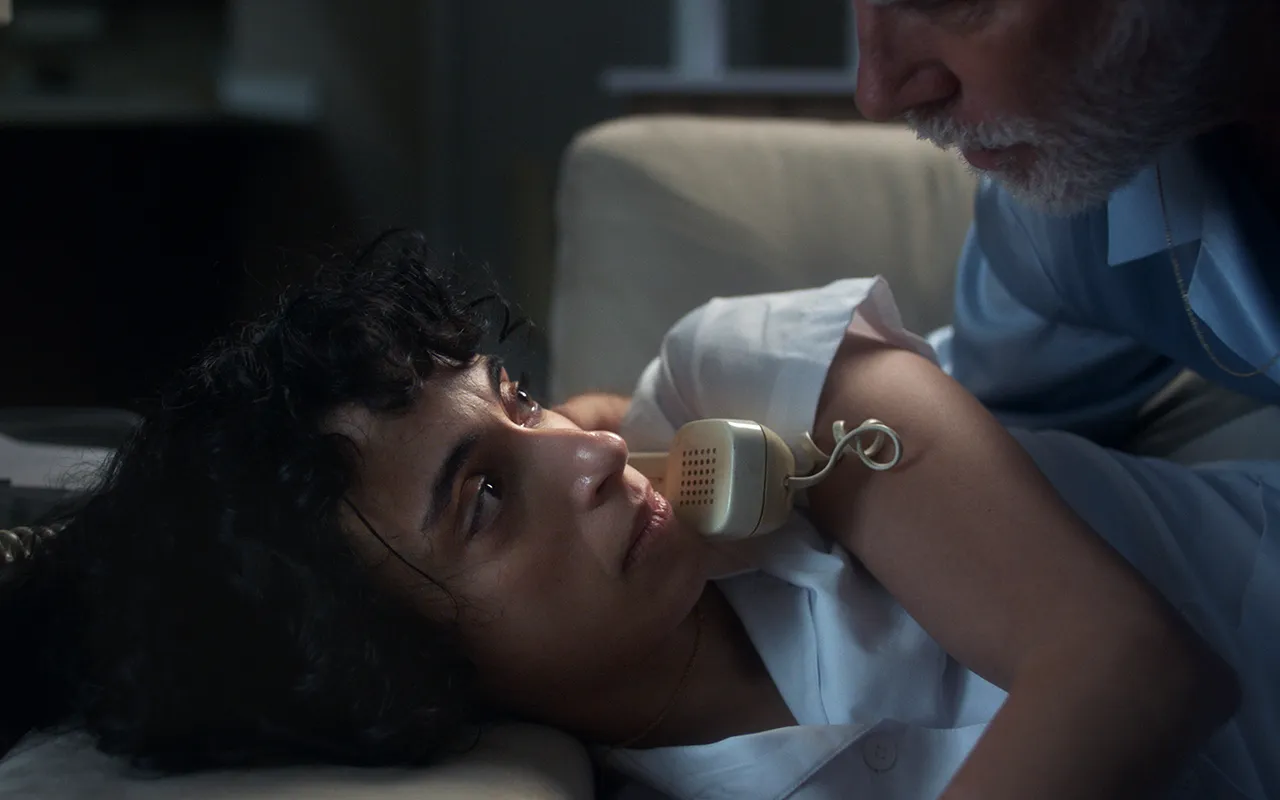
Together, the pair orchestrate a calculated phone scam targeting other elderly individuals, posing as distressed grandchildren urgently needing monetary assistance. Beyond the financial yield, both characters derive a profound sexual and psychological thrill from the confidence game. Bernstein frames these transactions with deliberate pacing. Their initial telephone scam is captured in an unbroken, aching long take that frequently obscures Eleni’s facial reactions, prioritizing the tension between audience desire and character agency. As the scam concludes, Douglas and Eleni become physically intertwined with a telephone cord—a visual metaphor for their entanglement—before a sudden rejection from Douglas disrupts the dynamic: "If you’re looking for a pogo stick, I’m really not your guy."
At the heart of the narrative lies a probing examination of validation and existential need. As a fellow resident, Mona (played by Eléonore Hendricks), remarks to Eleni, "It’s amazing to be needed, isn’t it? It feels good to mean something to somebody." Bernstein traces this emotional dependency past conventional moral logic, interrogating how far human beings will go to feel purposeful, even when manipulated toward destructive and illegal ends. When Eleni experiences moments of ethical hesitation, Mona reassures her regarding their victim: "He was numb to life before today. You gave him purpose. You helped him."
Production Genesis and Collaborative Infrastructure
Night Nurse developed through a deeply collaborative ecosystem anchored in Chicago’s independent film community, reflecting Bernstein’s background as a producer on experimental works such as Alex Phillips’s All Jacked Up and Full of Worms and Anything That Moves.
The financing and pre-production phase took an unconventional route. Following the completion of Anything That Moves, producer Eddie Linker sought a subject for a class he was scheduled to teach at Northwestern University. Selecting Bernstein’s script as the curriculum, Linker, alongside co-producer Veronica Barbosa and Liane Cunje, utilized the classroom environment to execute foundational pre-production tasks. Students were instructed on establishing LLCs, drafting functional budgets, and navigating regional tax credits, effectively transforming a syllabus into a functional production pipeline.
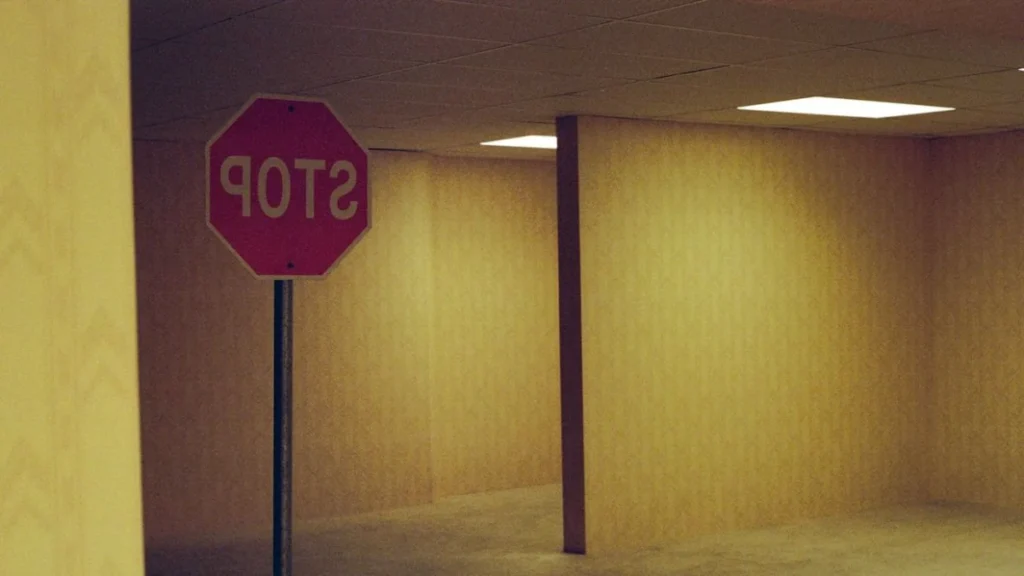
Practical considerations heavily influenced the film’s aesthetic geography. Bernstein chose to shoot the vast majority of the picture inside her grandmother’s residence, deliberately writing scenes to transition organically through specific architectural layouts, from the main living spaces to the enclosed atrium. This choice imbued the script with a pervasive sense of temporal displacement. The house features 1970s-era wallpaper left intact since its initial installation, juxtaposed against outdated landline telephones and intentionally absent of modern smartphones, creating a disorienting atmosphere where the exact era remains intentionally ambiguous.
Aesthetic Influences and Technical Execution
Critics and cinephiles have drawn comparisons between Night Nurse and the chilly, detached urban alienation of David Cronenberg’s Crash, as well as the disquieting suburban malaise found in Atom Egoyan’s The Adjuster and Exotica. However, Bernstein cites a broader international filmography, noting shared atmospheric sensibilities with Argentine auteur Lucrecia Martel and German provocateur Rainer Werner Fassbinder.
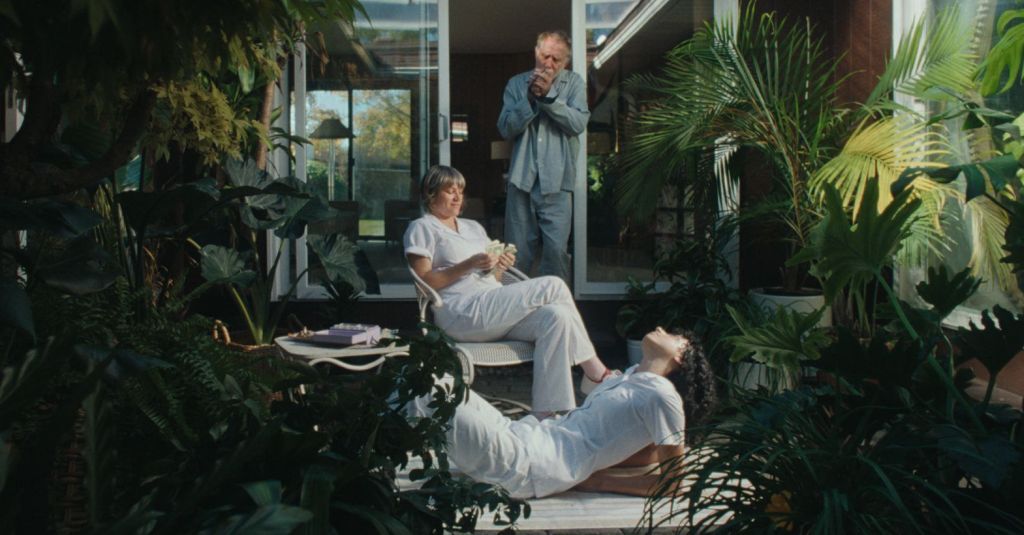
To achieve this specific visual texture, Bernstein recruited cinematographer Lidia Nikonova, known for her work on Lucy Kerr’s Family Portrait. The two directors share a distinct thematic and spatial kinship, favoring humid, slow-moving atmospheres that alter the psychological weight of their environments.
Rather than relying on modern, flexible handheld or Steadicam setups, Nikonova and Bernstein committed to executing nearly the entire film on traditional dolly tracks. The deliberate, heavy movement of the camera—producing a physical thud as it rolls slowly across carpeted floors—lends the proceedings an unhurried, almost dreamlike velocity. This pacing directly influenced the physical performances; Paksoy’s character frequently crawls across carpeted hallways to traverse rooms, reinforcing the notion of boundaries dissolving between characters.
Casting decisions further anchored the production in a curated network of collaborators. While Bruce McKenzie was brought through a formal casting process to embody a classic, older archetype reminiscent of mid-century cinema, nearly every other role was written specifically for the performers who ultimately inhabited them. Eléonore Hendricks and performance artist Colleen Rose Trundy were integrated directly from Bernstein’s creative circle.

The aural landscape was entrusted to composers Steven B. Jackson and Samm Clapp, who previously scored Bernstein’s produced features. Eschewing modern digital scoring conventions in favor of a more classical approach, Jackson and Clapp brought in instrumentalists to record live-to-picture, featuring prominent arrangements centered around the piano and flute. Heavily influenced by David Shire’s iconic score for Francis Ford Coppola’s The Conversation, the music establishes a recurring, hypnotic theme that mirrors the narrative’s central metaphor: characters trapped spinning in endless circles around a communal pool, unable or unwilling to find an exit.
Critical Implications and Distribution Outlook
As Night Nurse prepares for its wide theatrical rollout via IFC, industry analysts are positioning the film as a vital benchmark for contemporary American independent cinema. By refusing to offer moral absolutes or neat resolutions regarding the exploitation of vulnerable populations, Bernstein intentionally courts viewer discomfort.
The film subverts the traditional power dynamics typically observed in narratives pairing a younger woman with an older man, popularized by filmmakers like Catherine Breillat. By introducing questions of cognitive decline, institutional isolation, and shared complicity, Night Nurse complicates traditional definitions of victimhood and agency. The result is a work that challenges audience sympathies, positioning caregiving not as an act of pure altruism, but as a complex theater of mutual psychological extraction.