Taiwanese cinema has consistently distinguished itself by seamlessly integrating rich folk beliefs and deeply rooted local traditions into popular genre filmmaking, a practice "Kiss Me My Ghost Friend" continues with notable warmth and authenticity. Director Chen Ta-pu’s 2026 fantasy comedy, a compelling blend of supernatural romance and comedic charm, made its highly anticipated North American premiere at the prestigious New York Asian Film Festival (NYAFF), where it quickly garnered acclaim as one of the lineup’s most enchanting inclusions. The film’s arrival at such a prominent international platform underscores its potential to captivate a broad audience while showcasing the unique cultural tapestry of Taiwan.
Chen Ta-pu, previously honored with the Best Cinematography award at the Taipei Film Festival for his work on "We Are Champions," demonstrates a nuanced evolution in his artistic vision with this latest endeavor. He meticulously crafts a narrative that not only explores the intricacies of a supernatural romance but also ingeniously weaves in elements of gezaixi, the distinctively Taiwanese opera form, and draws inspiration from the enduring classic tale of Wang Baochuan. This deliberate fusion of traditional performing arts with contemporary storytelling ensures the film resonates deeply with cultural significance while delivering accessible entertainment. The directorial decision to ground the fantastical elements in such rich cultural heritage contributes significantly to the film’s unique identity and its widespread appeal, successfully fulfilling its ambition to please a diverse viewership.
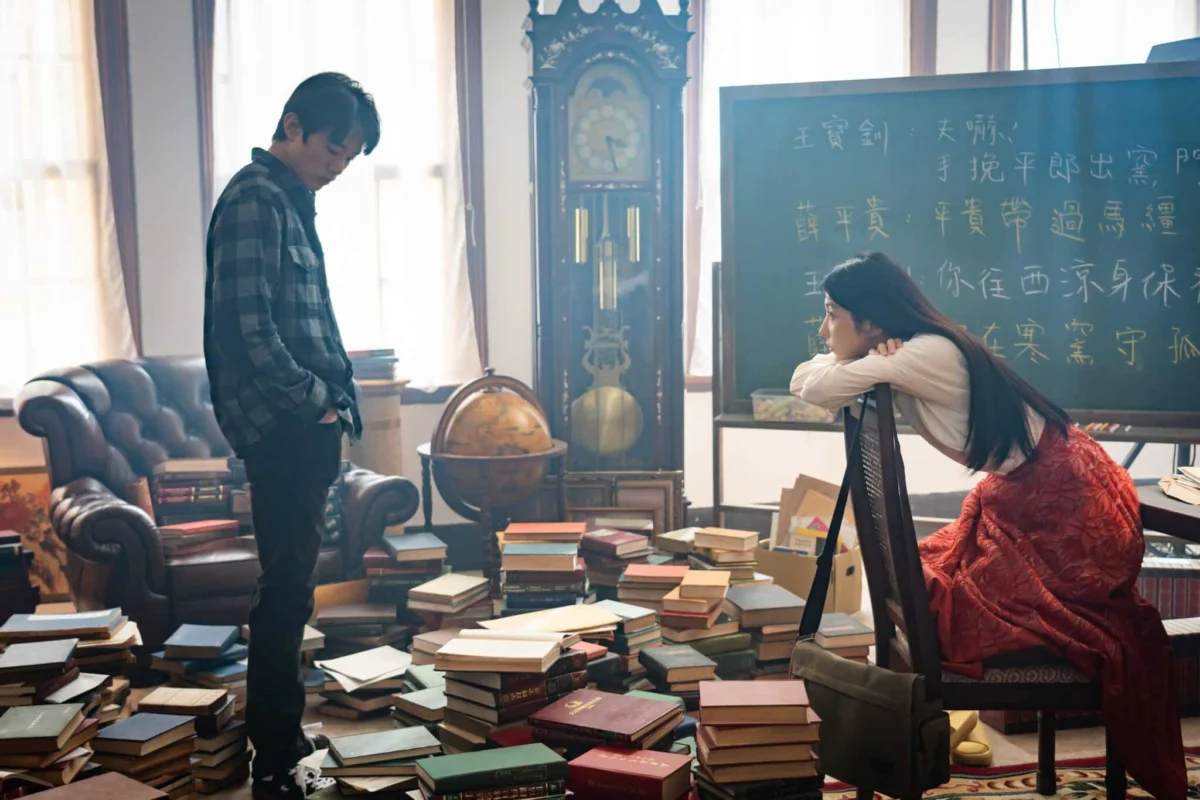
"Kiss Me My Ghost Friend" unfolds its whimsical premise by introducing a young, struggling theatre director. Plagued by mounting debt after his theatrical troupe collapses and his girlfriend departs, he finds himself at a crossroads. Driven by the pragmatic counsel of his uncle, he reluctantly returns to his family’s long-shuttered and reputedly haunted playhouse. His mission: to stage "Pao-chuan," an opera his father abruptly abandoned years prior, with the desperate hope that a new backer’s investment will alleviate his financial woes. The spectral rumors surrounding the old theatre are quickly validated. Caisi, a quick-witted and enigmatic assistant who mysteriously materializes at his side, is, in fact, the ghost of the theatre’s former leading lady. A supremely gifted opera performer, Caisi tragically died on that very stage eighteen years earlier and has remained tethered to it, patiently awaiting her final, triumphant bow. From this delightful and poignant setup, the film embarks on a journey that explores profound themes of second chances, the lingering weight of unfinished farewells, and the improbable, yet deeply affecting, partnership that blossoms between the living and the dead.
Chen Ta-pu’s direction imbues the film with a pervasive breezy and youthful energy, ensuring its accessibility and engaging tone throughout. The narrative masterfully balances the chaotic, often humorous, realities of backstage life with gentle, spectral mischief, maintaining a brisk and engaging pace. While subtle touches of light horror are strategically employed to keep the stakes alive and add a layer of tension, the director judiciously avoids any gratuitous gore or genuinely terrifying sequences, consciously preserving a predominantly feel-good atmosphere. The narrative structure, while following conventional genre lines, embraces a familiar trajectory. The revelation concerning Caisi’s unfinished business, though largely predictable for audiences accustomed to supernatural romance tropes, is handled with grace. Rather than allowing this predictability to deflate the drama, Chen skillfully leans into the emotional resonance of the situation, prioritizing heartfelt sentiment over cheap shock tactics. This approach elevates the film beyond a simple ghost story, transforming it into a touching exploration of human (and spectral) connection.
One of the film’s most ingenious narrative strokes is the parallel drawn between its spectral heroine, Caisi, and Wang Baochuan, the protagonist of the opera being staged. In the traditional tale, Wang Baochuan endures eighteen years of dutiful waiting for her husband, who has, unbeknownst to her, taken another wife. Caisi, however, staunchly refuses to perform the opera’s traditional ending, one that glorifies passive waiting. Instead, she insists that the troupe rewrite the finale, a bold choice that transforms a familiar ghost story into a quiet, yet powerful, argument about a woman’s reclamation of her own narrative and agency. This narrative subversion culminates in a finale that is profoundly touching rather than manipulative, leaving a lasting impression on the audience and underscoring the film’s deeper thematic ambitions.
The strength of "Kiss Me My Ghost Friend" is significantly bolstered by its ensemble performances, which anchor the fantastical elements with genuine emotion. Ivy Shao delivers a truly standout performance as Caisi, skillfully balancing sharp comic sparring with the poignant ache of a woman denied her rightful ending. Her portrayal is particularly commendable for her convincing execution of the demanding gezaixi movement and song, demonstrating a deep commitment to the role’s cultural requirements. Chu Meng-hsuan grounds the film’s fantasy as the young director, portraying a privileged man determined to forge his own path without relying on his wealthy family, bringing a relatable ambition to the character. Cheng Jen-shuo appears in flashbacks as the father whose past actions inadvertently sealed Caisi’s fate, adding layers to the historical context of the playhouse. Megan Lai rounds out the talented cast, contributing to the ensemble chaos with the loose, restless spirit characteristic of theatre people. Together, the actors adeptly convey both the humor and the sentiment, a considerable achievement given the material’s potential to easily veer into either broad farce or excessive mawkishness. Their collective performance ensures the film maintains its delicate balance of genres and tones.
The Enduring Legacy of Taiwanese Cinema and Gezaixi
Taiwanese cinema has cultivated a rich and distinct identity, characterized by its profound engagement with local culture, history, and spiritual beliefs. For decades, filmmakers from the island nation have masterfully interwoven elements of folk religion, traditional mythology, and social commentary into diverse genres, from poignant dramas to supernatural thrillers and comedies. This approach not only provides unique narratives but also serves as a vibrant cultural ambassador, introducing global audiences to Taiwan’s rich heritage. Films like Hou Hsiao-Hsien’s historical epics, Edward Yang’s urban narratives, and Tsai Ming-liang’s minimalist explorations have all, in their unique ways, reflected facets of Taiwanese life and identity. In this lineage, "Kiss Me My Ghost Friend" stands as a contemporary example of how traditional elements, specifically gezaixi, can be revitalized and presented in an accessible, modern context. The film contributes to a long-standing tradition of genre bending, where the fantastical often serves as a lens through which to explore very human emotions and societal reflections.
Gezaixi, or Taiwanese opera, is an indigenous form of opera unique to Taiwan, originating from street performances and folk storytelling in the late 19th and early 20th centuries. It combines traditional Chinese opera elements with local Hokkien dialect, incorporating singing, spoken dialogue, elaborate costumes, stylized movements, and often acrobatics. Unlike more formal opera traditions, gezaixi is known for its accessibility, often featuring improvised dialogue and a more direct engagement with its audience. It has historically served as a vital form of popular entertainment and cultural expression, narrating tales of heroism, romance, and moral dilemmas. However, like many traditional art forms, gezaixi has faced challenges in maintaining its relevance in the modern era, competing with contemporary entertainment. "Kiss Me My Ghost Friend" plays a significant role in its contemporary revival, showcasing its beauty and dramatic potential to a new generation and international audience. By making gezaixi central to its plot and character development, the film not only celebrates this unique art form but also highlights its enduring power to tell compelling stories and evoke deep emotions. The integration of the classic Wang Baochuan tale, a narrative frequently performed in gezaixi, further anchors the film in this tradition, while Caisi’s desire to rewrite its ending subtly reflects the evolving perspectives within Taiwanese society on tradition and modernity.
A Festival Highlight: The New York Asian Film Festival Premiere
The selection of "Kiss Me My Ghost Friend" for its North American premiere at the New York Asian Film Festival in 2026 is a significant milestone for the film and its creators. NYAFF, established in 2002, has grown to become one of the most prominent showcases for contemporary Asian cinema in the Western Hemisphere. The festival is renowned for its eclectic programming, introducing cutting-edge films, emerging talents, and established masters from across Asia to American audiences. Its mission is to bridge cultural gaps, promote artistic exchange, and provide a platform for diverse Asian voices and narratives that might otherwise not receive international exposure.
For "Kiss Me My Ghost Friend," its inclusion in the NYAFF lineup signifies not only critical recognition but also a crucial gateway to broader international distribution and appreciation. Festival organizers expressed considerable enthusiasm for Chen Ta-pu’s film, highlighting its unique blend of traditional Taiwanese opera and contemporary fantasy as a standout feature of the 2026 edition. A festival spokesperson remarked, "‘Kiss Me My Ghost Friend’ perfectly embodies NYAFF’s mission to showcase the diverse and innovative storytelling emerging from Asia. Its charming narrative, rich cultural context, and heartfelt performances resonated deeply with our programming team, and we are thrilled to introduce this truly special film to our North American audience. It’s a testament to the vibrant creativity of Taiwanese cinema and its ability to connect with universal themes." This statement underscores the film’s artistic merit and its cultural significance in the global cinematic landscape.
The production journey of "Kiss Me My Ghost Friend" began in late 2023, following an extensive period of script development and casting that sought to find actors capable of embodying both the comedic and dramatic nuances of the story, particularly those skilled in gezaixi. Principal photography commenced in early 2024, taking advantage of authentic theatre locations and meticulously designed sets to capture the film’s distinct aesthetic. The post-production phase, including intricate visual effects to bring Caisi’s spectral presence to life and the composition of its evocative score, extended through late 2025. The film’s completion and subsequent selection by NYAFF in early 2026 marked the culmination of this dedicated effort, positioning it for its global debut. This careful chronology of development, production, and premiere reflects a strategic approach to bringing a culturally rich and technically ambitious project to fruition.
Technical Mastery and Broader Implications
The technical craftsmanship evident in "Kiss Me My Ghost Friend" significantly enhances its storytelling. Seven Tsai’s cinematography is particularly noteworthy, imbuing the crumbling playhouse with a "lived-in glow." The camera masterfully transitions between the dusty, melancholic emptiness of the auditorium and the vibrant, kaleidoscopic colors of the opera itself, effectively transforming the building into a character with its own history and emotional resonance. The staging of the gezaixi sequences is handled with evident care and respect, featuring authentic traditional costumes and stylized movements that lend the fantasy a specific, rooted texture. This attention to detail not only enriches the visual experience but also serves as a respectful homage to the traditional art form. The film’s musical score, composed by Jesse Tang and Kuo Li-chi, subtly underlines both the comedic moments and the underlying melancholy, with a recurring piano motif artfully tying together the central bond between the living and the spectral. The consistent quality of the craft throughout the production ensures that even at its most fanciful, the film remains grounded in its distinct cultural and emotional landscape.
The broader implications of "Kiss Me My Ghost Friend" extend beyond its immediate entertainment value. The film contributes to the evolving landscape of fantasy-comedy and supernatural romance genres in Asian cinema, demonstrating how these categories can be infused with unique cultural specificities to create fresh and engaging narratives. Its focus on gezaixi also serves a vital role in cultural preservation, bringing an indigenous Taiwanese art form to a global audience and potentially inspiring renewed interest in its study and performance. By presenting universal themes of grief, ambition, and the struggle to move on through a distinctly Taiwanese lens, the film bridges cultural gaps, proving that compelling storytelling transcends geographical boundaries. It highlights Taiwan’s soft power, showcasing its unique cultural identity and creative output on the international stage. The positive reception at NYAFF also suggests potential for wider distribution, further solidifying Taiwan’s presence in global independent cinema.
In conclusion, "Kiss Me My Ghost Friend" emerges as a highly watchable and profoundly feel-good ghost story, confident in its identity and narrative purpose. Chen Ta-pu has delivered a thoroughly entertaining Taiwanese comedy that expertly balances supernatural hijinks with a surprisingly tender and insightful look at universal themes: the complexities of grief, the relentless pursuit of ambition, and the inherent difficulty of moving forward. While the film may not break entirely new ground in terms of narrative structure, and its plot beats might feel familiar to seasoned genre enthusiasts, its infectious charm, consistent laughs, and deeply heartfelt climax more than compensate. It stands as a testament to the notion that sometimes, the most rewarding collaborations indeed happen between the living and the dead. This cinematic endeavor is compelling proof that a well-worn formula, when handled with genuine heart, cultural reverence, and artistic integrity, can still resonate powerfully with an audience, sending them home not only smiling but also perhaps with a newfound appreciation for the rich traditions it so beautifully honors.