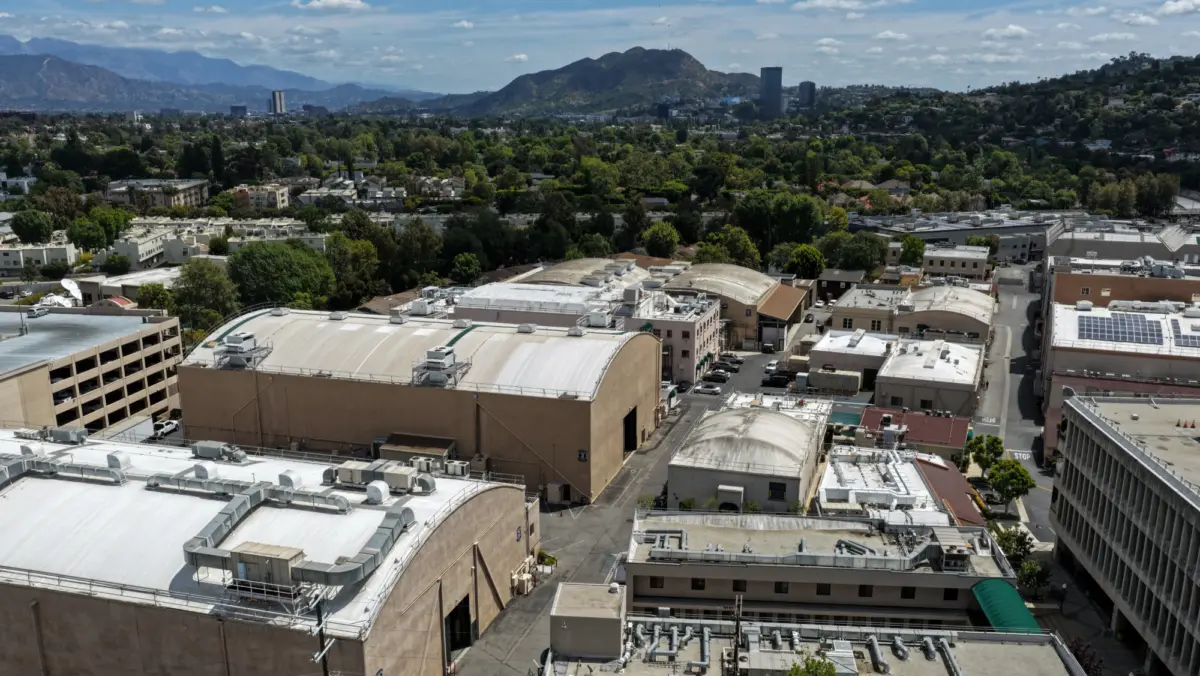
In a landmark transaction that signals a significant transformation of the Los Angeles production landscape, Netflix has reached a definitive agreement to acquire the Radford Studio Center for $380 million. The deal, which secures one of Hollywood’s most storied filming lots, marks a strategic pivot for the streaming giant as it seeks to anchor its long-term physical infrastructure in the heart of the entertainment capital. The acquisition follows a turbulent period for the property, which was recently reclaimed by a Goldman Sachs-led lending group after the previous owner, Hackman Capital Partners, defaulted on its mortgage.
The purchase price—a staggering 80 percent discount from the $1.85 billion valuation Hackman Capital Partners assigned the lot during its acquisition in 2021—serves as a stark indicator of the current volatility within the commercial real estate sector. The dramatic repricing reflects broader economic headwinds, including historically low production levels in California and a cooling market for legacy studio space, as industry players navigate a landscape redefined by the aftermath of labor strikes and the shifting economics of streaming.
A Chronology of a Hollywood Landmark
The Radford Studio Center, formerly known as CBS Studio Center, holds a deep-rooted history in the fabric of television production. Located in Studio City, the 55-acre lot has served as the backdrop for some of the most iconic programs in history, ranging from Gilligan’s Island and Seinfeld to The Mary Tyler Moore Show.
The recent history of the lot began with the high-profile acquisition by Hackman Capital Partners in 2021. At the time, the deal was heralded as a major vote of confidence in the future of L.A.-based filming. However, the subsequent years proved difficult. The convergence of the 2023 WGA and SAG-AFTRA strikes, combined with a general tightening of production budgets by major studios, led to a sharp decline in regional filming activity. As production volume cratered, the financial viability of the massive debt load associated with the 2021 purchase evaporated, resulting in the default that necessitated the intervention of the lender group.
Goldman Sachs, acting as the lead lender, moved to initiate foreclosure proceedings earlier this year. The subsequent auction process provided an opportunity for Netflix to enter the fray, ultimately securing the asset as a means to solidify its footprint in a region where it has historically relied on third-party leasing arrangements.
Strategic Implications for Netflix’s Production Pipeline
For years, Netflix has operated as an "asset-light" production entity, relying heavily on long-term leases at major facilities like Sunset Studios and Raleigh Studios. By transitioning into a property owner, the company is signaling a desire to gain greater control over its operational overhead and creative logistics.
Consolidating production on the 55-acre Radford campus allows Netflix to streamline its workflows, reduce the administrative friction of managing multiple disparate sites, and gain greater security over its physical intellectual property. While the company maintains significant office presence in Hollywood—specifically through its leases at the ICON, EPIC, and CUE buildings at Sunset Studios—this acquisition provides a long-term hedge against rising rental costs in the highly competitive Los Angeles commercial real estate market.
Industry analysts note that while the current leases at Sunset Studios are set to remain in effect through 2031, the Radford acquisition provides Netflix with a clear path toward internalizing its entire production ecosystem in the coming decade. This shift away from leasing to ownership is a mature step for a company that has spent the last decade aggressively scaling its content output.
Navigating the Financial and Regulatory Landscape
The transaction was complicated by the state’s evolving tax environment. As part of the acquisition, Netflix was required to navigate the city’s "mansion tax," formally known as Measure ULA. This tax imposes a 5.5 percent levy on the transfer of properties valued above $10.9 million. The payment of this levy by Netflix—a move confirmed by sources close to the deal—underscores the massive scale of the capital outlay required to finalize the transaction, even at the discounted price.
To facilitate the transition, Netflix has entered into a strategic partnership with Zello, a rising studio services firm headed by Louis Dargenzio. Through its entertainment advisory division, ZVantage, the firm will manage the operational integration of the studio. Furthermore, Netflix will leverage Dargenzio’s production equipment provider, Cinelease, to ensure that the transition to new management does not disrupt the ongoing filming requirements of the various projects currently stationed on the lot.
Official Stance and Future Commitment
In an internal memorandum circulated to staff following the announcement, Netflix leadership emphasized that the purchase was not merely a real estate investment, but a commitment to the regional economy.
"This city is home to us," the memo stated. "We’re excited to keep investing here and finding more ways to entertain the world, while supporting the writers, builders, electricians, drivers, designers, and talent who make L.A., California, and the entertainment industry so special."
The company highlighted its track record, noting that since 2018, it has filmed more than 300 movies and television shows within the region. Projects such as The Rip, The Further Mis-Adventures of Cliff Booth, and the popular series GLOW have relied on the infrastructure provided by L.A.-based studios. With more than 45 productions completed in the region this year alone, the move to acquire Radford is presented as an effort to stabilize the local production ecosystem.
"There’s still a long way to go, but we are hopeful that with the partnership of the State of California and the City of Los Angeles, this will be the start of a meaningful new investment in California’s film industry," the memo added, signaling a collaborative tone with local government officials who have been eager to reverse the trend of "runaway production" to other states and countries.
Broader Economic Context: The State of the Industry
The acquisition occurs at a pivotal moment for the California entertainment industry. Following the labor disruptions of 2023, the region has struggled to regain its pre-pandemic production volume. According to data from FilmLA, the official film office for the region, on-location filming has seen significant fluctuations, with many producers opting for jurisdictions offering more aggressive tax incentives.
By taking ownership of the Radford Studio Center, Netflix is effectively placing a "big bet" on the resilience of the Los Angeles production model. The acquisition serves as a counter-narrative to the prevailing sentiment that filming is permanently departing the region. However, the price point—roughly 20 percent of the previous valuation—remains a sobering reminder of the fiscal discipline now being enforced across the media and entertainment sector.
For the city of Los Angeles, the investment is a welcome development. The retention of a major studio lot as an active production hub helps secure thousands of jobs for the "below-the-line" workers who constitute the backbone of the California entertainment economy. The facility supports a wide range of essential services, from stage crews and lighting technicians to post-production specialists, all of whom benefit from the long-term stability that corporate ownership brings to a historic lot.
As Netflix begins the process of integrating Radford Studio Center into its global operations, the industry will be watching closely to see how this transition influences the competitive landscape of Hollywood. With the potential to centralize production and lower long-term operating costs, Netflix is positioning itself not just as a consumer of studio space, but as a dominant landlord in the entertainment ecosystem. The deal, which is expected to close on Tuesday, marks the end of a difficult chapter for the property and the beginning of a new, potentially defining era for the company’s relationship with the city of Los Angeles.