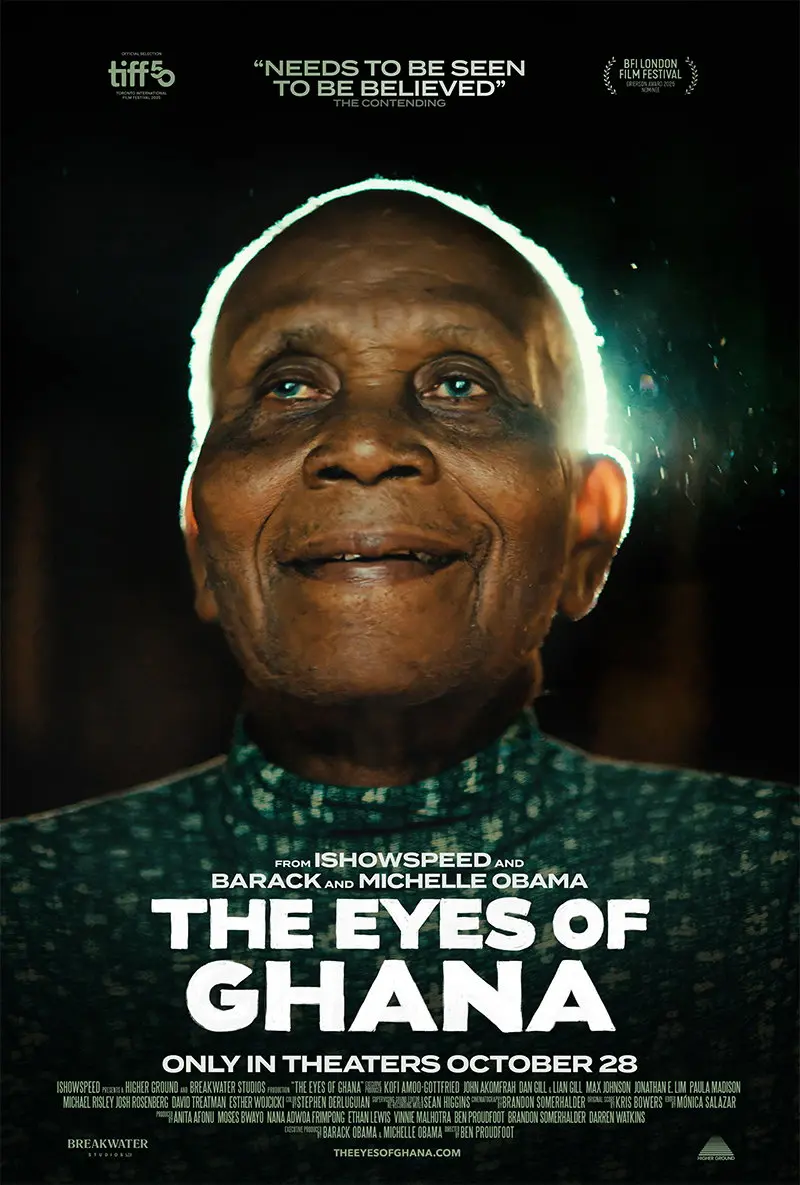
Breakwater Studios, in partnership with Higher Ground and notable digital creators, has officially debuted the trailer for The Eyes of Ghana, an upcoming feature-length documentary directed by Academy Award-winning filmmaker Ben Proudfoot. The film explores the extraordinary life of Chris Hesse, who served as the personal cinematographer to Dr. Kwame Nkrumah, the first president of Ghana. Following a successful world premiere at the Toronto International Film Festival (TIFF) in the TIFF Docs section, the documentary is scheduled for a targeted theatrical rollout this fall, beginning October 28, 2026, ahead of its widely anticipated streaming release.
At the center of the documentary is a compelling historical mystery set against the backdrop of the mid-20th-century decolonization of Africa. The narrative investigates a pivotal question posed in the promotional materials: What was so dangerous about those films that they had to be destroyed? The answer lies in the volatile political landscape of 1966, when a CIA-backed coup d’état overthrew Nkrumah’s administration. In the immediate aftermath of the coup, a decade of invaluable archival footage captured by Hesse was ordered destroyed, seemingly erasing the visual record of a crucial chapter in African liberation history. However, unbekant to the public and political authorities at the time, Hesse quietly preserved more than 1,000 reels of historical film, safeguarding what is now recognized as the single largest existing archive detailing Ghana’s path to independence.
Chronology of the Liberation Era and the 1966 Coup
The historical scope of The Eyes of Ghana spans the waning years of British colonial rule and the optimistic dawn of the post-independence era. During the late 1950s and early 1960s, Ghana—formerly the Gold Coast—became a beacon of hope for anti-colonial movements across the African continent. Under the leadership of Kwame Nkrumah, the nation charted a bold path toward sovereignty, pan-African unity, and modernization.

Chris Hesse, a young and exceptionally talented filmmaker, was uniquely positioned to document this transformation. Entrusted by Nkrumah himself, Hesse served as the president’s personal cameraman, recording state visits, diplomatic breakthroughs, and the intimate, everyday reality of a newly sovereign nation building its future. This unprecedented access yielded thousands of feet of film that captured the fervor and complexity of the era.
The trajectory of Ghana’s young republic shifted dramatically on February 24, 1966. While Nkrumah was on a state visit to Beijing, China, a military and police coup—later documented to have received covert backing from the United States Central Intelligence Agency—overthrew his government. The new military junta sought to systematically erase Nkrumah’s legacy from the national consciousness. This campaign included the purging of state media and the destruction of cultural and political artifacts tied to his administration. Among the targeted materials was Hesse’s extensive film collection, which captured the ideological core and popular support of the Nkrumah administration.
The Survival of a Hidden Historical Archive
Despite the immense danger and the official directives to purge materials associated with the former regime, Chris Hesse undertook a decades-long covert effort to protect the historical record. Now 93 years old, Hesse managed to retain custody of more than 1,000 reels of original 16mm and 35mm film. For generations, these materials remained largely unseen by the global public, existing in private preservation while the official historical narrative of the 1960s was shaped by external perspectives.
Documentary experts and historians analyzing the premise of The Eyes of Ghana note that the survival of these reels could fundamentally reshape historical understandings of West African politics, Cold War interventions in the Global South, and the mechanics of post-colonial state-building. By capturing the unvarnished realities of the Nkrumah years, Hesse’s footage offers primary-source documentation that bypasses decades of geopolitical narrative framing.

Production Background and Creative Collaboration
The realization of The Eyes of Ghana is the result of an accidental meeting between director Ben Proudfoot and Chris Hesse. Proudfoot, renowned for his distinct approach to honoring overlooked historical figures—exemplified by his Academy Award-winning short documentaries—encountered Hesse by happenstance. The two men reportedly recognized an immediate creative and philosophical alignment regarding the urgent need to preserve vanishing histories.
Proudfoot serves as a producer alongside Nana Adwoa Frimpong, Anita Afonu, Moses Bwayo, and Brandon Somerhalder. Furthermore, Higher Ground, the production company founded by Barack and Michelle Obama, serves as an executive producer on the project, lending significant cultural and institutional weight to the film’s distribution and message. The collaboration brings together a diverse coalition of North American and African filmmakers dedicated to bringing authentic narratives of Black history to international audiences.
Official Statements and Critical Reception
Festival programmers and industry insiders have lauded the documentary since its debut at TIFF. Festival organizers highlighted the director’s distinct ability to elevate forgotten or marginalized narratives, noting that the partnership between Proudfoot and Hesse represents a monumental cultural alignment.

"The director, Ben Proudfoot, has a gift for honouring overlooked figures," festival notes stated following the premiere. "The coming together of all these talents is a cause for celebration."
Similarly, programmers at DOC NYC emphasized the emotional and historical weight of the project, describing the feature as both a rigorous historical excavation and a passionate homage to the cinematic arts. "During the waning years of British rule, Chris Hesse is tasked with becoming Ghanaian leader Kwame Nkrumah’s personal cinematographer," DOC NYC stated in its program overview. "Once a young filmmaker entrusted with recording the tumultuous march to sovereignty, the 93-year-old now looks to pass his legacy, and a hidden, precious archive, to a new generation… The film showcases a fascinating chapter in Ghana’s history and is a love letter to the nation’s cinema."
Broader Implications and Cultural Impact
The release of The Eyes of Ghana arrives at a time of heightened global interest in the repatriation of cultural artifacts, the decolonization of historical archives, and the re-examination of Cold War foreign policies. As African nations continue to reclaim narratives historically dominated by Western perspectives, the emergence of Hesse’s 1,000-plus reel archive provides tangible, visual evidence of a pivotal era that was intentionally obscured.
For film historians, the documentary serves as a vital bridge between classic African cinema and contemporary documentary storytelling. It underscores the fragility of celluloid history and the immense personal courage required by archivists and artists who operate under authoritarian threats. By illuminating Hesse’s lifelong dedication, the film honors not only the political vision of Kwame Nkrumah but also the foundational architects of African visual media who risked everything to ensure their stories survived for posterity.

Following its limited theatrical release via Breakwater Studios starting on October 28, 2026, The Eyes of Ghana is expected to roll out on streaming platforms, making this unprecedented historical archive accessible to global audiences and researchers for the first time.