The fourth season of Star Trek: Strange New Worlds continues to push the boundaries of television storytelling by fully embracing high-concept, genre-bending episodes. Since its premiere, the Paramount+ science fiction series has consistently subverted traditional narrative expectations, transporting its crew into an array of distinct cinematic formats. Throughout the current run, viewers have journeyed through black-and-white noir detective mysteries, fantastical realms featuring knights and dragons, character-driven soap operas, and even a technically demanding puppet-centric installment. While these creative swings have become a defining hallmark of the series, they have simultaneously reignited a passionate debate within the global Star Trek fanbase regarding the appropriate balance between serialized continuity and standalone experimental storytelling.
The ongoing discourse surrounding these creative choices touches on a fundamental question that has followed the franchise for decades: How far can a science fiction property deviate from its core aesthetic before alienating its core audience? Executive producers Akiva Goldsman and Henry Alonso Myers, alongside cast member Rebecca Romijn, have recently addressed the criticism, offering insight into the deliberate artistic strategy driving the ship’s ongoing voyage.
The Historical Precedent of Genre Shifting
To understand the creative philosophy behind Strange New Worlds, television historians and franchise veterans often point to the origins of the Star Trek universe. When Gene Roddenberry conceptualized the original 1960s series, the show operated under a self-contained episodic format that allowed writers to explore vastly different narrative genres week after week. Episodes ranged from hard science fiction and political allegory to gothic horror, Westerns, and comedic farce.
Akiva Goldsman emphasized this historical precedent when responding to viewer inquiries regarding the frequency of stylistic departures in the fourth season. Acknowledging the vocal feedback from the community, Goldsman maintained that the production team firmly rejected the notion of scaling back these ambitious narrative experiments. In interviews with industry media, he explained that utilizing diverse genres has always been an effective vehicle for exploring complex human themes within the Star Trek framework. The creators view themselves primarily as passionate fans of the franchise, a perspective that informs their desire to honor the eclectic spirit of the original broadcasts while acknowledging the impossibility of satisfying every viewer preference continuously.
Complementing this viewpoint, Henry Alonso Myers noted that the overarching production strategy is designed to offer a multifaceted viewing experience across a single season. Rather than tailoring every minute of content to a single demographic, the showrunners aim to curate a diverse broadcast slate ensuring that audiences with varied tastes find at least one standout installment per season. Myers suggested that while individual stylistic choices may not resonate universally with every segment of the fandom, the broader cumulative season arc successfully delivers compelling dramatic engagement for the majority of viewers.
Inside the Fourth Season Experiments
The current season’s roster of experimental episodes showcases the extensive technical and creative ambition of the production crew. The black-and-white noir detective story required specialized lighting, stylized cinematography, and period-appropriate dialogue to faithfully replicate classic 1940s detective fiction within a futuristic starship setting. Similarly, the fantasy-themed episode involving knights and dragons demanded elaborate costume design, physical set construction, and advanced visual effects integration to merge medieval mythology seamlessly with established science fiction lore.
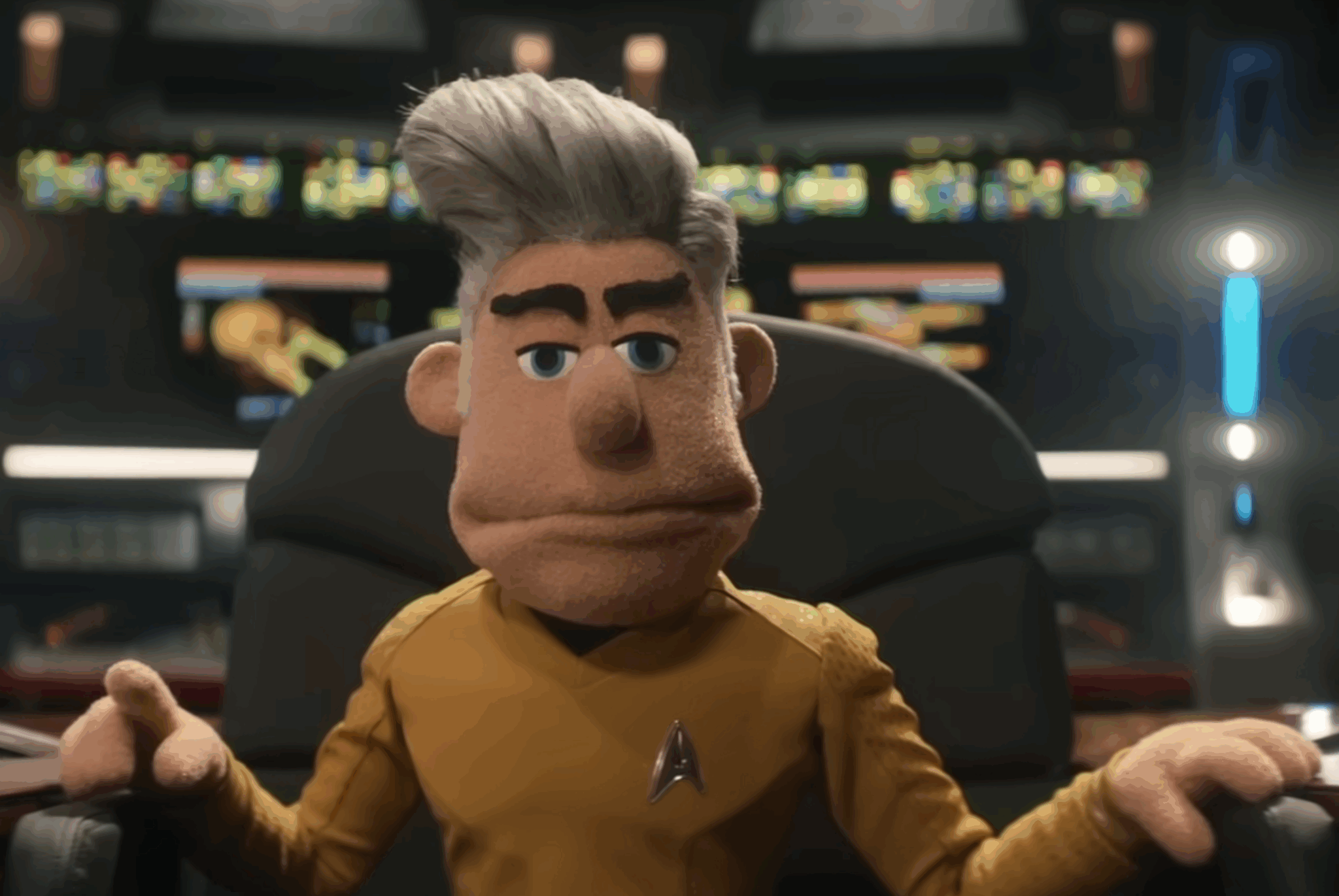
Further expanding the tonal spectrum, the soap opera installment leaned heavily into heightened emotional melodrama, complicated interpersonal entanglements, and serialized relationship drama, offering a stark contrast to the tactical command decisions typically featured on the bridge. Perhaps the most radical departure was the puppet episode, a high-risk creative endeavor that required the principal cast to record specialized vocal performances while puppeteers brought meticulously crafted miniature avatars of the crew to life on custom-built miniature sets.
These bold artistic choices require substantial resource allocation, specialized guest directors, and extended post-production timelines. Despite the logistical hurdles, the creative team has doubled down on its commitment to taking risks, viewing creative unpredictability as vital to preventing narrative stagnation in the modern streaming landscape.
Cast Perspectives and the Road to the Series Finale
As the ensemble cast navigates these diverse narrative landscapes, actors like Rebecca Romijn—who portrays Commander Una Chin-Riley—have emerged as vocal defenders of the show’s experimental format. Speaking candidly with entertainment journalists, Romijn addressed the polarized reactions from the viewership, characterizing the audience response as a distinct mixed bag of passionate affection and vocal skepticism.
Romijn pointed out that underneath the stylistic disguises and unconventional formats, every single installment remains fundamentally rooted in the core tenets of Star Trek. Whether the characters are navigating a gritty crime syndicate in monochrome or battling mythical beasts, the underlying ethical dilemmas, character development, and exploratory mission parameters remain intact. The cast stands fully behind the creative risks taken during production, noting that many viewers who initially expressed skepticism often shift their perspectives upon subsequent viewings.
Looking toward the horizon, Romijn shared significant news regarding the structural evolution of the series. With the fifth season officially designated as the final chapter of the Strange New Worlds run, the narrative focus is shifting toward resolving longstanding character arcs and tying together overarching plot threads. Consequently, viewers who have grown weary of the stylistic departures can anticipate a notable reduction in high-concept thematic diversions. Romijn lightheartedly confirmed that the final season will feature significantly fewer genre gimmicks as the production team prioritizes definitive narrative closure, offering welcome reassurance to audience members eager for traditional storytelling resolutions.
Broader Implications for Modern Franchise Television
The debate surrounding the creative direction of Strange New Worlds reflects a broader tension within contemporary franchise television. In an era dominated by serialized streaming models and heavy-serialized continuity, episodic anthology storytelling has become increasingly rare. Shows that attempt to balance multi-season character arcs with wildly divergent standalone episodes often find themselves at the center of cultural scrutiny.
For Paramount+, the willingness to greenlight such ambitious stylistic swings represents a calculated effort to distinguish Star Trek within a crowded digital marketplace. By fostering an environment where creative teams are encouraged to experiment, the platform ensures that the franchise remains culturally relevant and capable of attracting diverse audiences beyond traditional science fiction loyalists.
As Strange New Worlds moves closer to its ultimate conclusion in season five, the legacy of its experimental era will likely be viewed as a defining period of creative fearlessness. Whether fans celebrate the noir investigations or long for standardized space exploration, the series has undeniably cemented its place in television history by daring to ask what happens when a starship boldly goes into entirely uncharted stylistic territory. New episodes continue to stream on Thursdays via Paramount+.