The acclaimed horror-comedy series Widow’s Bay has officially been renewed for a second season, much to the relief and excitement of its dedicated fanbase and critics alike. While the renewal ensures continued engagement with the show’s unique blend of suspense, humor, and supernatural elements, the looming conclusion of its initial run has left many viewers pondering how to fill the void left by its exceptional storytelling. The series, lauded for its clever writing, surprising plot twists, and meticulous craftsmanship, is also poised to be a significant contender throughout the upcoming awards season, further solidifying its impact on the television landscape.
Widow’s Bay distinguishes itself in the crowded television market, particularly within the horror genre. While it frequently draws upon a rich tapestry of horror references and thematic explorations, its distinct narrative voice and execution make it a singular viewing experience. To help audiences navigate the post-Widow’s Bay landscape, a curated watchlist has been compiled, focusing on films and series that capture specific facets of the show’s remarkable appeal.
Echoes of Stephen King: Illuminating Influences and Similarities
A significant source of inspiration for Widow’s Bay is evident in the works of Stephen King. The series creator has openly acknowledged King’s profound influence, a connection that extends beyond mere thematic resonance to specific narrative structures and character archetypes. For fans seeking to deepen their understanding of the show’s roots, exploring King’s bibliography, particularly his television adaptations, offers a compelling avenue.
Storm of the Century: A Foundational Influence
Among Stephen King’s extensive body of work, the miniseries Storm of the Century stands out as a particularly pertinent recommendation for Widow’s Bay enthusiasts. This 1999 television film, often overshadowed by King’s more famous novel adaptations, presents a compelling narrative that directly mirrors themes and plot points explored in Widow’s Bay, especially in its later episodes.
Set against the backdrop of a brutal snowstorm descending upon the isolated community of Little Tall Island, Maine, the story introduces a mysterious and malevolent entity that preys upon the town’s residents. The unfolding events force the inhabitants to confront their deepest fears and make unthinkable decisions, mirroring the moral quandaries faced by the characters in Widow’s Bay. Storm of the Century masterfully captures King’s signature ability to portray intricate small-town dynamics and the corrosive effects of external threats on communal bonds, all without resorting to the over-the-top supernatural finales that sometimes characterize other adaptations. This three-part miniseries is a testament to King’s original screenwriting prowess, offering a nuanced and impactful narrative that stands as one of his finest works of the past few decades.
Midnight Mass: Faith, Fear, and Flanagan’s Vision
Another series that resonates with the thematic depth and unsettling atmosphere of Widow’s Bay is Mike Flanagan’s Midnight Mass. While not directly based on a Stephen King story, it is a product of Flanagan’s deep understanding of King’s narrative sensibilities, often referred to as the "Stephen King whisperer." The series shares an unofficial connection to King’s ‘Salem’s Lot, offering a more mature and thematically complex exploration of vampirism and religious fervor than many official adaptations.
Midnight Mass begins as the story of a charismatic priest arriving in a small, isolated island community, bringing with him an air of hope and miraculous renewal. However, this facade gradually crumbles, revealing a profound and terrifying examination of faith, blind devotion, and the corrupting influence of power. The series delves into the monsters born from unwavering hope for salvation, as well as the chilling creatures that emerge when hearts harden against the possibility of something better. The performance of Hamish Linklater as Father Paul Hill has been widely praised, with many noting its potential influence on his own standout performance in Widow’s Bay. Linklater’s portrayal of a man grappling with profound conviction and the unintended consequences of his actions offers a compelling parallel to the complex moral landscapes often navigated by characters in Widow’s Bay.
Unearthing Dark Comedy and Small-Town Secrets
Beyond the direct King-inspired connections, Widow’s Bay also shares DNA with a range of films and series that expertly blend horror with dark comedy and delve into the hidden underbellies of seemingly idyllic small towns.
Ravenous: A Taste for the Absurd
For viewers captivated by the darkly humorous and occasionally grotesque elements of Widow’s Bay, the 1999 film Ravenous offers a unique and satisfying experience. While not directly related to Widow’s Bay‘s plot, the film shares a particular comedic sensibility that aligns with the show’s ability to find humor in dire circumstances.
Set during the Mexican-American War, Ravenous chronicles a group of soldiers who descend into cannibalism, confronting an ancient curse tied to their unspeakable acts. Often categorized as a horror-comedy, the film’s humor is derived from the sheer absurdity of the escalating bad decisions and the remarkable situations in which the characters find themselves. This morbid comedy, often cited as a spiritual successor to Hannibal and Cannibal! The Musical in its dark humor, aligns with the Widow’s Bay-esque charm of watching increasingly dire choices unfold with a darkly comedic undertone. It also delves into the "Men would rather…" subgenre, exploring the darker impulses that can surface under extreme duress.
Blow the Man Down: Uncovering Hidden Depths
While not a horror film, Blow the Man Down provides several compelling reasons for Widow’s Bay fans to seek it out. The film’s exploration of a seemingly quaint small town’s hidden secrets and its masterful use of atmosphere create a strong thematic resonance.
The presence of Margo Martindale, an actress whose work is consistently praised for its depth and versatility, is a significant draw. While her connection to Widow’s Bay might be more thematic than direct, her ability to embody complex characters in atmospheric settings makes her a fitting addition to this recommended viewing list.
Blow the Man Down employs sea shanties as a loose structural element, weaving a narrative around two sisters who delve into the dark underbelly of their coastal town while attempting to conceal a murder. The film excels at capturing the perpetually foggy and melancholic atmosphere of a small fishing village, using this setting to craft a compelling story about the secrets we keep from those closest to us. The film’s ability to juxtapose its quaint setting with a grim criminal narrative offers a similar appeal to the layered storytelling found in Widow’s Bay.
In the Mouth of Madness: The Power of Fictional Worlds
For those who appreciate Widow’s Bay‘s meta-narrative and its exploration of fictional constructs bleeding into reality, John Carpenter’s In the Mouth of Madness (1994) is an essential watch. While Carpenter’s The Fog shares a similar seaside setting and a cursed community motif, In the Mouth of Madness offers a more direct parallel in its central premise.
The film presents a fictional small town composed almost entirely of horror tropes, a manifestation of a popular missing author’s creations. This concept of a town born from the imagination, where reality bends to the will of narrative and myth, echoes the constructed reality of Widow’s Bay. The immersive experience of navigating this dreamlike, yet terrifying, landscape evokes the same sense of being enveloped in a "warm, spooky blanket" that Widow’s Bay so masterfully delivered. The film also implicitly critiques the unrealized potential of other narrative endeavors, such as the series Castle Rock, which aimed for similar thematic territory but often fell short of Widow’s Bay‘s execution.
Tucker and Dale vs. Evil: A Masterclass in Horror-Comedy
When it comes to pure comedic brilliance within the horror genre, Tucker and Dale vs. Evil (2010) is an undeniable standout. While Widow’s Bay balances its horror and comedy with remarkable finesse, Tucker and Dale leans heavily into the comedic aspect, resulting in one of the funniest horror films ever made.
The film’s premise revolves around two well-meaning but hapless hillbillies who are mistaken for deranged killers by a group of college students. The ensuing chaos and misunderstandings lead to a series of increasingly absurd and darkly humorous deaths. Though it may not offer the same level of sustained scares as Widow’s Bay, its cult status is a testament to its laugh-out-loud humor. The film satirizes common horror tropes, particularly the "hixsploitation" subgenre, and its charm lies in the simple, genuine kindness of its titular characters as they become increasingly bewildered by the self-inflicted calamities surrounding them. It’s a celebration of innocent intentions colliding with grim circumstances, a dynamic that, while played for laughs here, has echoes in the character-driven conflicts of Widow’s Bay.
Bodkin: Unraveling Small-Town Quirks
The unsettling nature of small towns, where the line between the mundane and the sinister can blur, is a theme expertly explored in the Netflix series Bodkin. This show captures the essence of Widow’s Bay‘s ability to find the "off" in the seemingly ordinary.
Bodkin follows a group of podcasters investigating a decades-old murder mystery in a quiet Irish town. What begins as an exploration of quaint village life soon reveals a darker reality, where perceived eccentricities mask deeper, more sinister truths. The series cleverly navigates the thin line between an outsider’s suspicion and an outsider’s intuition, drawing parallels to the investigative journeys undertaken in Widow’s Bay. Its comedic undertones and embrace of the peculiar make it a natural companion piece, offering a more grounded yet equally intriguing look at hidden secrets within a close-knit community. For those who enjoy this particular brand of mystery, Prime Video’s Deadloch is also recommended for its similar blend of dark humor and small-town intrigue.
Messiah of Evil: Embracing the Surreal
For viewers who appreciate deeply weird, surreal, and dreamlike horror, the 1973 film Messiah of Evil presents a unique and enduring experience. Though set in a Californian coastal town, the film transcends its setting to explore a peculiar corner of a Lovecraftian nightmare.
This surrealist slow-burn nightmare takes the concept of a cursed town to often indescribable levels. Its lethargic pace and hallucinatory imagery create an atmosphere that lingers long after the credits roll. While not for every fan of Widow’s Bay, its commitment to the bizarre and its willingness to eschew conventional narrative structures will resonate with those who appreciate the show’s more experimental and unsettling moments. It’s a journey into a psychological landscape where the ordinary dissolves into the terrifyingly strange.
The Devonsville Terror: Obscure Folk Horror Roots
While The Wicker Man (1973) is an undeniable foundational influence on Widow’s Bay‘s folk horror elements and thematic explorations of isolated communities, for those seeking a more obscure gem, The Devonsville Terror (1983) is a worthy consideration.
This film, featuring a possibly inebriated Donald Pleasance investigating a New England town purportedly cursed due to historical persecution of witches, is rough around the edges but possesses an undeniable charm. Its "village in the fall" atmosphere is immaculate, and it offers a surprisingly subtle commentary on the patriarchal power dynamics that fueled the historical witch hunts, all within a pulpy, B-movie framework. It taps into a similar vein of unsettling small-town folklore that underpins much of Widow’s Bay‘s narrative.
Grabbers: A Spirited Defense Against the Unknown
The Irish horror-comedy Grabbers (2012), despite its somewhat unwieldy title, stands as a testament to the power of fun and inventive storytelling in the genre. The film shares Widow’s Bay‘s commitment to pure entertainment, blending supernatural threats with a healthy dose of humor.
The premise is familiar: residents of a small Irish village find themselves under siege by mysterious creatures. However, the film takes an unexpected and brilliant turn when it’s revealed that the only defense against the monsters is to be inebriated. This unique defense mechanism provides ample opportunity for comedic set pieces and a lighthearted approach to horror. Grabbers‘ ability to remain purely fun from start to finish makes it a delightful companion piece for those who enjoyed Widow’s Bay‘s playful spirit.
Wellington Paranormal: Bureaucracy Meets the Bizarre
For fans of the procedural aspect of Widow’s Bay mixed with supernatural encounters, Wellington Paranormal offers a hilariously absurd take on the concept. Created by Taika Waititi and Jemaine Clement, this series spins off from What We Do in the Shadows and imagines a version of Cops where the officers deal with demons, ghosts, and other paranormal phenomena.
Unlike Widow’s Bay‘s serialized drama, Wellington Paranormal is episodic and deeply silly. Its humor stems from watching the least competent individuals navigate supernatural crises with an unwavering bureaucratic disposition. The sheer ineptitude of the Wellington police force in the face of otherworldly threats provides consistent laughs, offering a lighter, more slapstick counterpoint to the more complex emotional arcs found in Widow’s Bay.
The Babadook: The Birth of a Meme and a Monster
The 2014 film The Babadook holds a special place in the lore surrounding Widow’s Bay, not just for its critical acclaim but also for its role in inspiring a memorable moment for the show’s creator. The film itself is a masterclass in psychological horror, exploring themes of grief, motherhood, and the manifestation of trauma.
The Babadook is considered one of the most important modern horror films, and its influence on the show’s creator, Katie Dippold, led to one of the internet’s most beloved memes. While the film’s direct narrative links to Widow’s Bay might be more conceptual, its status as a celebrated horror work and its connection to a viral moment make it an essential watch for fans seeking to understand the cultural touchstones that inform the show.
A Bonus Double Feature: Celebrating "Patricia" and the Final Girl Trope
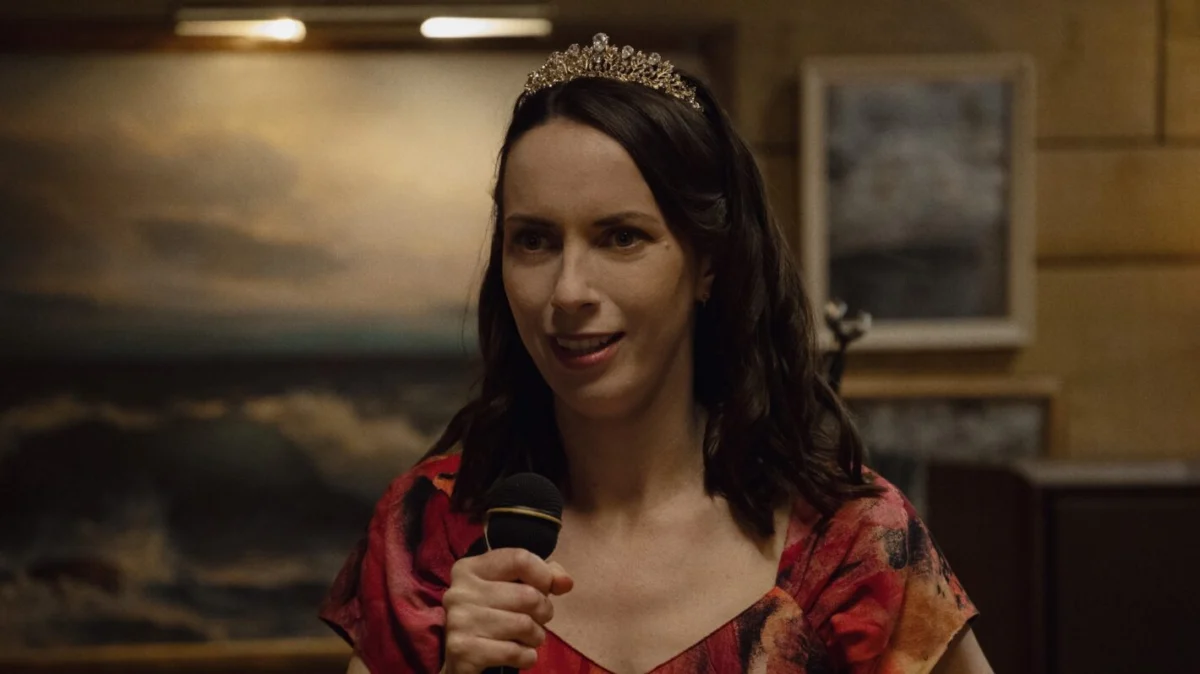
The breakout character of Patricia, portrayed by Kate O’Flynn in Widow’s Bay, has become a fan favorite, known for her chaotic energy and surprising resilience. Her arc, particularly her emergence as a "final girl" in disguise, invites a deeper dive into the tropes she embodies.
Friday the 13th Part 2: The Enduring Final Girl
For those drawn to Patricia’s "final girl" persona, Friday the 13th Part 2 (1981) offers a classic example of the archetype. While the Friday the 13th franchise may not always reach critical heights, this installment features Ginny Field, one of horror’s most intelligent and resourceful final girls. Ginny’s blend of intelligence, adaptability, and unwavering determination in the face of relentless terror provides a compelling model for survival that resonates with Patricia’s own journey. She represents a foundational subversion of many final girl tropes that would become more prevalent in subsequent horror films.
Pearl: The Unraveling of a Starlet
For fans who gravitated towards Patricia’s more chaotic and performative moments, Pearl (2022) provides a fascinating, albeit more extreme, parallel. Directed by Ti West, who also helmed one of Widow’s Bay‘s standout episodes, "Our History," the film features Mia Goth in a career-defining performance as a young woman desperate for stardom.
While Patricia may not possess the same level of desperate psychosis as Pearl, the glint of madness in Patricia’s eyes when she envisions herself as the island’s party princess certainly recalls the unhinged ambition of Pearl. Both characters, in their own ways, grapple with a yearning for recognition and the potential for darkness that can emerge from such desires. Pearl‘s exploration of a fractured psyche and its descent into violent delusion offers a compelling, albeit darker, counterpoint to the character dynamics explored in Widow’s Bay.