The Tallinn Black Nights Film Festival, widely known as PÖFF, has solidified its role as a pivotal cultural platform for Ukrainian narratives, utilizing its 30th anniversary milestone to amplify the voices of a nation under siege. Since the escalation of the Russian invasion in February 2022, the Estonian-based festival has evolved from a traditional film showcase into a vital hub for geopolitical discourse and cultural preservation. By integrating the "Standing With Ukraine" program into its core identity, PÖFF has demonstrated how international film festivals can serve as frontline defenses against the erasure of national identity, ensuring that Ukrainian stories remain a fixture of the European and global consciousness.

A Chronology of Solidarity: From 2022 to the 30th Anniversary
The institutional pivot began immediately following the February 2022 invasion. Tiina Lokk, the founder and CEO of PÖFF, recognized early on that the festival’s geographical proximity to the conflict necessitated a moral and professional mandate. In the weeks following the initial surge of hostilities, PÖFF implemented an industry-wide ban on films funded by the Russian state, a stance that has remained steadfast.
By the summer of 2022, the festival had launched its first dedicated Ukraine-themed industry panels at the Industry@Tallinn & Baltic Event. This was not merely a symbolic gesture; it was an economic intervention designed to keep the Ukrainian film industry solvent. By showcasing works-in-progress and connecting Ukrainian producers with international distributors, the festival provided a lifeline to creators whose domestic infrastructure had been decimated by missile strikes and power grid failures. As the conflict transitioned into a protracted war of attrition, the festival’s commitment expanded to include psychological and emotional documentation, leading to the current, robust "Standing With Ukraine" program featured in the 2026 anniversary edition.

The Strategic Importance of Cultural Visibility
The festival’s leadership views the continued presence of Ukrainian cinema not as an optional addition, but as a geopolitical necessity. "Ukraine is fighting not only for Ukraine, but also for Europe and the democratic world," Tiina Lokk stated in an interview with The Hollywood Reporter. This sentiment is echoed by Marge Liiske, head of the Industry@Tallinn & Baltic Event, who emphasizes that the festival’s program is a deliberate reflection of the current reality in the Baltic region.
For the organizers, the "Standing With Ukraine" strand is also an act of community building. With a significant population of Ukrainian refugees now residing in Estonia, the festival serves as a cultural bridge. Triin Tramberg, the festival’s new artistic director, notes that for these communities, the ability to view their own cinema in a secure, international setting is a vital component of resilience. The festival’s programming strategy acknowledges that cultural preservation is a key facet of the broader war effort, as Russia has historically attempted to suppress Ukrainian language, history, and artistic expression.

Analyzing the 2026 "Standing With Ukraine" Selection
The 2026 lineup is a carefully curated selection of nine features that offer a multidimensional view of the war—ranging from frontline documentaries to political thrillers and intimate character studies. The films underscore that the impact of the war is not confined to the battlefield, but extends to the realms of identity, gender, and long-term psychological trauma.
The Power of Music and Cultural Identity
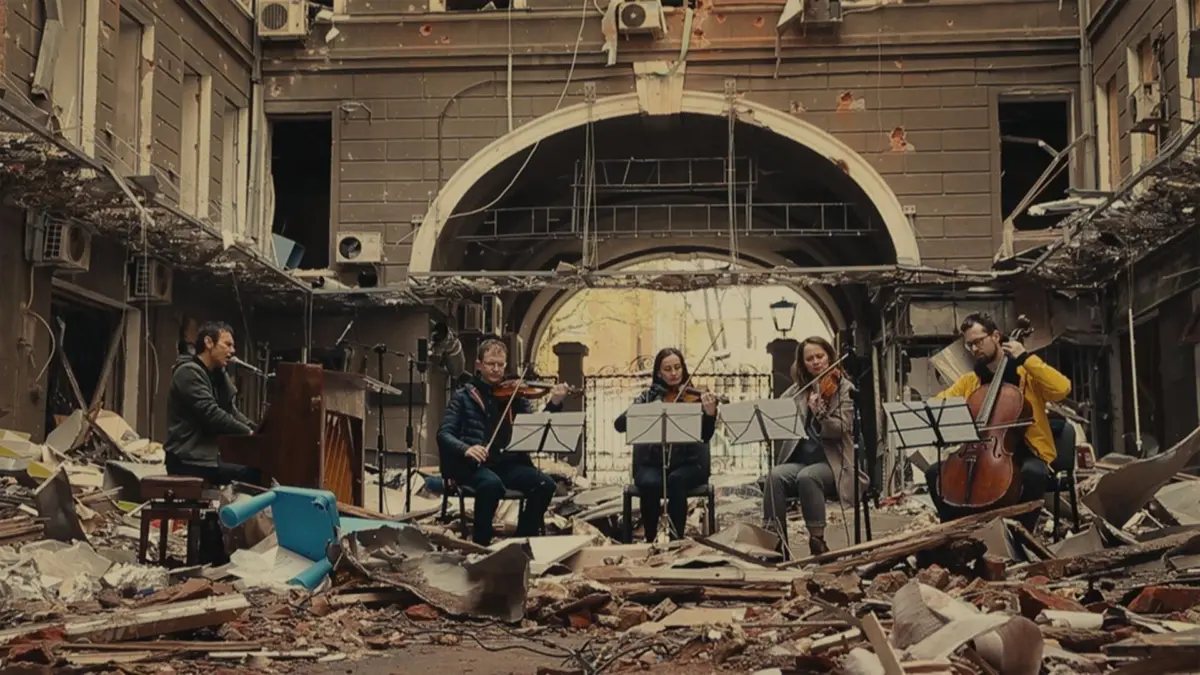
Slava: Shooting With Music, directed by Jacqui Morris and David Morris, examines the intersection of art and mobilization. By focusing on Sviatoslav Vakarchuk, the lead singer of the rock band Okean Elzy, the documentary illustrates how culture serves as a tool for morale. Vakarchuk’s transition from a theoretical physicist and politician to a touring performer for troops highlights the mobilization of the Ukrainian intelligentsia. The film also documents an international coalition of artists, including Coldplay, supporting the band’s global tour—a clear example of how soft power is being leveraged to keep the Ukrainian struggle at the forefront of the global stage.

Documenting the Human Cost
The documentary entries in this year’s program, including Yuliia Hontaruk’s To Die to Live and Nerijus Milerius’s Living On, provide a granular look at the toll of the conflict. To Die to Live offers an expansive, 12-year longitudinal study of three men who volunteered in 2014 and were forced to return to the front in 2022. The film’s fragmented narrative style is a deliberate choice by the director to mirror the psychological fragmentation caused by chronic combat exposure. Similarly, Living On captures the resilience of civilians in bombed-out cities like Kharkiv and Kherson, with director Nerijus Milerius filming his experiences while delivering medical aid, adding a layer of journalistic immediacy to the festival’s offerings.
Identity and Displacement
The festival also highlights the complex intersections of identity during wartime. I Rarely Wake Up Dreaming, directed by Isabelle Stever, explores the experience of a queer couple navigating the challenges of gender transition amidst the backdrop of a full-scale invasion. This film underscores the fact that personal identity struggles do not pause for war; rather, they are often exacerbated by it. Camouflage, directed by Mykyta Gibalenko, echoes these themes by tracking a young Ukrainian student in Germany whose family is forced to seek refuge with him after the 2022 invasion, resulting in a forced confrontation between his past and his newly formed identity.

Official Recognition and International Impact
The festival’s commitment has received international acclaim, particularly with the inclusion of Traces, directed by Alisa Kovalenko and Marysia Nikitiuk. The film, which documents the testimonies of six women who survived sexual violence and torture, has already garnered significant attention on the global festival circuit, winning the best documentary award at the Berlin International Film Festival’s Panorama section. Its status as Ukraine’s official submission for the Best International Feature Film Oscar underscores the importance of the Tallinn festival in acting as a launchpad for high-caliber Ukrainian productions.
Broader Implications for European Cinema
The decision by PÖFF to prioritize these films has broader implications for the European film industry. It sets a precedent for how festivals can, and perhaps should, engage with active conflict zones. By providing a platform for films like Vesna, which depicts the moral dilemmas of civilians living under occupation, the festival is forcing its audience to engage with uncomfortable truths about collaboration, survival, and moral ambiguity.

Moreover, the industry strand, Industry@Tallinn & Baltic Event, provides an essential infrastructure for the survival of the Ukrainian film industry. In 2026, the inclusion of Ukraine-themed panels serves to remind international investors and distributors that the Ukrainian film sector remains active, creative, and worthy of investment, even while the nation faces an existential threat.
Conclusion
As the Tallinn Black Nights Film Festival concludes its 30th year, its legacy is being redefined by its unwavering support for Ukraine. The "Standing With Ukraine" program is more than a list of films; it is a meticulously documented archive of a nation’s struggle for sovereignty. By blending artistic excellence with a firm moral stance, the festival has ensured that it remains a critical player in the global film landscape, proving that cinema, when used as a medium for truth, can be one of the most powerful tools for maintaining international focus on the preservation of democracy and the human spirit. Through the lenses of these nine films, the world is invited to see beyond the headlines and into the lived reality of a people determined to endure.