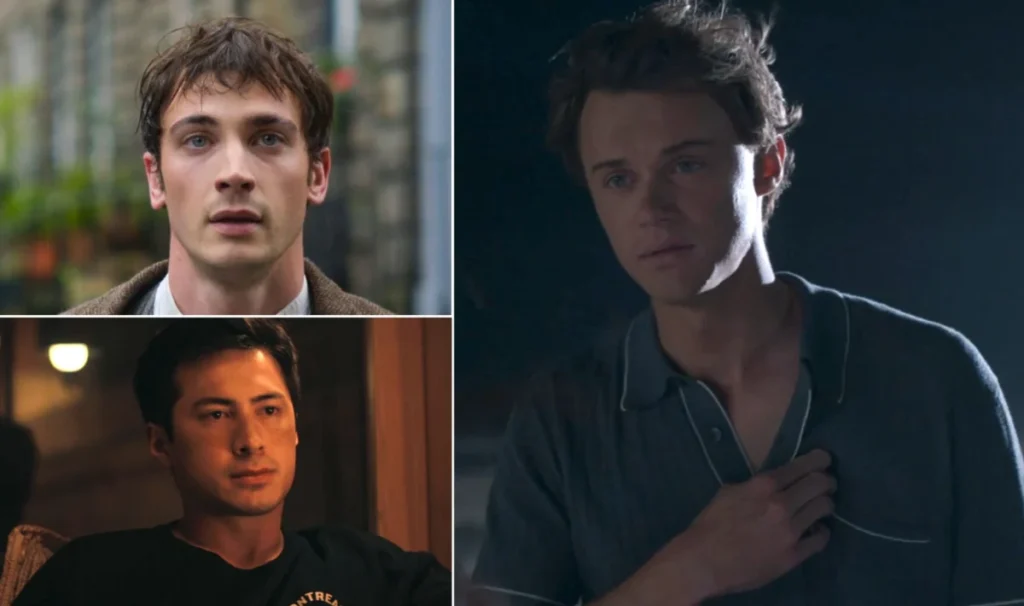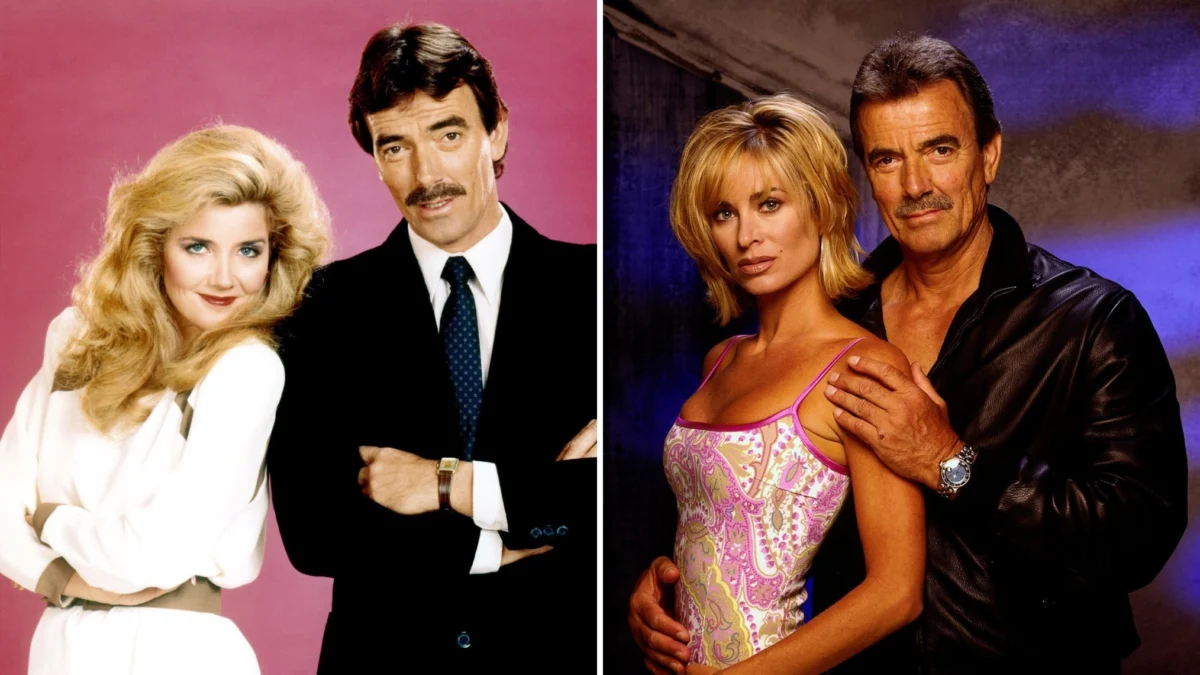
In the landscape of American daytime drama, few figures cast as long or as formidable a shadow as Victor Newman, the ruthless yet complex patriarch of Genoa City on the long-running CBS soap opera The Young and the Restless. While the character is now synonymous with the show’s identity, his origins in 1980 were remarkably humble and intended to be fleeting. When actor Eric Braeden first stepped onto the set, the production’s blueprint for his character, Victor Newman, was not that of a series-defining lead, but rather a short-term antagonist destined for a violent and permanent exit. The transformation of Victor Newman from a disposable villain into the cornerstone of a multi-decade television dynasty remains one of the most significant creative pivots in the history of the medium, illustrating the profound impact of casting and the intuitive storytelling of the show’s late creator, William J. Bell.
The Original Narrative Trajectory and the 1980 Introduction
When Victor Newman was introduced to the audience of The Young and the Restless in 1980, the show was in a period of transition, seeking to solidify its ratings dominance against competitors like General Hospital. At the time, Victor was framed as a cold, controlling husband to Julia Newman, played by Meg Bennett. The central conflict of the storyline involved Julia’s burgeoning affair with a photographer named Michael Scott, portrayed by Nick Benedict.
In the standard operating procedure of soap opera writing during that era, a character like Victor—an oppressive, older husband obstructing a younger heroine’s true love—was a classic "obstacle character." The narrative plan established by the writing room was clear: Victor’s jealousy and cruelty would escalate, eventually leading to a climactic confrontation where Julia would be forced to kill him in self-defense or as an act of liberation. This would have allowed Julia to move forward with Michael Scott, effectively ending Eric Braeden’s tenure on the show after a standard guest-arc duration of approximately eight to twenty-six weeks.
However, the dynamics on set began to shift almost immediately upon Braeden’s arrival. Braeden, a German-born actor with a background in film and primetime television (notably starring in the 1970 cult classic Colossus: The Forbin Project and appearing in The Rat Patrol), brought a gravitas and a "commanding presence" that was rare in the daytime circuit at the time. His portrayal of Victor was not merely that of a two-dimensional bully; he infused the character with a brooding intensity and a palpable, albeit hidden, vulnerability that caught the attention of the executive team.
The William J. Bell Intervention and the Creative Pivot
The decision to scrap the original plan to kill off Victor Newman rests solely with William J. Bell, the creator, head writer, and executive producer of The Young and the Restless. Bell was renowned in the industry for his ability to identify "lightning in a bottle"—the rare instances where an actor’s chemistry with a role transcends the written page. Observing the daily rushes of Braeden’s performances, Bell recognized that Victor Newman had the potential to be more than a villain; he had the makings of a quintessential "anti-hero" or a leading man around whom an entire cast could revolve.
Bell’s strategy to save the character involved a radical rewrite of Victor’s history. To move Victor away from being a disposable antagonist, Bell decided to humanize him by giving him a tragic and deeply layered backstory. In a series of now-legendary scenes, it was revealed that Victor Newman was born Christian Miller and had been abandoned by his mother at an orphanage as a child. This revelation reframed Victor’s ruthlessness not as innate evil, but as a defense mechanism born from a life of abandonment and poverty. By establishing Victor as a "self-made man" who rose from the trauma of an orphanage to the heights of the business world, Bell provided the audience with a reason to root for him, despite his often-questionable ethics.
A Chronology of Victor Newman’s Ascendance
The timeline of Victor Newman’s evolution reflects the broader shifts in daytime television over the last four decades:
- 1980: Victor Newman debuts as a guest villain. The Julia-Michael-Victor love triangle concludes not with Victor’s death, but with a complex dissolution of the marriage, leaving Victor on the canvas as a permanent fixture.
- 1981-1983: The character is transitioned into a romantic lead. The pivotal introduction of Nikki Reed (played by Melody Thomas Scott), a girl from the "wrong side of the tracks," creates the show’s most iconic pairing. Their "Beauty and the Beast" dynamic becomes the primary engine for the show’s ratings growth.
- 1984: The first wedding of Victor and Nikki Newman occurs, an event that garnered massive viewership and solidified Victor’s status as a cultural icon.
- 1990s: Victor becomes the undisputed "Godfather" of Genoa City, with his business rivalries against Jack Abbott (Peter Bergman) defining the corporate intrigue subgenre of soap operas.
- 1998: Eric Braeden wins the Daytime Emmy Award for Outstanding Lead Actor in a Drama Series, a formal industry recognition of the character’s depth and Braeden’s performance.
- 2020-Present: Celebrating over 40 years on the air, Victor Newman remains the central patriarch, with storylines now focusing on his legacy and his complex relationships with his adult children.
Supporting Data and Industry Impact
The decision to retain Eric Braeden had measurable impacts on the success of The Young and the Restless. Since the mid-1980s, the show has consistently held the number one spot in the Nielsen ratings for daytime dramas, a streak that lasted for over 30 consecutive years. While many factors contribute to such a feat, industry analysts frequently cite the stability of the Newman and Abbott families—anchored by Braeden’s Victor—as the primary reason for viewer loyalty.
Statistically, the character of Victor Newman is one of the most "prolific" in television history. Eric Braeden has appeared in over 4,000 episodes of the series. Under his tenure, the show has won the Daytime Emmy for Outstanding Drama Series 11 times. The global reach of the character is also significant; The Young and the Restless is broadcast in dozens of countries, making Victor Newman one of the most recognized American television characters internationally, particularly in France (where the show is titled Les Feux de l’Amour) and across various African and European markets.
Statements and Perspectives on the Character’s Longevity
Eric Braeden has been vocal in interviews regarding the character’s longevity and the creative shift that saved his job. In his 2017 memoir, I’ll Be Damned, Braeden reflected on the early days, noting that he initially had reservations about the medium of daytime television. He credited Bill Bell’s willingness to ground Victor in a "deep-seated emotional reality" as the reason he chose to stay with the role for decades. Braeden has often stated that the "orphanage backstory" was the turning point that allowed him to find the "heart" of a man who otherwise seemed heartless.
Melody Thomas Scott, his long-time on-screen partner, has also commented on the unique energy Braeden brought to the set. In various retrospective specials, she has noted that the chemistry between Victor and Nikki was unplanned but undeniable, providing the show with a romantic core that balanced Victor’s often-aggressive business dealings.
From a production standpoint, the "Victor Newman model" changed how soap operas approached villains. Before Victor, villains were typically either redeemed fully or killed off. Victor Newman represented a third path: the "permanent antagonist" who is also a protagonist. He could be the hero of his family while simultaneously being the villain in a corporate takeover, a nuance that paved the way for future "complex" leads in both daytime and primetime television.
Broader Implications for Daytime Media
The story of Victor Newman’s survival is a case study in the importance of actor-character synergy. In the television industry, the term "star power" is often used loosely, but in the case of Eric Braeden, it resulted in the literal rewriting of a show’s history. Had the original plan to kill Victor been executed, the entire trajectory of The Young and the Restless would have been altered. The show likely would have remained a more traditional ensemble piece rather than the character-driven powerhouse it became.
Furthermore, the character’s evolution reflects the changing demographics and expectations of the television audience. In 1980, viewers were accustomed to clear moral boundaries. By the mid-80s and into the 90s, the audience’s appetite for "grey" characters—those who operate in the moral middle ground—grew significantly. Victor Newman was at the forefront of this shift, embodying the "titan of industry" archetype that would later be mirrored in primetime shows like Dallas or Dynasty, and much later in prestige dramas like Succession.
Today, as the landscape of linear television faces challenges from streaming platforms, the presence of a character like Victor Newman serves as a vital anchor for the CBS network. The character represents a sense of continuity for generations of viewers. The decision made by William J. Bell four decades ago to put down the pen and reconsider the fate of a "short-term villain" remains one of the most profitable and culturally significant editorial choices in the history of American broadcasting. Victor Newman did not just survive his intended death; he became the lifeblood of a television institution.