The emergence of The Spiral (L’Estranea) on the international festival circuit marks a significant pivot for the Italian film industry. Historically, Italy’s footprint at the Oscars has been defined by the auteurist traditions of legends like Federico Fellini, Giuseppe Tornatore, Roberto Benigni, and Paolo Sorrentino. By successfully navigating the transition from a domestic horror production to an Oscar-contending feature, director Paolo Strippoli is effectively challenging the long-standing perception that Italian cinema is defined solely by historical drama or social realism.
A Chronology of Success: From Venice to the Academy
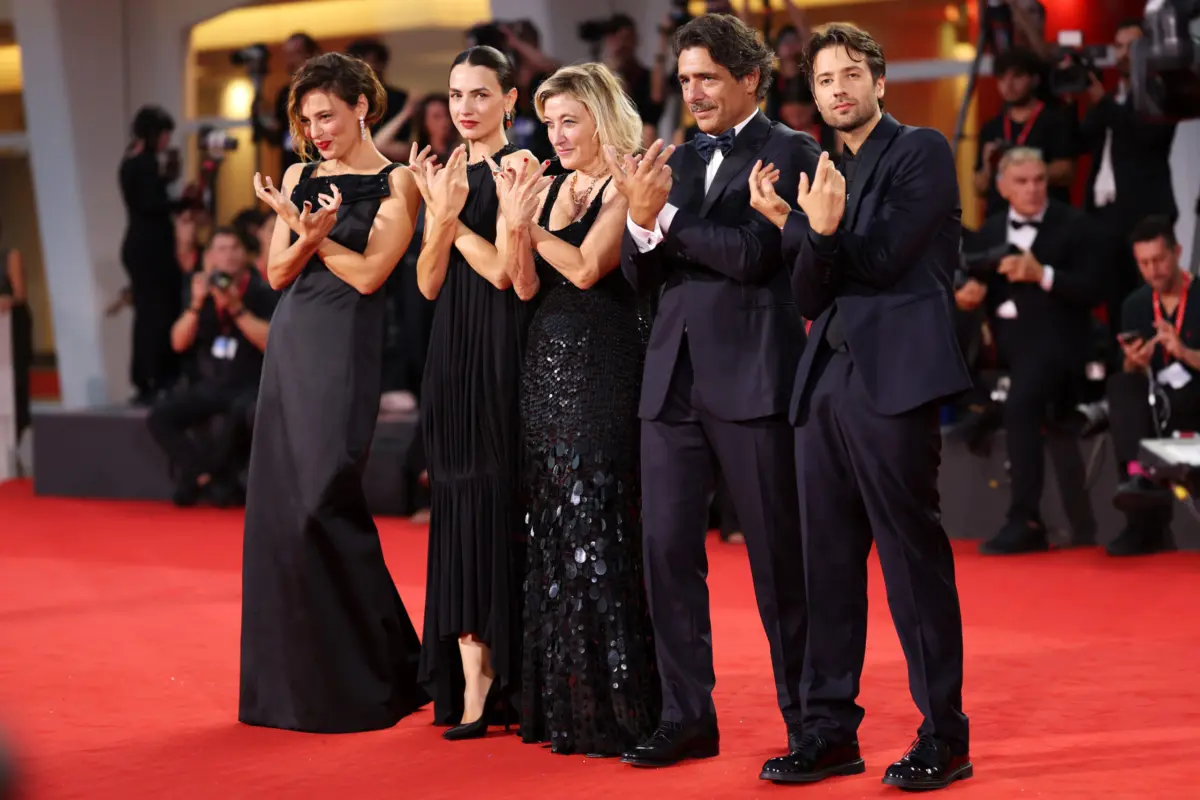
The trajectory of The Spiral has been characterized by rapid momentum. Following the success of his third feature, Holy Boy, which premiered out of competition in Venice, Strippoli secured a prestigious competition berth for The Spiral at the same festival. The Venice premiere served as the catalyst for the film’s critical ascent, yielding a nine-minute standing ovation and a wave of critical acclaim.
The momentum continued into the autumn festival circuit, where the film was named the first runner-up for the People’s Choice Midnight Madness Award at the Toronto International Film Festival. This international reception provided the necessary leverage for the Italian film authorities to select the project as the country’s official submission for the 97th Academy Awards. This selection is historic, as it represents the first time a homegrown genre film has been chosen to represent Italy in the Best International Feature category.
The Narrative Architecture: A Faustian Descent
Co-written by Strippoli and Salvatore De Chirico, The Spiral is structured across four distinct chapters that chronicle a family’s disintegration over 25 years. The narrative focuses on Anna (Jasmine Trinca), a mother grappling with the psychological weight of a secret confessed to her estranged daughter, Alice (Romana Maggiora Vergano).
The film utilizes the external environment—a relentless, mounting rainstorm—as a metaphor for the internal collapse of the family unit. Central to the plot is a Faustian bargain between Anna and a mysterious, ethereal figure portrayed by Valeria Bruni Tedeschi. Strippoli’s directorial vision intentionally avoids traditional Satanic tropes, opting instead to present the antagonist as a mischievous entity that exploits the greed and moral vulnerabilities of the protagonist.
"I wanted their relationship to be carnal, almost sapphic," Strippoli noted during a recent screening event in Toronto. "Anna exists in a state of rigid, societal confinement, and her interactions with the Stranger represent a perverse, yet necessary, form of liberation."
Commercial Performance and Industry Impact
The film’s commercial reception has validated the decision to push it into the global awards conversation. Since its theatrical release on October 8, The Spiral has grossed over $4 million at the Italian box office—a notable figure for a genre film in a market traditionally dominated by comedy and drama.
This commercial viability caught the attention of major Hollywood players. New Line Cinema successfully acquired the English-language remake rights in a highly competitive bidding process. As part of the deal, the Paramount label has secured distribution rights for the original Italian-language version across North America and several key international territories. To maintain momentum for the Oscar campaign, New Line has scheduled a limited theatrical run for the original film, ensuring it meets the Academy’s eligibility requirements for future cycles, while prioritizing the current push for the 2024–2025 season.
The Mechanics of an Oscar Campaign
The campaign for The Spiral, supported by the Italian Trade Agency, is currently navigating a competitive landscape. While Spain’s La Bola Negra is widely cited as the current frontrunner, Strippoli’s team is focused on securing a position on the shortlist of 15 films, which the Academy of Motion Picture Arts and Sciences is expected to announce on December 15.
The film faces competition from other high-profile international entries, including Romania’s Palme d’Or winner Fjord, the French production Minotaur, and the South Korean drama Possible Love. Industry analysts suggest that while horror films often struggle to gain traction with the Academy’s voting body, the prestige of the Venice premiere and the strong lead performance by Jasmine Trinca provide a distinct advantage for The Spiral.
Navigating Creative Ambition and Commercial Expectations
Despite the mounting pressure of the awards season, Strippoli maintains a philosophy of tempered expectations. He warns that allowing commercial considerations to dictate the creative process can result in a dilution of the director’s original vision.
"In my work, expectations can change the nature of a project for the worse," Strippoli explained. "When you try to calibrate a film to meet the perceived requirements of an audience or a producer’s commercial assumptions, the project loses its authenticity. I believe audiences value honesty. They don’t want to be treated like children; they are paying for a vision, and you have to provide that vision without compromise."
This approach has informed his decision-making regarding future projects. While he has been inundated with scripts from major studios looking for the next breakout thriller, he remains selective. He emphasizes that his primary interest lies in the intimate character dynamics that allow him to comment on broader societal structures.
Broader Implications for Italian Genre Cinema
The success of The Spiral signals a potential shift in the international branding of Italian cinema. For decades, the "Made in Italy" label in film has been synonymous with high-art, arthouse, or period-piece productions. The success of a psychological horror film suggests that Italian directors are increasingly capable of utilizing the tropes of genre cinema to explore complex, universal themes.
If The Spiral secures a shortlist placement, it could pave the way for increased investment in Italian genre projects, potentially opening doors for younger filmmakers who have previously been sidelined by the dominance of traditional drama. The international distribution deal with Paramount and the interest from New Line Cinema suggest that the global market is ready for a more diverse range of Italian storytelling.
As the Academy’s voting period approaches, the focus remains on the film’s ability to transcend its genre origins. For Strippoli, the goal is not merely the pursuit of a gold statue, but the opportunity to continue working in a collaborative environment. "I really miss the set," he remarked. "I love the family you build during production, and finally seeing what you imagined coming to life—that is the beauty of this profession."
As of mid-November, the film has undergone screenings in Los Angeles, designed specifically to familiarize Academy voters with the technical and narrative nuances of the production. Whether or not the film earns a nomination, the impact of The Spiral on the international perception of Italian cinema is already evident. It has moved the conversation away from the shadows of past masters and toward a new, experimental, and distinctly visceral chapter of Italian filmmaking. By balancing the "carnal" intensity of its lead performances with a sophisticated, four-chapter narrative structure, The Spiral stands as a testament to the fact that horror, when handled with artistic rigor, can compete at the highest levels of global cinema.