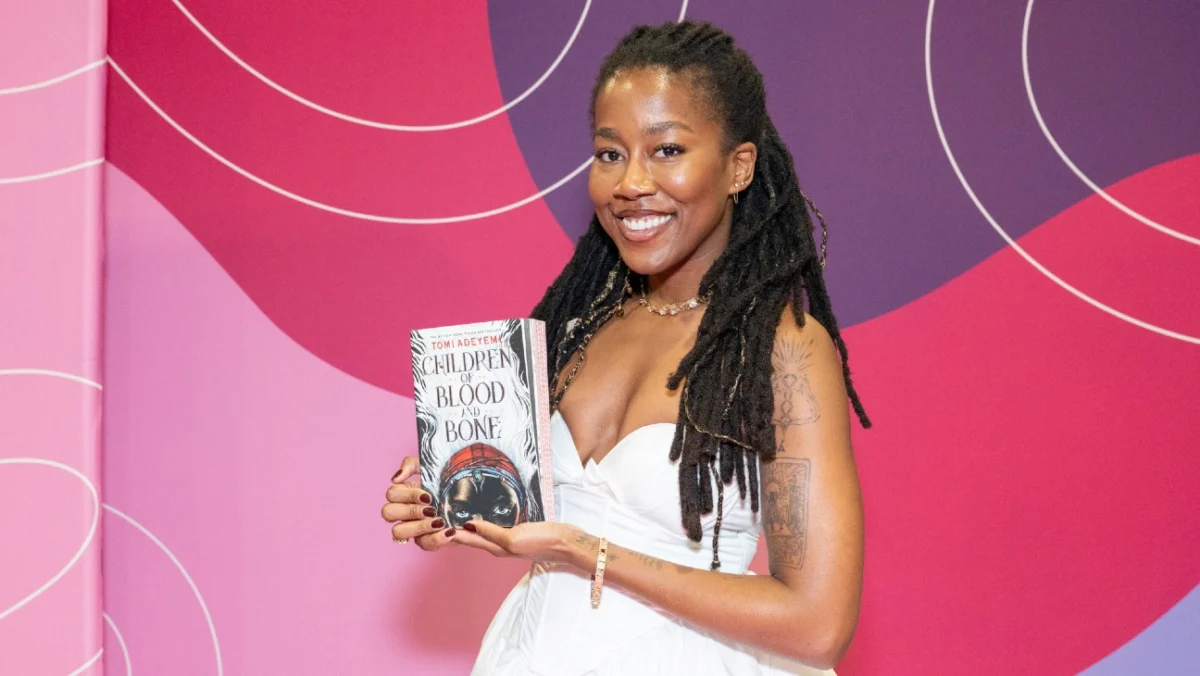
In a striking turn of events that has sent ripples through the literary and cinematic worlds, best-selling young adult author Tomi Adeyemi has publicly distanced herself from Paramount Pictures’ forthcoming feature film adaptation of her acclaimed debut novel, Children of Blood and Bone. Adeyemi, whose 2018 novel garnered a seven-figure book deal and quickly became a global phenomenon, took to social media over the weekend to articulate her profound dissatisfaction with the production, declaring she will not promote, watch, or associate her name with the movie, slated for release on January 15, 2027. Her candid revelations have ignited fervent discussions among fans and industry observers alike, raising critical questions about authorial control, creative integrity, and the often-fraught process of adapting beloved literary works for the big screen.
Adeyemi’s Public Disavowal: A Social Media Revelation
The author’s statements emerged via a series of posts on TikTok, where she addressed her considerable following regarding her conspicuous silence surrounding the film’s promotion. In one pivotal screenshot shared within her video, Adeyemi conveyed a stark message to unidentified recipients: "There is a reason I will not post anything about the adaptation of my work. That’s all." This initial pronouncement hinted at underlying tensions that had, until now, remained largely behind closed doors.
Further amplifying the gravity of the situation, Adeyemi included a screenshot of an alleged direct message sent to actress Amandla Stenberg, who portrays Princess Amari in the film. The message read, unequivocally, "Do not ever use my name in an interview or video again. Do not text me. Do not call me." The image strongly implied that Adeyemi had proceeded to block Stenberg, an actress known for her roles in The Hunger Games and The Hate U Give. The timestamp on this message indicated it was sent in February 2025, a crucial detail that links back to a previously deleted TikTok video by Stenberg. In that video, Stenberg reportedly addressed earlier colorism backlash concerning her casting by claiming Adeyemi had supported her involvement. Adeyemi’s recent post, therefore, serves as a forceful rebuttal to that assertion, indicating a deep and personal rupture.
In subsequent messages shared on TikTok, Adeyemi further clarified her stance, stating, "Since someone asked, I have not seen the film, and I will not watch it." She expressed the emotional toll this private struggle has taken, adding, "It’s been painful holding this back from you all." Her concluding remarks underscored her commitment to her community and artistic principles: "And I’m sorry if any of you thought I didn’t care. I will always care about US. More than any glitter." When a fan expressed sadness in the comments section, Adeyemi responded with a poignant explanation: "I do not mind anyone going to watch the film. I wrote this for us. I fought for us. I’m just laying down my sword and officially separating my name because I can’t keep being hurt and attacked behind the scenes." This statement not only confirms significant behind-the-scenes conflict but also suggests a desire for personal peace over continued engagement with a project that has evidently caused her distress.
The Illustrious Journey of Children of Blood and Bone
Tomi Adeyemi’s Children of Blood and Bone (2018) burst onto the literary scene as a groundbreaking work of young adult fantasy. Inspired by West African mythology, the novel is the first installment in her Legacy of Orïsha trilogy, introducing readers to a vibrant, magic-rich kingdom where a ruthless monarchy has suppressed magic, persecuting those who possess it. The narrative centers on Zélie Adebola, a young maji who embarks on a perilous quest to restore magic to her people, aided by her brother Tzain and the rebellious Princess Amari, daughter of the tyrannical King Saran. The book quickly ascended bestseller lists, earning critical acclaim for its intricate world-building, compelling characters, and powerful themes of oppression, resistance, and identity. Its commercial success was immediate and widespread, cementing Adeyemi’s status as a formidable new voice in fantasy literature and sparking a fervent demand for a cinematic adaptation.
The film rights were initially acquired by Fox 2000 in 2018 in a highly competitive deal. This acquisition, reportedly part of Adeyemi’s expansive seven-figure agreement, signaled Hollywood’s keen interest in bringing diverse, globally resonant fantasy narratives to the screen. However, the path to production proved to be protracted and complex. Following Disney’s acquisition of 21st Century Fox in 2019, the project underwent significant shifts. For a period, it was under the purview of Lucasfilm, Disney’s subsidiary renowned for the Star Wars franchise, which hinted at the grand scale and potential blockbuster aspirations for the adaptation. Despite this high-profile attachment, Lucasfilm eventually departed the project, reportedly due to creative differences or a shift in strategic priorities, a common occurrence in the volatile landscape of major studio development.
In 2021, Paramount Pictures stepped in, securing the rights to the adaptation. This move marked a new chapter for the project, with Paramount committing to bringing the vision to fruition. Acclaimed director Gina Prince-Bythewood, known for her masterful storytelling in films like Love & Basketball, The Old Guard, and the critically lauded The Woman King, was brought on board to direct. Her involvement was widely celebrated, given her proven ability to craft compelling narratives with strong female leads and her deep understanding of Black cultural contexts, which many hoped would ensure an authentic adaptation of Adeyemi’s work. Adeyemi herself was credited as an executive producer and co-writer of the screenplay alongside Prince-Bythewood, roles that typically imply a significant degree of creative input and collaboration.
The film boasts an impressive ensemble cast, featuring Thuso Mbedu as Zélie Adebola, Tosin Cole as Tzain, Amandla Stenberg as Princess Amari, Damson Idris as Prince Inan, Cynthia Erivo, Lashana Lynch, Regina King, Idris Elba, Chiwetel Ejiofor, and Viola Davis. This star-studded lineup further heightened anticipation for the film, promising a powerful and visually stunning rendition of the beloved novel.
The Shadow of Colorism: A Lingering Controversy
The journey of Children of Blood and Bone to the screen has been shadowed by a persistent and contentious debate surrounding colorism in its casting, a sensitive issue that has frequently emerged in discussions about representation within the fantasy genre. Colorism, the prejudice or discrimination against individuals with a darker skin tone, typically among people of the same ethnic or racial group, became a focal point of concern among a segment of Adeyemi’s readership and the broader online community.
When Amandla Stenberg, a talented actress with a lighter complexion, was cast as Princess Amari, it sparked significant debate. In the original novel, characters like Amari are described in a way that implies darker skin tones, aligning with the West African inspirations of the fantasy world. For many fans, the casting of a lighter-skinned actress for a role perceived as requiring a darker complexion was seen as a missed opportunity to truly represent the diversity of Black identity and to challenge prevailing Hollywood biases. This reaction was not unique to Children of Blood and Bone; similar conversations have arisen around other adaptations of works featuring Black characters, highlighting a persistent tension between artistic interpretation and community expectations for authentic representation.
The specific context of Stenberg’s deleted TikTok video in February 2025 now takes on greater significance. Her decision to address the colorism backlash directly, and her claim of Adeyemi’s support for her casting, evidently precipitated a direct and forceful repudiation from the author. Adeyemi’s subsequent blocking of Stenberg, coupled with her public statements, suggests that the author found Stenberg’s public assertion to be inaccurate or, at the very least, an overstep that misconstrued Adeyemi’s actual sentiments or the nature of their private communications. This incident underscores the deep emotional and professional stakes involved in these discussions, particularly for authors whose works are deeply personal and culturally resonant.
Authorial Control vs. Studio Vision: An Industry-Wide Struggle
Tomi Adeyemi’s public disavowal casts a harsh light on the perennial struggle between authors and studios over creative control in adaptations. While Adeyemi holds executive producer credit and a screenplay writing credit, these titles do not always guarantee ultimate creative authority, particularly in the multi-million-dollar world of Hollywood blockbusters. An executive producer’s role can vary widely, from a nominal title to a deeply involved creative partner, but the final say often rests with the studio, director, and lead producers, who control the budget and the ultimate vision.
The film industry is replete with stories of authors who have felt alienated from the cinematic versions of their own creations. From Stephen King’s well-documented dislike of Stanley Kubrick’s The Shining to Philip Pullman’s nuanced critiques of The Golden Compass adaptation, the gap between a writer’s vision and a filmmaker’s interpretation can be vast. Adeyemi’s statement, "I wrote this for us. I fought for us. I’m just laying down my sword and officially separating my name because I can’t keep being hurt and attacked behind the scenes," powerfully articulates a sense of betrayal and exhaustion from what appears to be a prolonged and difficult battle for creative fidelity. Her decision to "lay down her sword" suggests a capitulation not out of agreement, but out of a profound and personal toll.
The implications for Paramount Pictures are significant. The studio will now have to navigate the promotion of a major fantasy tentpole film without the public endorsement, and indeed with the explicit disavowal, of its original author. This presents a unique marketing challenge, as author engagement is often a cornerstone of adaptation promotion, particularly for books with passionate fan bases. Gina Prince-Bythewood, who expressed her honor in bringing the book to life at CinemaCon earlier this year, where she debuted the first footage, now faces the difficult task of leading the charge for a film that its creator has publicly rejected. Her previous statement, "I’m honored to bring this incredible best-selling fantasy book to life," will undoubtedly be re-evaluated in light of Adeyemi’s recent comments. The cast, a formidable ensemble of acclaimed actors, are also placed in an unenviable position, caught between the creative and commercial imperatives of the studio and the deeply personal grievances of the author.
Broader Implications and the Future of the Legacy of Orïsha
Adeyemi’s public stance is poised to have broader implications for the entertainment industry, particularly concerning the delicate dynamics between authors, studios, and the increasingly vocal fan communities. It underscores the growing power of authors in the digital age to directly communicate with their audience, circumventing traditional media gatekeepers. This direct line of communication allows authors to reclaim narratives around their work, even when those narratives diverge sharply from studio messaging.
For Paramount, the challenge lies not only in mitigating negative publicity but also in convincing fans that the film, despite the author’s rejection, remains a worthwhile adaptation. The controversy could create a schism within the fan base, with some choosing to support Adeyemi by boycotting the film, while others may still opt to see it, either out of curiosity or a desire to support the actors and director. The box office performance will be closely watched as a litmus test for the impact of such public disputes on audience reception.
Furthermore, this situation raises questions about the future of the Legacy of Orïsha trilogy as a potential film franchise. While Children of Blood and Bone is the first book, two subsequent novels, Children of Virtue and Vengeance (2019) and Children of Anguish and Anarchy (2024), complete the series. An author’s disavowal of the first film could severely complicate, if not outright jeopardize, the development of adaptations for the sequels. Studios typically seek long-term relationships with authors for multi-book series, and a public rift of this magnitude is a significant deterrent.
The incident also reignites critical conversations about diversity and authenticity in casting, especially within fantasy genres. Adeyemi’s original work was celebrated for its unapologetically Black and African-inspired world. Any perceived deviation from that foundational spirit, whether through casting choices or narrative shifts, is likely to be met with intense scrutiny from a fan base deeply invested in such representation.
In conclusion, Tomi Adeyemi’s powerful and public separation from the Children of Blood and Bone film adaptation represents a pivotal moment in the ongoing dialogue about creative ownership, industry pressures, and the complex journey from page to screen. Her "painful" decision to "lay down her sword" is a testament to the profound challenges authors face when their literary creations enter the commercial machinery of Hollywood. As the release date approaches, all eyes will be on Paramount, Gina Prince-Bythewood, and the cast as they navigate this unprecedented situation, and on the enduring legacy of a story that has clearly touched its creator in ways that transcend mere commercial interest.