The Enduring Legacy of Venice Classics
The Venice Classics section stands as a cornerstone of the Venice International Film Festival, one of the oldest and most prestigious film festivals in the world, founded in 1932. Established to honor and bring back to public view significant films from cinematic history, the section plays a vital role in the global effort to preserve and disseminate film culture. Unlike the main competition, which focuses on contemporary cinema, Venice Classics looks to the past, ensuring that seminal works are not only protected from decay but also made accessible to new generations of cinephiles and scholars. Each year, the selection is a testament to the collaborative efforts of numerous institutions dedicated to the art of film restoration, often involving painstaking work to recover and digitize original negatives, sound elements, and prints. Artistic director Alberto Barbera, alongside Federico Gironi, curated this year’s impressive lineup, underscoring the festival’s dedication to presenting a diverse and historically significant collection.
A Pantheon of Master Filmmakers
The 2026 Venice Classics lineup is distinguished by the inclusion of works from some of the most influential and innovative directors in film history, representing diverse national cinemas and stylistic approaches. These restorations not only offer a refreshed viewing experience but also reaffirm the lasting impact of these artists on the medium.
John Cassavetes and the Spirit of Independence: A highlight is John Cassavetes’ 1971 drama Minnie and Moskowitz. Cassavetes, often hailed as the godfather of American independent cinema, revolutionized filmmaking with his raw, improvisational style and unflinching focus on human relationships. Minnie and Moskowitz, starring Gena Rowlands and Seymour Cassel, delves into the messy, often chaotic realities of love and companionship, capturing the spontaneity and emotional depth characteristic of Cassavetes’ work. Its restoration is crucial for preserving a film that epitomizes the director’s unique vision and his departure from traditional Hollywood narratives. The film’s exploration of unconventional romance and its cinéma vérité aesthetic continue to resonate, making its pristine presentation a significant event for admirers of authentic, character-driven storytelling.
Roger Corman and the Cult of the B-Movie: From the realm of independent and exploitation cinema comes Roger Corman’s 1966 biker film, The Wild Angels. Corman, a legendary producer and director known for his prolific output and groundbreaking low-budget productions, profoundly influenced generations of filmmakers. The Wild Angels, starring Peter Fonda and Nancy Sinatra, is a seminal work in the biker film genre, capturing the rebellious spirit of the 1960s counterculture. Its restoration allows for a re-evaluation of its cultural significance and Corman’s astute ability to tap into contemporary anxieties and youth movements, proving that even "B-movies" can hold profound artistic and historical value. The film’s gritty realism and anti-establishment themes provided a template for subsequent counterculture films, making its preservation an important cultural artifact.
Luis Buñuel and Surrealist Cinema: The selection also features Luis Buñuel’s 1954 Mexican film, La Ilusión Viaja en Tranvía (Illusion Travels by Streetcar). Buñuel, a towering figure in surrealist cinema, consistently challenged social conventions and religious dogma through his provocative and often darkly humorous films. While perhaps less overtly surreal than some of his more famous works, Illusion Travels by Streetcar is a satirical comedy that playfully critiques Mexican society, showcasing Buñuel’s characteristic wit and subversive sensibility. The restoration of this film provides an opportunity to appreciate a different facet of his diverse filmography and his mastery of storytelling across various genres. Its allegorical narrative and social commentary remain strikingly relevant, cementing Buñuel’s status as a master satirist.
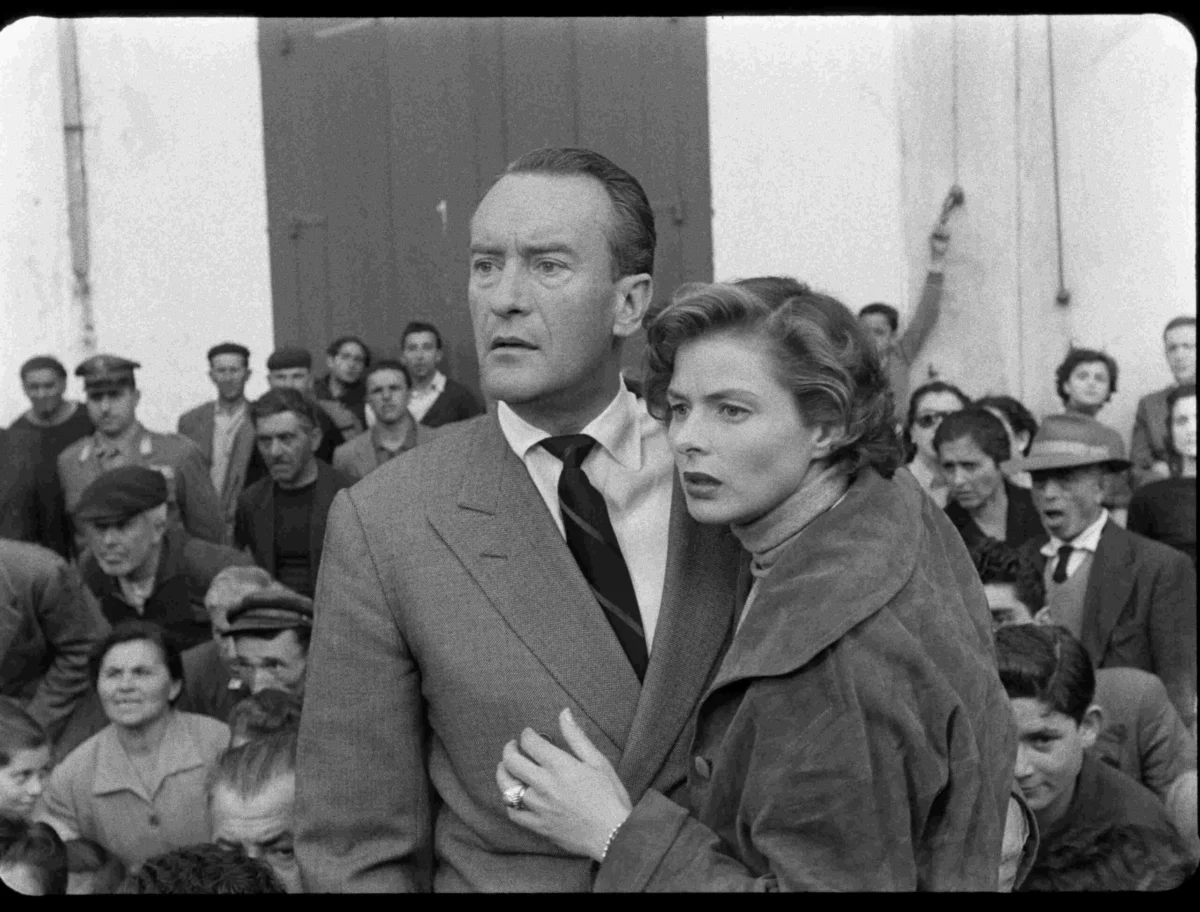
Roberto Rossellini and Italian Neorealism: Representing the foundational movement of Italian Neorealism is Roberto Rossellini’s 1954 masterpiece, Viaggio in Italia (Journey to Italy). Starring Ingrid Bergman and George Sanders, the film is a poignant exploration of a disintegrating marriage set against the backdrop of post-war Italy. Rossellini, a pioneer of neorealism, used naturalistic settings and a minimalist style to explore profound human emotions and social realities. Journey to Italy is celebrated for its psychological depth and its influence on subsequent European art-house cinema, including the French New Wave. Its restoration ensures that its subtle beauty and profound insights into the human condition continue to be experienced as intended, preserving a key moment in cinematic modernism. The film’s observational style and focus on internal struggle marked a significant shift in cinematic narrative.
Andrzej Wajda and Polish Cinema: From Poland, Andrzej Wajda’s 1958 film Popiół i Diament (Ashes and Diamonds) is included. Wajda was a leading figure in the Polish Film School, known for his powerful historical dramas that confronted the complexities of Poland’s wartime and post-war experiences. Ashes and Diamonds, a stark and poetic portrayal of young resistance fighters in the immediate aftermath of World War II, is considered one of the greatest achievements of Polish cinema. Its restoration is vital for preserving a film that not only offers a crucial historical perspective but also showcases Wajda’s masterful direction and the enduring power of its tragic narrative. The film’s iconic imagery and morally ambiguous characters have left an indelible mark on European cinema.
Roman Polanski and Psychological Thrillers: Roman Polanski’s 1966 psychological thriller Cul-de-sac also makes an appearance. Shot in a remote castle in Northumberland, England, this dark comedy-thriller explores themes of power, emasculation, and isolation. Polanski’s early works are noted for their unsettling atmospheres and exploration of the macabre and the absurd. Cul-de-sac, starring Donald Pleasence and Françoise Dorléac, is a quintessential example of his ability to craft tense, claustrophobic narratives that delve into the darker aspects of human nature. Its restoration ensures that this cult classic, a precursor to many of his later, more famous psychological dramas, remains available for study and appreciation.
Ernst Lubitsch and the Lubitsch Touch: The lineup reaches further back into cinematic history with Ernst Lubitsch’s 1942 classic, To Be or Not to Be. A master of sophisticated comedies, Lubitsch brought a unique blend of wit, elegance, and subversive humor to Hollywood. To Be or Not to Be, a daring satire set in Nazi-occupied Warsaw, brilliantly balances sharp comedy with biting social commentary, showcasing Lubitsch’s famed "Lubitsch Touch." Its restoration is particularly important for preserving a film that, despite its controversial subject matter at the time, has come to be recognized as a courageous and timeless anti-war satire, demonstrating the power of humor in the face of tyranny.
The Opening Act: Tinto Brass’s ‘Deadly Sweet’
The Venice Classics program will commence with a pre-festival screening of Tinto Brass’s 1967 soft-core thriller, Col Cuore in Gola (Deadly Sweet). This choice not only highlights the diversity of films considered worthy of restoration but also sheds light on a particular genre and period of Italian cinema. Brass, known for his distinctive and often provocative style, carved out a unique niche in Italian filmmaking. Deadly Sweet, with its blend of noir elements and sensuality, offers a glimpse into the evolving landscape of European genre cinema in the late 1960s, a period of significant social and cultural transformation. Its restoration allows for a fresh perspective on a film that pushes boundaries and challenges conventional narrative structures.
A Rich Tapestry of Italian Cinema
Beyond the opening film and Rossellini’s masterpiece, Italian cinema is further represented with several other notable restorations. Ettore Scola’s 1976 black comedy Brutti, Sporchi e Cattivi (Ugly, Dirty and Bad) offers a raw and often shocking look at poverty in Rome, solidifying Scola’s reputation as a keen observer of Italian society. This film, a darkly humorous yet profoundly empathetic portrayal of marginalized lives, is a testament to the versatility and social consciousness of Italian filmmakers.
Also featured is Daniele Ciprì and Franco Maresco’s 1995 work Lo Zio di Brooklyn (The Uncle From Brooklyn). This more contemporary Italian film showcases the innovative and often surrealist tendencies within modern Italian independent cinema, providing a counterpoint to the neorealist tradition. Its inclusion speaks to the Classics section’s commitment to presenting a broad historical scope, extending into more recent cinematic history.
Rounding out the Italian selection is Florestano Vancini’s 1960 drama La Lunga Notte del ‘43 (Long Night in ‘43). This film delves into the lingering shadows of World War II in Italy, exploring themes of guilt, memory, and the moral complexities of a nation grappling with its past. Vancini’s work provides a crucial historical and social document, and its restoration ensures that these important narratives continue to be explored and understood.
Global Perspectives: Beyond Europe and North America
The 2026 Venice Classics lineup extends its reach globally, emphasizing the universal nature of cinematic art and the worldwide effort in film preservation.
- Indian Cinema: Dev Benegal’s 1993 film English, August from India, offers a witty and insightful look at post-colonial identity and bureaucracy. The film, a landmark in contemporary Indian independent cinema, captured the zeitgeist of a changing nation and remains relevant for its social commentary.
- Hong Kong New Wave: Ann Hui’s 1981 Woo Yuet Dik Goo Si (The Story of Woo Viet) from Hong Kong is a powerful drama that reflects the humanitarian concerns and stylistic innovations of the Hong Kong New Wave. Hui, a pioneering female director, explores themes of displacement and survival with compelling realism.
- Chinese Independent Film: Ning Ying’s 1995 Minjing Gushi (On the Beat) from China provides a nuanced portrayal of everyday life in Beijing, offering a rare glimpse into Chinese society through the eyes of its police force. This film represents a crucial moment in the development of Chinese independent cinema.
- Czech New Wave: Jaromil Jireš’ 1970 surreal fantasy Valerie a Týden Divů (Valerie and Her Week of Wonders) from Czechoslovakia is a visually stunning and dreamlike film, a cult classic of the Czech New Wave, known for its poetic imagery and allegorical narrative. Its restoration is a gift to fans of experimental and art-house cinema.
- German New Cinema: Alexander Kluge’s 1966 Abschied von Gestern (Yesterday Girl) from Germany is a seminal work of the New German Cinema, an intellectually rigorous and formally inventive film that explores the struggles of a young woman in post-war Germany. Kluge’s work is celebrated for its critical engagement with history and society.
- Japanese Cinema: Shinji Sōmai’s 1983 Gyoei No Mure (The Catch) from Japan is a powerful drama that delves into the lives of fishermen, known for its emotional depth and visually striking cinematography. Sōmai was a master of capturing raw human emotion within expansive, beautifully composed frames.
- Argentine Cinema: Simón Feldman’s 1960 Los de la Mesa 10 (Those at Table 10) from Argentina offers a poignant social commentary, reflecting the political and cultural currents of Latin American cinema in the mid-20th century.
- Lusophone African Cinema: Flora Gomes’ 1992 Udju Azul di Yonta (The Blue Eyes of Yonta) from Guinea-Bissau provides a rare and valuable perspective from Lusophone African cinema, exploring themes of post-colonial identity and hope. Its inclusion highlights the festival’s commitment to showcasing underrepresented cinematic voices and their vital contributions to global film history.
The Art and Science of Film Restoration
The very existence of the Venice Classics section underscores the critical importance of film restoration. Film, a fragile medium, is susceptible to physical deterioration, color fading, and chemical degradation over time. The process of restoration is a meticulous and often expensive undertaking, involving a complex interplay of archival research, chemical processes, and digital technology. Experts painstakingly clean, repair, and stabilize original film elements, often reconstructing missing frames or correcting color balances. Digital restoration techniques now allow for unparalleled precision, removing scratches, dust, and other imperfections while preserving the original artistic intent. This work is not merely technical; it is a profound act of cultural preservation, ensuring that masterpieces remain accessible and can be experienced by future generations in a quality that approximates or even surpasses their original theatrical release. The global network of film archives, cinematheques, and cultural institutions collaborating on these restorations represents a collective dedication to safeguarding our shared cinematic heritage.
The Jury and the Prestigious Award
Further emphasizing the academic and critical importance of the Classics section, a dedicated jury will evaluate the restored films. Chaired by Italian director Daniele Vicari, the Venice Classics jury is unique in its composition: it comprises 24 film students. These students are nominated by professors from Italian universities, DAMS programs (disciplines of arts, music, and performance), and Ca’ Foscari University of Venice. This innovative approach not only engages the next generation of film scholars and practitioners but also fosters critical thinking and appreciation for film history among young audiences. The jury’s task is to award the prestigious Venice Classics prize for Best Restored Film, a recognition that celebrates not only the film’s enduring artistic merit but also the exemplary efforts of the institutions and individuals involved in its preservation. This award serves as a powerful incentive for continued investment in film restoration worldwide.
Broader Impact and Festival Context
The Venice Classics section, with its carefully chosen lineup, contributes significantly to the broader cultural discourse surrounding film. It educates audiences about film history, introduces them to diverse cinematic traditions, and highlights the ongoing efforts to protect this fragile art form. By showcasing films from various eras, genres, and geographic origins, the section fosters a deeper understanding of cinema’s evolution and its power as a medium for storytelling, social commentary, and artistic expression.
The announcement of the Venice Classics program serves as an important prelude to the full official lineup of the 84th Venice International Film Festival, which is set to be unveiled on July 23. This staggered announcement strategy builds anticipation for the wider festival, which will feature new world premieres, competitive sections, and a host of industry events. The inclusion of such a robust and diverse Classics selection firmly establishes the 2026 Venice International Film Festival as a beacon for both contemporary cinematic innovation and the vital preservation of film history. The convergence of new and old cinema on the Lido annually creates a dynamic environment where the past informs the future, ensuring that the art of filmmaking continues to evolve while honoring its rich legacy.