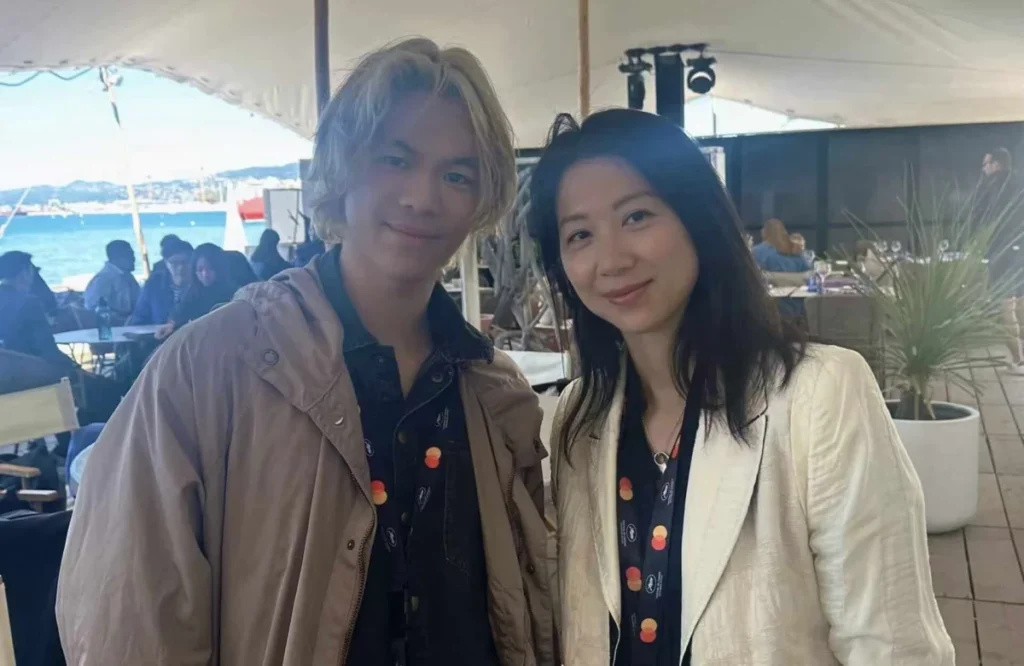
The global animation landscape is continually evolving, with established studios seeking innovative avenues to foster creativity and engage new audiences. In a significant move, Toei Animation, a titan in the Japanese anime industry, has launched ETERNA Animation, a new brand dedicated to original content and nurturing emerging talent. This strategic initiative, unveiled ahead of the studio’s momentous 70th anniversary, recently showcased its inaugural production, the 15-minute animated short “Foxing: Kitsuné-tsuki,” at the esteemed Fantasia International Film Festival. The film’s world premiere on July 18, as part of Fantasia’s "Anime no Bento 2026" program, provided a platform for director Takeru Shinozuka and producer Yoshihide Moriyama to elaborate on the brand’s vision, the film’s thematic depth, and the broader implications for the future of animation.
The Genesis of ETERNA Animation: A New Chapter for Toei
Toei Animation’s legacy is built upon decades of groundbreaking work, birthing global phenomena like "Dragon Ball," "One Piece," and "Digimon." These franchises have not only garnered immense commercial success but have also shaped the childhoods of millions worldwide, cementing Toei’s reputation as a powerhouse in mainstream anime production. However, as producer Yoshihide Moriyama articulated during the post-premiere discussion, the establishment of ETERNA Animation transcends a mere anniversary celebration. It signifies a deliberate strategic shift, a commitment to cultivating an alternative creative environment within the venerable studio.
Moriyama emphasized that ETERNA was conceived to offer a distinct space for creators, fostering a more independent production model. Unlike the often committee-driven or franchise-bound processes typical of large studios, ETERNA aims to empower individual artists, granting them greater autonomy over their projects from initial concept to final execution. "We wanted to do something more independent, in which creators can make their own works from beginning to end," Moriyama stated, underscoring the brand’s core philosophy. He elaborated on the aspiration to place creators at the forefront, nurturing their growth alongside the studio’s evolution. This approach mirrors a broader industry trend where creator-owned content and artist-driven narratives are gaining prominence, offering a counterbalance to large-scale, commercially risk-averse productions.
The relationship between Toei Animation and ETERNA, as Moriyama explained, can be likened to a major corporation establishing a separate subsidiary to pursue a specialized objective. This distinction is not intended to elevate ETERNA’s output as inherently "more prestigious" than Toei’s established works, but rather to carve out a dedicated space for originality, artistic individuality, and the development of emerging filmmakers. It represents Toei’s recognition of the need for diversification in its creative portfolio, ensuring it remains at the vanguard of animation innovation while honoring its commercial commitments. This strategic move could potentially attract a new generation of artists seeking creative freedom within the stability of a major studio, addressing a common challenge in the highly competitive and often demanding anime industry.
"Foxing: Kitsuné-tsuki": A Deep Dive into Creative Struggles
The inaugural short under the ETERNA banner, “Foxing: Kitsuné-tsuki,” serves as a potent illustration of the brand’s creative ethos. Written and directed by Takeru Shinozuka, the film introduces Shinano, a young character designer grappling with profound dissatisfaction in her professional life. Her creative malaise is compounded by relentless insomnia, a pervasive sense of isolation, and the unsettling manifestation of Koyami—a malicious, fox-masked figure born from one of her discarded drawings. This narrative, rich in psychological depth and mythological resonance, immediately distinguishes itself from Toei’s typically action-packed or lighthearted mainstream fare.
The film’s exploration of creative block and artistic alienation resonates deeply within the anime industry, an environment often characterized by demanding schedules, tight deadlines, and the pressure to conform to established commercial formulas. Shinozuka’s decision to tackle these themes head-on, through a personal and symbolically charged narrative, provides a compelling entry point for ETERNA. The 15-minute runtime of “Foxing: Kitsuné-tsuki” allows for an intense, focused examination of Shinano’s internal struggle, hinting at the potential for ETERNA to produce thought-provoking, mature animated content.
Takeru Shinozuka: A New Voice Emerges
The selection of Takeru Shinozuka, born in 1994, as the director for ETERNA’s debut project underscores the brand’s commitment to cultivating younger talent. Shinozuka joined Toei Animation after graduating from Tokyo Zokei University, a reputable institution known for its arts and design programs. His professional journey within Toei has seen him contribute to established franchises like "One Piece" and "Digimon," gaining valuable experience in large-scale production environments. However, “Foxing: Kitsuné-tsuki” marks his directorial debut, a significant milestone that showcases his multifaceted talents as a writer, storyboard artist, and character designer, in addition to his directorial responsibilities.
Moriyama’s description of their collaboration as "exceptionally fortunate" highlights the serendipitous nature of finding the right creator to embody ETERNA’s vision. Toei Animation, with its vast pool of directors, designers, and animators, provided the institutional framework, but ETERNA offered the crucial opportunity to center an entire production around a single creator’s unique perspective. This approach not only empowers the artist but also fosters a distinctive artistic voice, which is paramount for a brand aiming to carve out a niche for original content.
Personal Experience and the Tapestry of Japanese Mythology
A significant portion of “Foxing: Kitsuné-tsuki” draws directly from Shinozuka’s personal experiences, with the director estimating that approximately 30 to 40 percent of the story emerged from his own creative journey. He candidly acknowledged periods of restricted creativity and frustration bordering on depression, though he clarified that his mental state never reached the extreme levels depicted in Shinano’s narrative. This willingness to infuse personal vulnerability into his art lends the film an authentic emotional core.
To create a necessary artistic distance from the autobiographical elements, Shinozuka consciously chose a female protagonist. He explained that a male character might have felt too directly self-referential, hindering his ability to objectively approach and shape the narrative. This deliberate separation allowed him to concentrate more effectively on the technical and artistic demands of animation, ensuring the story resonated beyond his individual experience.
Crucially, Shinozuka masterfully interweaves these personal elements with the rich tapestry of Japanese folklore, drawing heavily from Shinto beliefs, yokai traditions, and other aspects of indigenous mythology. The fox, or kitsuné, was a deliberate choice due to its multifaceted and often contradictory roles in Japanese mythology. Kitsuné can be benevolent divine messengers, mischievous yokai, formidable monsters, enigmatic spirits, or deceptive beings capable of possessing and misleading humans. "They have many different faces in mythology," Shinozuka observed, "That is exactly why I picked the fox."
This inherent duality of the kitsuné becomes a powerful metaphor in the film. The concept of kitsuné-tsuki, or fox possession, functions both as a supernatural affliction and as a profound allegory for Shinano’s alienation from her own creative essence. Koyami, the fox-masked figure, embodies not just an external tormentor but also a suppressed aspect of Shinano’s imagination—a part of herself that she has attempted to discard or ignore. The attacks and mockery from Koyami are, therefore, an internal struggle, a battle with the untamed, perhaps darker, aspects of her own artistic spirit.
Finding the Fox Within: A Journey of Self-Reclamation
One of the film’s most striking sequences sees Shinano venturing into an underworld-like corridor, a symbolic journey culminating in her confrontation with the fox. Shinozuka clarified that this setting is not a literal supernatural realm but rather a metaphorical space within the protagonist’s own heart. Shinano’s proactive decision to enter this inner world, rather than waiting for external rescue, signifies a crucial step towards self-empowerment. She already knows where Koyami resides because it is intrinsically linked to her.
"She reaches out to it and is the one who gives it meaning," Shinozuka explained. This distinction is central to the film’s overarching message. Shinano’s path to overcoming her creative and personal problems does not involve rejecting the strange characters she once created or the wildness of her imagination. Instead, it necessitates acknowledging them as integral parts of herself, embracing the individuality that had been eroded by professional pressures and debilitating self-doubt. The film argues for a reclamation of artistic agency and personal authenticity, suggesting that true creative liberation comes from confronting and integrating one’s internal conflicts.
While the narrative unfolds within the confines of a commercially driven animation studio, Shinozuka maintained that direct criticism of the anime industry was not the film’s primary concern. He acknowledged the numerous systemic issues facing the industry—issues often cited by animators and critics alike, including low wages, intense workloads, and a hierarchical structure that can stifle individual creativity. However, “Foxing: Kitsuné-tsuki” does not purport to offer a comprehensive solution to these problems. Instead, these industry conditions serve as the surrounding environment, an "aftertaste" for a more intimate story about personal honesty and self-discovery. "What is important is to be true to yourself and to what you actually believe," he concluded, emphasizing the film’s focus on individual integrity over institutional critique.
A Deliberately Contrasting Visual World
The visual aesthetic of “Foxing: Kitsuné-tsuki” is a key component of its storytelling. Shinozuka deliberately crafted a visual contrast between Shinano’s relatively simple character design and the more elaborate, often monstrous, creatures that populate her inner world. He expressed an attraction to the graphic simplicity of Shinano’s style, though he admitted that animating her proved unexpectedly challenging.
These contrasting designs are not merely stylistic choices; they are integral to the film’s thematic depth. The fantastical creatures are presented as Shinano’s own discarded drawings, their unruly and complex forms reflecting the vibrant imagination she once possessed. This visual dichotomy highlights the chasm between her restrained, often mundane daily existence and the boundless, untamed creativity she once channeled into her art. It visually articulates the internal conflict between conformity and artistic freedom.
Shinozuka meticulously focused on bodily movement and the intricate details of Shinano’s actions, aiming to convey a tangible sense of tension through animation. While he appreciates dynamic action sequences, he noted the significant effort required to produce them. His influences span a wide range, including the iconic productions of Studio Ghibli, other forms of Japanese animation, and even the camera techniques commonly employed in live-action cinema. This eclectic approach allows for a rich visual language that transcends conventional anime aesthetics, creating a unique and immersive experience.
Looking Ahead: ETERNA’s Feature Film Ambitions
While Takeru Shinozuka remained circumspect about his next project, indicating he was exploring various motifs without a definitive decision, producer Yoshihide Moriyama offered a tantalizing glimpse into ETERNA Animation’s long-term ambitions. The brand’s strategic roadmap includes the production of a feature-length movie, signaling a significant expansion beyond short films. Working with promising young directors like Shinozuka on shorts represents the foundational stage of this initiative, designed to test creative waters and cultivate talent. The transition into feature film production will constitute the next major phase, positioning ETERNA as a significant player in the realm of original, creator-driven animated features.
The synergy between Shinozuka and Moriyama appears strong, with both affirming their intention to continue collaborating. This enduring partnership is vital for ETERNA’s stated mission: to create original animation that not only leaves a lasting impression on audiences but also empowers younger creators to develop and amplify their distinctive artistic voices.
“Foxing: Kitsuné-tsuki” stands as an early, compelling testament to this approach. It is a deeply personal narrative that skillfully leverages industry anxieties, ancient Japanese folklore, and a deliberately contrasting visual style to explore the profound consequences when an artist becomes disconnected from the very creations that once defined their identity. As Toei Animation navigates its seventh decade, ETERNA Animation represents a bold, forward-thinking stride, promising a new era of diverse, artist-centric storytelling that could reshape perceptions of what a major animation studio can achieve.