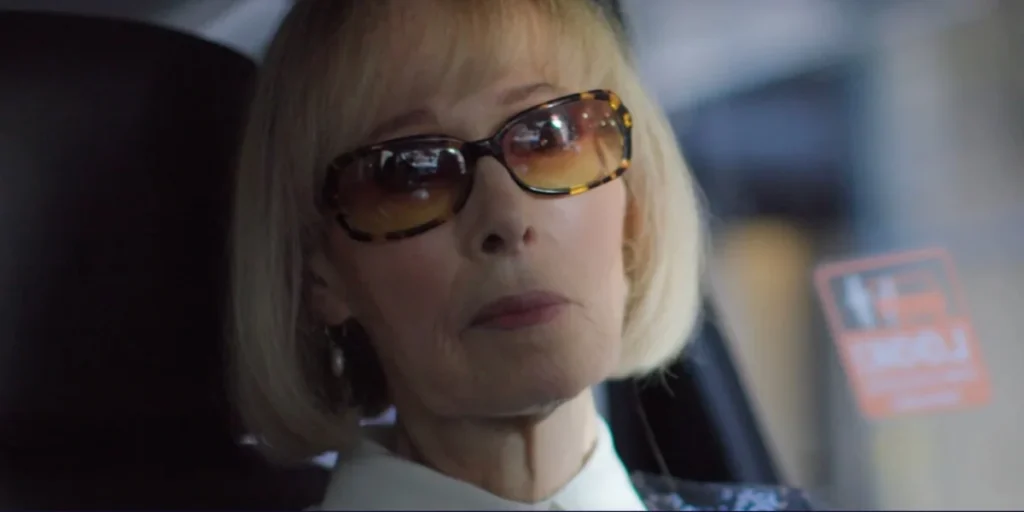
The 98-minute runtime of Evgeny Afineevsky’s documentary Ash and Crayons offers a harrowing yet deeply inspiring exploration of the ongoing Russia-Ukraine war, shifting the geopolitical discourse toward its most vulnerable casualties: the nation’s children. Through the firsthand accounts of seven resilient survivors, the film constructs a collective war diary detailing the physical devastation of bombings and the psychological warfare of forced abductions. The documentary features testimonies from young survivors Valeriia Sydorova, Bohdan Yermohin, Yana Stepanenko, Roman Oleksiv, Sasha Pascal, Veronika Vlasova, and Vladislav Buryak, alongside public figures such as Nina Vlasova, Pope Francis, and Ukrainian First Lady Olena Zelenska. Afineevsky, an Oscar-nominee renowned for his incisive coverage of Ukrainian civil unrest and conflict, utilizes an innovative visual framework to frame a geopolitical catastrophe through the innocent perspective of youth.
Background and Context of the Ongoing Conflict
To understand the profound resonance of Ash and Crayons, one must examine the trajectory of the Russo-Ukrainian conflict, which escalated dramatically with the full-scale Russian invasion in February 2022. However, the roots of this humanitarian crisis stretch back to the 2013–2014 Revolution of Dignity—often called the Euromaidan movement—which ultimately led to the ousting of pro-Russian President Viktor Yanukovych. That pivotal democratic shift toward European integration prompted the
illegal annexation of Crimea by the Russian Federation in 2014 and the instigation of armed separatism in the Donbas region.
Director Evgeny Afineevsky has chronicled this historical continuum across multiple award-winning projects. His 2015 breakout documentary, Winter on Fire: Ukraine’s Fight for Freedom, captured the heroism of the Maidan protesters, earning an Academy Award nomination for Best Documentary Feature and the Toronto International Film Festival Audience Award. Following the 2022 invasion, Afineevsky returned to the frontlines to produce Freedom on Fire: Ukraine’s Fight for Freedom, which documented the immediate geopolitical shockwaves and civilian suffering. Ash and Crayons serves as a thematic evolution of these prior works, narrowing its analytical lens from mass societal uprising to the hyper-local, deeply personal devastation experienced by children.
Chronology and Structural Anatomy of the Film
Structurally, Ash and Crayons is divided into two distinct thematic halves, reflecting the dual nature of the atrocities documented by human rights monitors. The narrative is stitched together using an animated diary motif, where children’s drawings and scribbled notes serve as transitional bridges between harrowing accounts. While the animated sequences provide a creative buffer against graphic live-action violence and compensate for missing archival footage, critics have noted that the primitive, video-game-like motion sometimes disrupts the visceral realism of the testimonies.
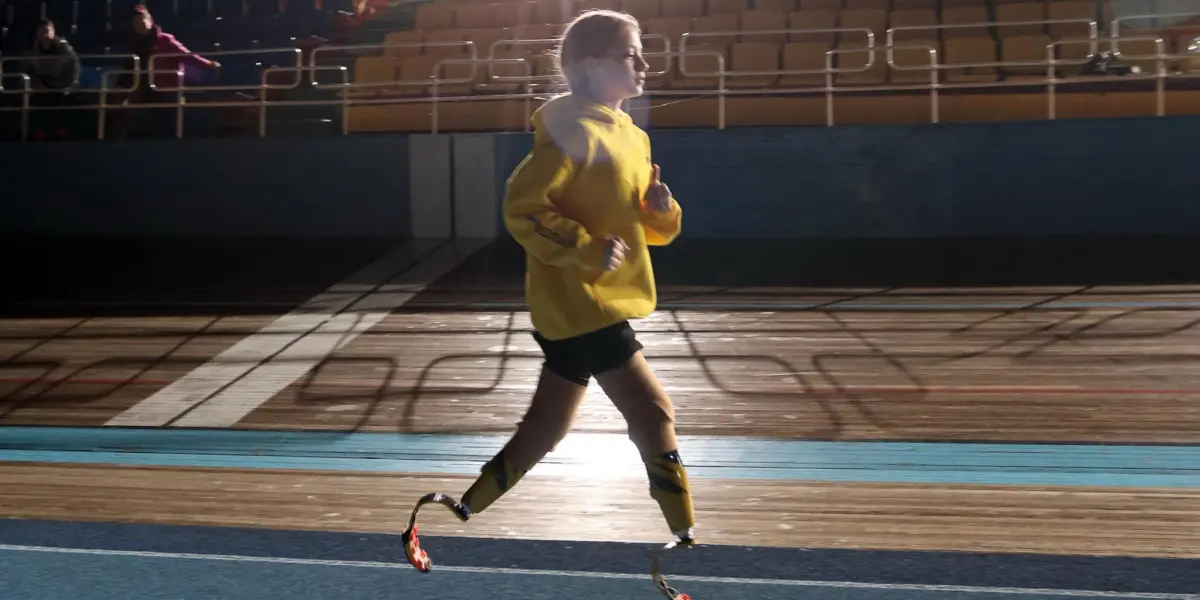
The first half of the documentary focuses on the indiscriminate destruction wrought by Russian shelling and missile strikes on civilian infrastructure. Among the young subjects is 12-year-old Yana Stepanenko, whose life changed forever at a railway station where she and her mother awaited evacuation; an exploding munition shattered her lower limbs, necessitating bilateral amputations. Similarly, eight-year-old Roman Oleksiv survived a direct missile strike on a medical center, sustaining severe burns across 40 percent of his body that required prolonged medical intervention and protective masking for healing skin. Seven-year-old Sasha Pascal, an aspiring gymnast since the age of four, lost the lower portion of her left leg when a missile destroyed her family home, abruptly terminating her athletic ambitions.
The second half of the documentary pivots to a less frequently explored, yet systematically executed, element of the Russian military campaign: the forced deportation and abduction of Ukrainian children. International monitors and humanitarian organizations have documented thousands of cases where minors were forcibly transferred to Russian-controlled territories under the guise of humanitarian evacuation or summer camps, only to be subjected to aggressive Russification and political indoctrination.
The film details the horrifying ordeals of four youths subjected to these programs:
- Valeriia Sydorova, 17, who was relocated to a camp in Russian-occupied Crimea and subjected to intensive pro-Russian nationalist curricula.
- Bohdan Yermohin, 18, abducted from Mariupol and transferred to a Moscow-region camp, where he faced threats of conscription into the Russian armed forces before attempting a perilous escape.
- Vladislav Buryak, 18, who was intercepted from his family’s vehicle at a checkpoint and detained in an isolation cell for 48 days, enduring psychological torment and witnessing the severe distress and attempted suicide of a cellmate.
- Veronika Vlasova, 14, targeted due to her mother’s military service, enduring a 14-month separation before her mother, Nina Vlasova, launched a high-profile international advocacy campaign—culminating in an address to the United Nations Security Council—to secure her repatriation.
Supporting Data and International Humanitarian Implications
The allegations highlighted in Ash and Crayons are corroborated by substantial international legal and humanitarian data. According to official figures compiled by Ukrainian government agencies and international human rights bodies, tens of thousands of Ukrainian children have been forcibly deported to Russia or held in filtration and re-education camps since February 2022. These actions led the International Criminal Court (ICC) in March 2023 to issue arrest warrants for Russian President Vladimir Putin and Maria Lvova-Belova, the Russian Presidential Commissioner for Children’s Rights, citing war crimes linked to the unlawful deportation and transfer of children from occupied areas of Ukraine to the Russian Federation.
From a geopolitical and sociological perspective, the forced transfer of children constitutes a grave violation of the Fourth Geneva Convention, which prohibits individual or mass forcible transfers, as well as deportations of protected persons from occupied territory. Legal experts and human rights analysts have characterized these systematic indoctrination campaigns as an explicit attempt to erase the cultural, linguistic, and national identity of a sovereign population—effectively deploying children as political pawns to compromise the long-term demographic and social viability of Ukraine.
Official Responses and High-Level Advocacy
The film weaves international diplomacy and high-profile institutional support into its narrative arc. Throughout their recovery and subsequent advocacy journeys, several of the children featured in the documentary met with the late Pope Francis at the Vatican, receiving papal validation and global visibility for their plight. Furthermore, Ukrainian First Lady Olena Zelenska has repeatedly championed the cause of returning abducted minors, using her platform to rally international coalitions and secure the repatriation of displaced youths.
Official responses from Moscow have consistently dismissed international legal findings and humanitarian reports, framing the relocations as protective humanitarian measures designed to remove children from active combat zones. However, independent journalistic investigations, United Nations findings, and testimonies from survivors such as those documented in Afineevsky’s film overwhelmingly contradict these assertions, pointing instead to a coordinated state policy of forced assimilation.
Broader Impact, Resilience, and Conclusion
Despite the grim subject matter, Ash and Crayons concludes on a note of defiant optimism. Rather than defining the young survivors solely by their trauma, the documentary highlights their extraordinary post-trauma achievements. In the months following their rehabilitation, the subjects have demonstrated remarkable physical and psychological resilience: competing in international ballroom dancing championships, running 5K races, launching nascent music careers, and reclaiming their futures.
In its final analysis, Ash and Crayons posits that the Kremlin’s strategy of abducting and indoctrinating Ukrainian youth is designed to fracture the nation’s future by targeting its newest generation. Yet, the unyielding spirit, courage, and determination exhibited by Valeriia, Bohdan, Yana, Roman, Sasha, Veronika, and Vladislav serve as a powerful testament to human endurance. Through their collective war diary, Afineevsky ensures that the world confronts not only the brutal calculus of modern aggression but also the indomitable will of a generation refusing to surrender its identity or its dreams.