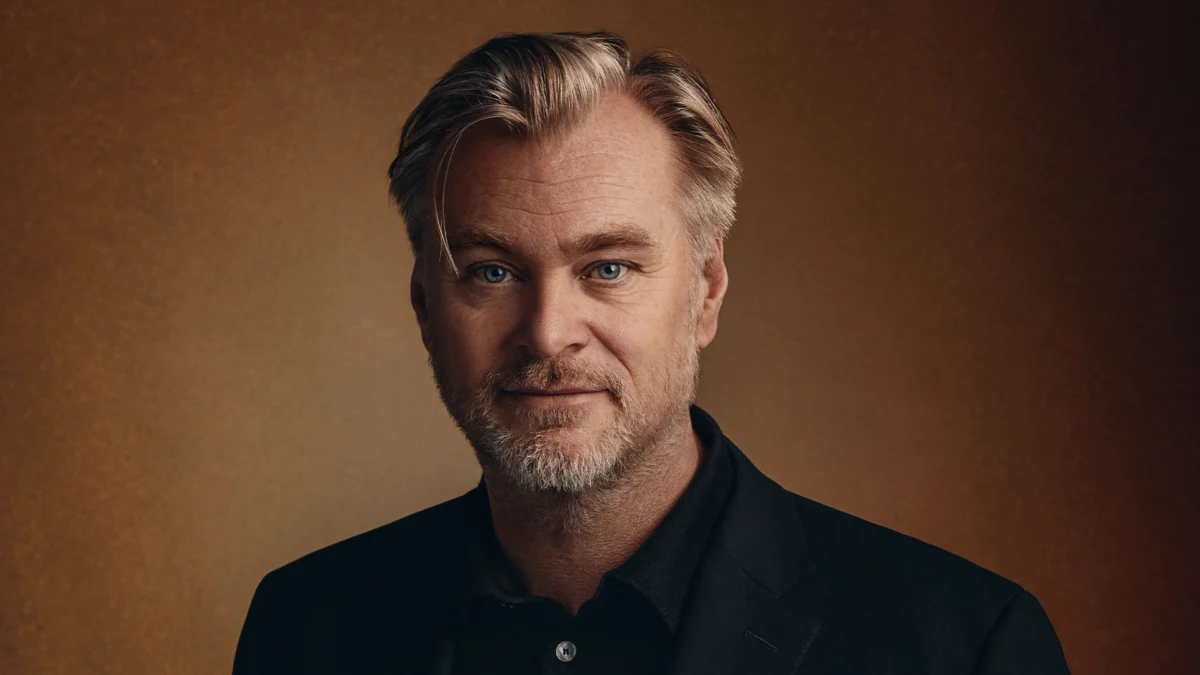
Christopher Nolan, the acclaimed British-American filmmaker, has once again captivated global audiences with his latest cinematic endeavor, The Odyssey. Fresh off the monumental success of Oppenheimer, which garnered seven Academy Awards including Best Picture and Best Director, Nolan’s thirteenth feature film has debuted to a staggering $264 million worldwide, marking his highest-grossing global opening weekend to date. This impressive haul further bolsters his career cumulative box office to over $6.2 billion, cementing his status as one of Hollywood’s most consistently successful and critically lauded auteurs. The film, notable for being the first narrative feature shot entirely in IMAX, has resonated deeply with critics and moviegoers alike, affirming Nolan’s unparalleled ability to blend visual spectacle with profound intellectual inquiry.
Record-Breaking Box Office Performance and IMAX Dominance
The Odyssey‘s opening weekend performance underscores not only Nolan’s enduring appeal but also the robust demand for premium cinematic experiences. Domestically, the film achieved an impressive $124 million, making it Nolan’s strongest opening outside his iconic Batman franchise. A significant portion of this domestic success, 23.8 percent, originated from IMAX screens, highlighting the format’s critical role in the film’s financial triumph and Nolan’s strategic utilization of the technology. This remarkable performance follows a period of significant anticipation, especially after the critical and commercial success of Oppenheimer, which redefined the potential for adult-oriented dramas at the box office. Industry analysts had closely watched The Odyssey‘s release as a barometer for the theatrical market’s health, and its performance has delivered a resounding affirmative. The film’s robust global reception, spanning diverse international markets, signals Nolan’s universal cinematic language and his capacity to draw audiences to complex, thought-provoking narratives on an epic scale. This success also reinforces the unique selling proposition of the IMAX experience, particularly when paired with a filmmaker who leverages its capabilities to their fullest, offering an immersion that cannot be replicated at home.
A Decades-Long Fascination with Homer’s Epic
Nolan’s journey to adapt Homer’s ancient Greek poem, which chronicles the legendary hero Odysseus’s perilous ten-year voyage home after the Trojan War, has been a long and winding one. His initial encounter with The Odyssey dates back to a grade school play, sparking a lifelong fascination. This early interest nearly materialized into a directorial opportunity during his brief involvement in the development of 2004’s Troy. While that project ultimately went to Wolfgang Petersen, Nolan’s imprint was almost made, specifically his vision of the iconic Trojan Horse—a deceptive, war-altering gift—wedged into the beach of Troy. This powerful image, a haunting recurring motif, is precisely how Nolan chooses to open his rendition of The Odyssey, establishing a thematic anchor within the first 30 seconds of the film. This long gestation period allowed Nolan to deeply internalize the epic’s themes, realizing, as he began writing, how many elements of The Odyssey had unconsciously permeated his prior filmography. This profound personal connection to the source material is a cornerstone of the film’s unique narrative and thematic richness.
Interweaving Filmography: A Signature Nolan Tapestry

One of the most striking aspects of Nolan’s The Odyssey is its intricate self-referentiality, where his past cinematic achievements are subtly woven into the fabric of the ancient tale. Viewers familiar with Nolan’s oeuvre will recognize numerous thematic and character echoes. The arduous journey home, fraught with physical and psychological challenges, immediately calls to mind the desperate struggles of Alfred Borden (Christian Bale) in The Prestige, Cobb (Leonardo DiCaprio) in Inception, and the Allied soldiers in Dunkirk. The motif of a spectral figure observing their former home, a poignant reflection on loss and longing, mirrors Coop (Matthew McConaughey) in Interstellar and Bruce Wayne (Christian Bale) in The Dark Knight Rises.
Moreover, the film features a harrowing leap of faith reminiscent of Bruce Wayne’s escape from the pit in The Dark Knight Rises, symbolizing liberation from an oppressive confinement. Odysseus’s fragmented memories and his struggle to piece together his identity bear a striking resemblance to Leonard Shelby (Guy Pearce) in Memento, a character defined by his inability to form new memories. Even a seemingly minor detail, such as an Anne Hathaway character witnessing impressive archery skills, draws a direct parallel to Selina Kyle/Catwoman in The Dark Knight Rises, further solidifying the interconnectedness of Nolan’s cinematic universe. These deliberate thematic and visual callbacks are not mere Easter eggs; they serve to enrich The Odyssey, positioning it not just as an adaptation, but as a culmination and re-interpretation of the core ideas Nolan has explored throughout his distinguished career. This meta-narrative approach allows the filmmaker to deepen the universal resonance of Homer’s epic by grounding it in a recognizable cinematic language he has meticulously crafted over decades.
Exploring Profound Parallels: The Odyssey and Oppenheimer
Perhaps the most significant thematic convergence within Nolan’s recent work lies in the striking parallels between The Odyssey and Oppenheimer. Both films grapple with the profound and often terrifying consequences of extraordinary human ingenuity. The Trojan Horse, Odysseus’s cunning but devastating invention, serves as a mythological precursor to J. Robert Oppenheimer’s atomic bomb. Both creations irrevocably alter the landscape of warfare and, more broadly, the fabric of civilized society. The film portrays Odysseus grappling with the moral weight of his actions, fearing that his brilliance has unleashed forces beyond human control—a sentiment profoundly echoed in Oppenheimer’s own existential crisis after the detonation of the atomic bomb.
Nolan himself acknowledges these emergent connections, stating, "Now that I look back on it after finishing The Odyssey, there are interesting parallels [to Oppenheimer]." He elaborates on his creative process, explaining, "I try to leave each film I do with thematic concerns and questions that stay a little bit open for me and hopefully the audience too. They are things that I want to explore further without being too self-conscious about it." This reflective approach underscores Nolan’s commitment to exploring complex moral and philosophical questions across his filmography, allowing themes to organically intertwine and deepen with each new project. The convergence of these two epics, one ancient and one modern, highlights Nolan’s recurring interest in the dual nature of human innovation—its capacity for both creation and catastrophic destruction, and the moral imperative that accompanies such power.
The Golden Rule and the Fabric of Civilization
Central to The Odyssey is a strong emphasis on Zeus’s law, which can be broadly understood as the Golden Rule: treating others as one wishes to be treated. While the film concludes with a cautionary message about the dangers of disregarding historical warnings, Nolan maintains an optimistic outlook on humanity’s inherent capacity for mutual respect. He firmly believes that our better nature will ultimately prevail. "The fact that we have mutual respect is what, to some extent, defines civilization," Nolan asserts. He further posits that this fundamental principle transcends rigid frameworks: "I don’t think that’s something that can be entirely imposed by, for example, a religious framework. I think it has to be innate in us for that to be as prevalent and as effective as it has been over thousands of years."

This philosophical underpinning distinguishes Nolan’s The Odyssey from darker interpretations of societal norms, such as the Danish horror film Speak No Evil (2022), which explores the perilous consequences of blind adherence to social etiquette. Nolan acknowledges the comparison but frames his narrative in brighter terms, emphasizing the enduring power of innate human morality. This exploration of fundamental human values within an epic narrative allows Nolan to engage with timeless questions about justice, empathy, and the societal structures that uphold or erode them, offering a hopeful, albeit nuanced, perspective on the human condition.
Innovation in IMAX: Pushing Cinematic Boundaries
Nolan’s long-standing commitment to IMAX technology reached a new zenith with The Odyssey, being the first narrative feature filmed entirely in the format. His journey with IMAX began years ago, initially dabbling with the cameras on The Prestige and then making a significant leap with The Dark Knight, integrating what was traditionally a documentary format into mainstream Hollywood production. This pioneering spirit led to numerous refinements, including the development of new lenses, advanced focus-pulling techniques, and improved internal monitoring systems. Over the years, Nolan has collaborated closely with IMAX and Panavision to expand the variety of lens sets, increase lens speed, and refine focus control systems to meet the exacting standards of Hollywood cinematographers.
A major breakthrough for The Odyssey was the engineering of a sound blimp that allowed the massive IMAX cameras to operate effectively silently, a crucial advancement for dialogue-heavy scenes. Nolan elaborates on this evolution, stating, "The idea that IMAX has now been able to engineer a way to contain the camera so that it’s effectively silent, that’s a big leap forward. But I’m sure it could be further refined." He highlights the collaborative feedback process, noting that cinematographer Hoyte van Hoytema and his team have already provided extensive input on the new Keighley camera and blimp system. This continuous dedication to pushing the technological boundaries of filmmaking underscores Nolan’s desire to deliver an unparalleled immersive experience, making the theatrical viewing of his films a truly unique event.
Collaborative Evolution: The Nolan Team’s Dynamic
Nolan’s approach to his filmmaking team reflects a careful balance between working with trusted collaborators and embracing fresh perspectives. While he historically relied on a consistent core crew, such as cinematographer Wally Pfister, he has shown a willingness to evolve. The transition to Hoyte van Hoytema as his director of photography marked a significant change, a move that proved highly successful and perhaps paved the way for other new artisans. More recently, The Odyssey saw the inclusion of composer Ludwig Göransson, editor Jennifer Lame, and production designer Ruth De Jong, all of whom brought fresh energy and talent to the project.
Nolan articulates this dynamic, stating, "It’s always a balance between wanting to work with the same people that you have an ease of familiarity with and then also wanting new ideas and fresh perspectives." He expresses gratitude for all his crew members, acknowledging the unique contributions each brings. This strategic blend of familiarity and novelty ensures that while Nolan’s signature style remains consistent, his films also benefit from evolving creative input, keeping his work vibrant and innovative. His long-standing collaboration with casting director John Papsidera, since Memento, further exemplifies this, highlighting Papsidera’s "genius" in finding exceptional performers for roles of all sizes, ensuring that even minor characters deliver compelling performances under the high-pressure conditions of large-scale productions.

Future Endeavors and Enduring Legacy
Beyond The Odyssey, Nolan’s future slate holds intriguing possibilities and a nod to his past. He is preparing a re-release of his critically acclaimed 2006 film, The Prestige, to commemorate its 20th anniversary. This special event will feature 70-millimeter blow-ups of Wally Pfister’s anamorphic 35-millimeter photography, promising a stunning visual experience for both new and returning audiences. Nolan is particularly excited to highlight Christian Bale’s "underrated performance" in the film, hinting at a potential reunion with the actor whom he has collaborated with on some of his most iconic works. "He’s one of the great actors of his generation," Nolan affirms, leaving the door open for future projects.
While Robert Pattinson’s wrap gift of Oppenheimer’s speeches famously sparked the idea for Nolan’s previous film, the director humorously confirms that Pattinson’s Odyssey wrap gift did not similarly inspire his next project. However, Nolan’s insatiable appetite for new storytelling challenges remains. Despite the world’s continued pleas for him to direct a horror film, he suggests that large stretches of The Odyssey already contain elements of the genre. "They don’t need to beg me to tell a horror story anymore. Just buy a ticket," he quips, indicating he’s scratched that itch, though he also admits it has "whetted his appetite for more." He emphasizes that any future foray into horror would be driven by an "amazing idea" rather than technical aspirations, showcasing his story-first approach.
Nolan’s consistent ability to deliver massive-scale films both under budget and ahead of schedule is a rarity in an industry often plagued by production overruns. He attributes this discipline to a strategic approach aimed at maintaining creative autonomy. "If I stayed on budget and on schedule, I got less interference," he reveals. "I didn’t give people a reason to panic. That’s when you find people breathing down your neck and questioning everything you’re doing. If you can stay on the right side of that line, that buys you a different type of creative freedom." This pragmatic philosophy allows him to make creative compromises on his own terms, a practice he acknowledges not all filmmakers share, but one that has undeniably contributed to his unparalleled success and his ability to realize his ambitious visions without undue external pressure.
The Odyssey is now playing in movie theaters nationwide. A version of this story will appear in the July 22 issue of The Hollywood Reporter.