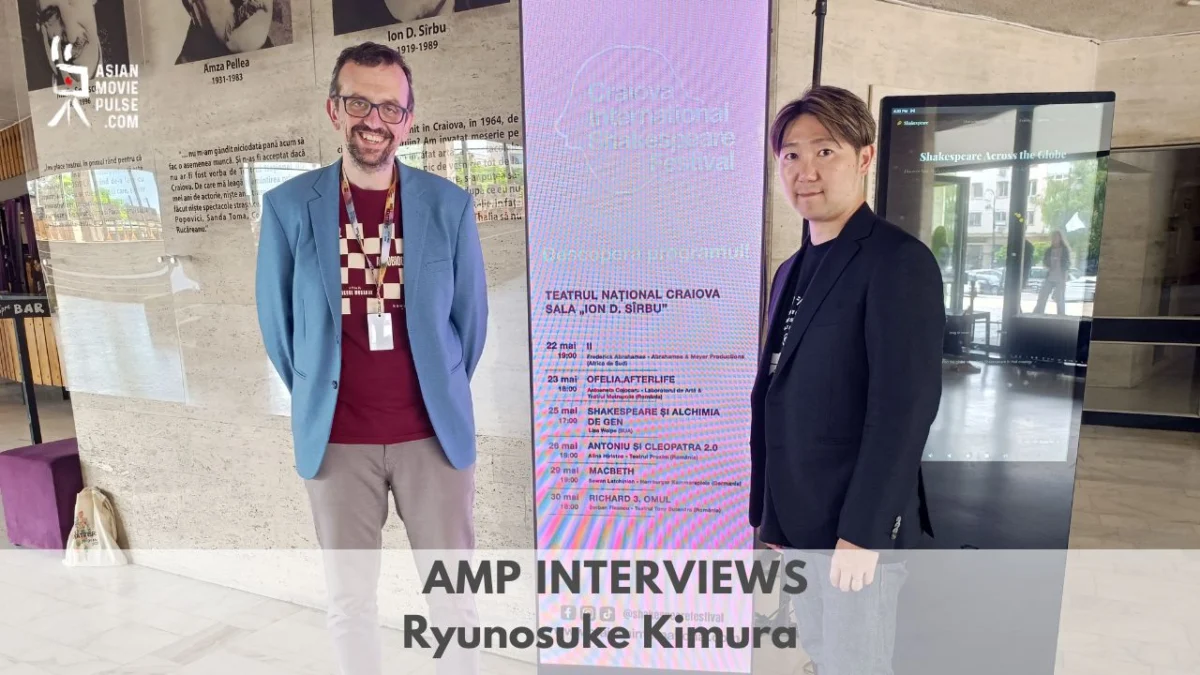
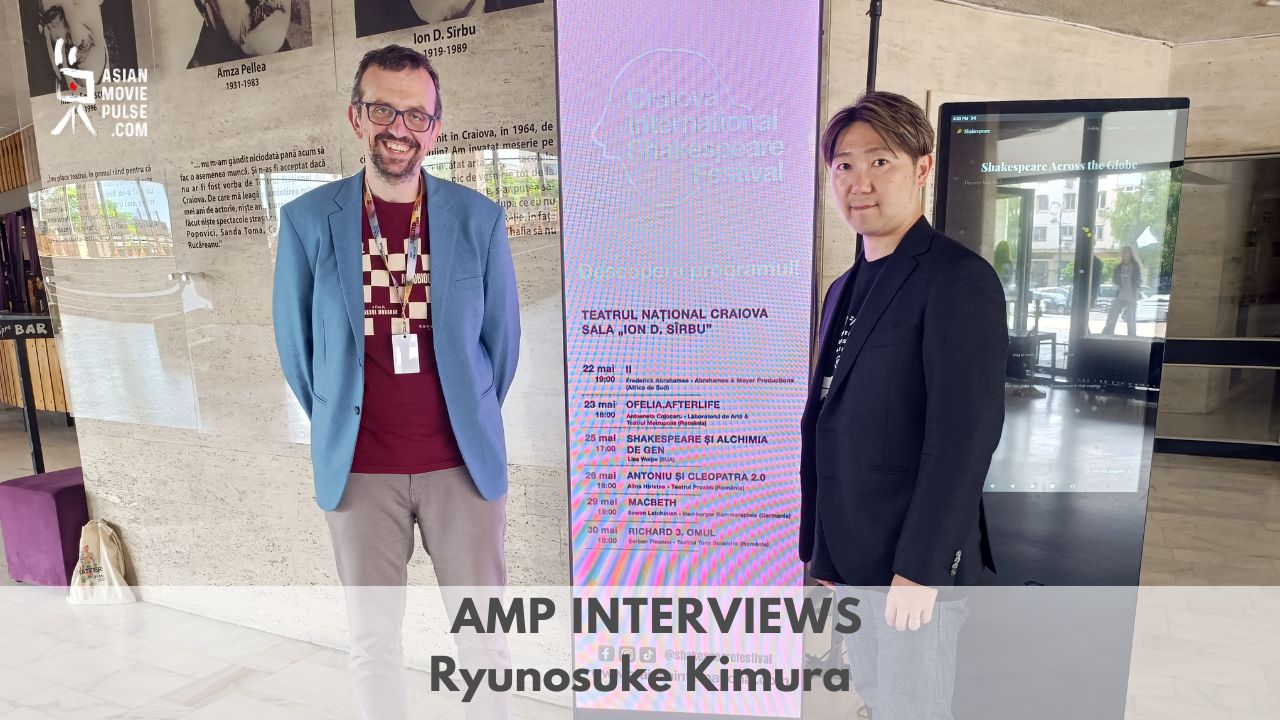
Craiova, Romania – The Craiova International Shakespeare Festival, a prominent fixture in the global theatrical calendar, recently hosted the compelling production of "Titus Andronicus: Reborn," helmed by acclaimed Japanese director Ryunosuke Kimura and his Kakushinhan theatre company. Kimura’s presence at the festival was a cornerstone of its wider Japanese focus, offering a unique opportunity for dialogue on Shakespeare, the evolving landscape of contemporary Japanese theatre, the profound influence of Noh, the pervasive nature of violence, and the intricate, multi-year journey that brought this distinctive adaptation to the Romanian stage. "Titus Andronicus: Reborn" stands as a testament to theatrical resilience and innovation, having navigated numerous iterations, cancellations, and creative transformations before achieving its current form – a powerful amalgamation of Shakespearean tragedy, traditional Japanese Noh theatre, Rakugo storytelling, dynamic physical performance, and a meticulously stylized approach to depicting brutality.
Director’s Vision and the Production’s Odyssey
During a series of engagements in Craiova, including a public discussion and a panel session, Kimura articulated his deeply personal relationship with William Shakespeare and the genesis of "Titus Andronicus: Reborn." He illuminated how contemporary Japanese society, the specter of global catastrophes, the ancient art form of Noh theatre, and historical trauma collectively inform and shape his artistic output. Kimura initiated one panel by engaging the audience directly, inviting their immediate reactions to his production, thereby transforming a conventional presentation into an interactive dialogue. A particularly insightful comment from a spectator lauded the performance’s evocative atmosphere, its nuanced incorporation of history, and the underlying premise that critical re-evaluation of the past might prevent the recurrence of errors. Kimura’s response underscored his core philosophy: Shakespeare, for him, is not a static literary relic but a vibrant, adaptable entity, demanding constant reinterpretation to resonate with the complexities of the modern world.
Kimura’s initial, profound connection with Shakespeare did not stem from childhood literary exposure or academic veneration. Instead, it emerged organically from his earnest attempts to comprehend the profound human capacity for violence, catastrophe, and cruelty. He cited a triad of epochal events that irrevocably shaped his worldview: the devastating 1995 Aum Shinrikyo sarin gas attack in Tokyo, which claimed 13 lives and injured thousands; the September 11, 2001, terrorist attacks in the United States, resulting in nearly 3,000 fatalities and fundamentally altering global security paradigms; and the catastrophic Great East Japan Earthquake and Tsunami of March 11, 2011, which caused over 15,000 deaths, widespread destruction, and triggered the Fukushima Daiichi nuclear disaster. As a young person witnessing these unfolding tragedies, Kimura grappled intensely with the incomprehensible motivations behind such widespread suffering and heinous acts.
Despite delving into politics and religion through extensive reading, Kimura confessed that conventional academic knowledge failed to satisfy the profound questions emanating "from the heart." His turning point arrived serendipitously with the discovery of "Macbeth" in a library. Through the haunting imagery of the witches, the uncanny movement of Birnam Wood, and the indelible stain of blood that defies cleansing, he found a dramatic lexicon that seemed to articulate the very problems he sought to understand. This revelatory experience led Kimura to "adopt Shakespeare" into his artistic consciousness, cultivating the playwright’s work as a cornerstone of his creative life. He later developed a deep admiration for the late Yukio Ninagawa (1935-2016), whose globally celebrated Shakespearean productions left an indelible mark on Japanese theatre and were, notably, a recurring highlight at the Craiova Festival for many years. Kimura vividly recalled his first encounter with Ninagawa’s work – a filmed version of "Titus Andronicus" – an experience that would prove profoundly prescient for his own directorial career.
Kakushinhan: Forging a New Path Post-Catastrophe
In the nascent stages of his directing career, Kimura adhered closely to Shakespeare’s original texts. However, the seismic events of March 11, 2011, served as a profound catalyst, convincing him that a fundamental rupture had occurred within Japanese society, yet this very rupture held the potential for new beginnings. It was in this context that he founded Kakushinhan Theatre Company, establishing a dedicated ensemble committed to exploring Shakespeare through a contemporary Japanese lens. The company’s name, "Kakushinhan," meaning "a crime committed out of conviction" or "ideological crime," subtly reflects Kimura’s intent to challenge theatrical norms and societal perceptions through his art.
Earlier Kakushinhan projects involved intensive, long-duration explorations of Shakespearean texts, including marathon-style performances that delved into plays over the course of an entire day. These immersive experiences honed Kimura’s ability to perceive history, politics, Japanese society, and culture through the prism of Shakespeare. For him, the Bard became an indispensable tool for processing both personal and collective trauma. This profound connection explains the pivotal role "Titus Andronicus" came to play in his repertoire. Kimura describes it as a play that contemporary directors, including himself, are compelled to confront due to its unflinching violence, pervasive grief, and disturbing resonance with present-day global realities. Kakushinhan had previously staged iterations related to "Titus Andronicus" in 2016 and another around 2019 or 2020, before the development of the critically acclaimed "Titus Andronicus: Reborn" that premiered in 2023.
The global COVID-19 pandemic played a decisive, albeit challenging, role in the production’s journey. Two attempts to stage the work collapsed due to cast members contracting the virus, necessitating continuous adjustments to the cast and the very form of the production. Rather than halting the project, these interruptions were ingeniously integrated into its evolutionary process. The production underwent continuous updates, most significantly around 2021, with the pivotal decision to incorporate elements of Noh theatre through the participation of master Noh actor Yamai Tsunao. This shift fundamentally altered Kimura’s approach, moving the production’s emphasis from a heavy reliance on Shakespeare’s text towards the physicality and presence of the actors. The final version, as Kimura explained, transcended mere words, prioritizing the performers’ bodies and making the act of acting itself the very core of the production.
The unusual spaces in which the work was developed also shaped its creation. With theatres closed during the pandemic, the company opted to rehearse and stage the piece in a warehouse located outside Tokyo, towards Saitama Prefecture. Kimura described this unconventional venue not as a traditional theatre but as a "primitive space," one that brought the production closer to theatre’s fundamental, ritualistic roots.
A Tapestry of Traditions: Noh, Rakugo, and Shakespeare
One of the most transformative outcomes of this adaptive process was the integration of Noh theatre. For the titular role of Titus Andronicus, Kimura cast Yamai Tsunao, a distinguished Noh actor recognized as a holder of Important Intangible Cultural Property status in Japan and a performer from the venerable Konparu school. Kimura underscored the profound significance of Yamai’s lineage, linking it directly to the deep historical continuity and foundational principles of Noh. Noh, a major form of classical Japanese musical drama that has been performed since the 14th century, is renowned for its stylized movements, masks, elaborate costumes, and spiritual themes, often rooted in Buddhist philosophy. Its preservation over centuries represents a unique model of theatrical professionalism, a quality Kimura deeply admires.
While Yamai typically performs in traditional Noh plays, Kimura was resolute in persuading him to enter the Shakespearean world, believing the role of Titus was, in essence, "written for him." The director saw in Yamai the exceptional capacity to embody the immense weight of the character’s grief, violence, and sorrow. Kimura noted that Yamai’s participation was extraordinary in the Japanese context, as a Noh performer appearing in a Shakespeare adaptation is highly uncommon. Crucially, he emphasized that his intent was not for Yamai to appear as a "Noh performer" superimposed onto Shakespeare, but rather as a Shakespearean performer in his own right, channeling the profound discipline and depth of his Noh training into the role.
The production’s structure revolves around what Kimura terms a "Noh actor centralism." Yamai, as Titus, stands as the unwavering axis of the stage world, while other performers dynamically attack, pressure, and revolve around him. Instead of succumbing to this centrifugal force, Yamai’s presence transmutes it into potent performance energy. Kimura drew a direct parallel to Noh itself, where the intricate relationship between the Waki (the secondary character) and the Shite (the main character, often masked) creates a central spiritual and dramatic core. In "Titus Andronicus: Reborn," Titus becomes that pivotal figure, the gravitational center around which the entire stage universe rotates.
However, Kimura was quick to clarify that this artistic centrality does not translate to hierarchy within the rehearsal room. Despite Yamai’s esteemed cultural stature, equality is a paramount principle within Kakushinhan. Every company member’s voice is valued, and the director actively listens to all suggestions, while ultimately retaining responsibility for the final artistic direction.
Kimura further elucidated why Noh proved so crucial to his interpretation of "Titus Andronicus." He perceives within Noh a potent element of "warriorship," exploring the intricate relationship between the killer and the killed. Rage and fury are undeniably present, but so too are profound grief and sorrow, emotions that can be transformed and transmitted with visceral impact to the audience. This inherent emotional architecture of Noh allowed Kimura to forge a powerful connection between Shakespeare’s brutal Roman tragedy and the deep traditions of Japanese theatre. Moreover, Kimura rejects the notion of Noh as an art form confined solely to Japanese performers or ethnicity. He champions it as a national heritage he aspires to share globally, believing that international artists can also master these forms, just as Japanese performers embrace Shakespeare. His directorial mission, therefore, is to foster a dynamic fusion of Eastern and Western theatrical theories, creating a fertile ground for both traditions to engage in profound dialogue.
Confronting Violence: The Theatrical Language
The pervasive question of violence was central to the discussions, given "Titus Andronicus"’s enduring reputation as one of Shakespeare’s most brutal and graphically violent plays. Kimura underscored that the production’s aim was neither to be consumed by violence nor to sanitize it. Instead, the imperative was to "deal with it properly." This entailed maintaining a delicate, often precarious, balance between tragedy, dark comedy, surprise, and entertainment, enabling the actors to navigate the narrative’s violent currents without rendering the violence meaningless or gratuitous.
To achieve this nuanced portrayal, Kimura ingeniously combines various theatrical forms, including Noh’s stylized movements, the comedic timing of Rakugo (a traditional Japanese verbal entertainment where a lone storyteller depicts a long and complicated comic story), innovative stage props, and classic Shakespearean theatricality. He metaphorically likened the treatment of violence to "playing with a ball," its inherent force scattered and refracted across different genres and techniques. In this manner, brutality is undeniably present, yet it is never presented in a singular, flat, or purely realistic mode. Instead, it is filtered and transformed through deliberate form, rhythm, and calculated theatrical distance.
Addressing one of the play’s most shocking moments – the horrific scene where Queen Tamora unwittingly consumes her own children baked into a pie – Kimura stated unequivocally that such violence is too terrible for direct, realistic depiction. It demands to be elevated into form and metaphor. Because theatre is, at its core, a form of "play," the horror should not be presented as direct violence alone but transmuted into an image that remains profoundly disturbing while simultaneously possessing an aesthetic or symbolic quality that compels the audience to reflect rather than merely react viscerally.
The production’s music serves as another crucial element in managing this rhythm of escalating violence and subsequent release. Kimura discussed the strategic use of hayashi, a form of traditional Japanese accompaniment that, rather than conventional music, emphasizes rhythmic patterns and sound effects to build tension. He connected this to the idea of gradual escalation. This principle also explains the inclusion of Maurice Ravel’s iconic "Boléro" in the production. The relentless, building tension of "Boléro" mirrors Titus’s escalating rage, culminating in a dramatic crescendo that functions as an integral part of the dramatization. As Kimura described it, Titus’s anger is interwoven into the structural framework of the bolero, creating a meticulously graded progression of sounds that profoundly shapes the atmosphere of the work.
Kimura also revealed his constant awareness of the audience during the directorial process. For him, every visual image and every stage object must be meticulously considered in terms of its reception. He cited the example of the production’s prominent silver sheet, which he envisions almost as a piece of modern art or a deliberate provocation. Throughout the creative journey, he maintains an imagined audience in his mind, meticulously evaluating scene by scene how each visual and performative choice will be perceived.
The pervasive use of red throughout the production is similarly intentional. Kimura’s approach to depicting blood consciously references theatrical masters such as Peter Brook and Yukio Ninagawa. Brook, in his seminal 1955 production of "Titus Andronicus," famously used red cloth to symbolize blood, while Ninagawa often employed red ropes in his earlier stagings. Kimura sought to acknowledge these powerful precedents while forging his own distinct visual language. In his version, red is connected not only to the visceral reality of blood but also to the profound grief and sorrow of the human heart.
The distinctive mask worn by Yamai Tsunao as Titus was specifically crafted for this production. Kimura clarified that it is not merely a generic demon mask but a "Titus mask," meticulously designed for the character. Created by master Noh mask designer Hisahito Iwasaki, it ingeniously combines the fierce visage of a demon with the poignant features of a grieving individual. Depending on the angle from which it is viewed, the audience can perceive either profound sorrow or monstrous wrath. Kimura’s ambition is for this mask to endure for centuries, much like traditional Noh masks, becoming a cultural artifact through which future generations might also interpret Japanese grief following the Second World War and the complex act of returning home.
Shakespeare for the Modern Age: Relevance and Adaptation
The conversation also delved into the challenges and strategies of adapting Shakespeare for contemporary Japanese audiences. Kimura observed that many young people in Japan are familiar with Shakespeare’s name but have not engaged with the plays themselves, often lacking understanding of references such as Elsinore Castle or the fundamental world of "Hamlet." To bridge this cultural gap, he frequently situates Shakespearean narratives within contemporary Japanese settings, enabling younger audiences to grasp the drama’s underlying meaning more directly and immediately.
A striking example Kimura provided was his conceptualization of "Hamlet" set in Shibuya, Tokyo’s iconic bustling district. He envisions Hamlet seated in a lotus position amidst the famous Shibuya Crossing, a vortex of humanity moving in every conceivable direction, while Hamlet remains a serene, motionless center. For Kimura, this image becomes a contemporary equivalent of Hamlet’s isolated castle, a spiritual sanctuary amidst modern chaos. Beneath the crossing, he imagines the buried dead of Japanese history, while falling sakura (cherry blossom) petals evoke the famous literary motif that "corpses are buried beneath cherry blossoms," a poignant symbol of fleeting beauty and hidden darkness in Japanese culture.
This methodological approach, Kimura explained, is akin to assembling a complex puzzle. His directorial task is to forge meaningful connections between Shakespeare’s timeless narratives and contemporary Japanese history, memory, violence, and specific places. Whether tackling "Macbeth," "Hamlet," or "Titus Andronicus," he relentlessly searches for the intrinsic links that allow these classic plays to speak powerfully and urgently to the present moment.
Regarding the Japanese reception of "Titus Andronicus: Reborn," Kimura noted an interesting phenomenon: Japanese audiences often tend to value a production more highly once it has garnered international attention. Following the announcement that the work would travel to Romania, domestic reactions became noticeably more enthusiastic, despite "Titus Andronicus" being a relatively lesser-known Shakespearean work for many viewers. Concurrently, Kakushinhan maintains a loyal base of supporters, and the presence of well-known figures within the cast also drew additional spectators.
Kimura also characterized his position within the broader Japanese theatre landscape as somewhat unusual. He does not claim to be an expert on the entire contemporary Japanese scene, acknowledging the existence of thousands of diverse professional and non-professional theatre groups across the nation. Instead, he views himself as operating in a distinct artistic lane, focused specifically on Shakespeare, a specialization that is rare for a Japanese theatre company.
The Craiova International Shakespeare Festival: A Global Platform and Future Horizons
The Craiova International Shakespeare Festival, established in 1994, has grown into one of the most important theatrical events globally, celebrated for its bold programming and commitment to exploring Shakespeare’s universal themes through diverse international lenses. The festival’s "Japanese focus" this year was a deliberate effort to showcase the vibrant and innovative interpretations of Shakespeare emerging from Japan, fostering cultural exchange and deepening understanding between East and West. By featuring productions like "Titus Andronicus: Reborn" and hosting dialogues with directors like Kimura, the festival reinforces its role as a crucial platform for international artistic collaboration and critical discourse.
Looking ahead, Kimura shared his exciting future plans. He is currently restaging "A Midsummer Night’s Dream" with the innovative inclusion of robots on stage, reflecting his interest in integrating technology into performance. Furthermore, he hopes to create a new version of "Hamlet" within the next four to five years, envisioning a "Hamlet Reborn" that explores how language can be transformed into the actor’s physicality and how humans can grapple with the complexities of language in an age increasingly shaped by artificial intelligence.
Finally, Kimura addressed the practicalities of financing his ambitious work, highlighting the critical importance of crowdfunding, dedicated supporters, corporate sponsors, and individuals in Japan who back his projects not as directors themselves but as passionate patrons of Shakespearean theatre. He also emphasized the strategic value of working beyond Tokyo, fostering connections with other prefectures, municipalities, and regional supporters to cultivate a more robust and decentralized environment for theatre across Japan.
Ultimately, Ryunosuke Kimura presented "Titus Andronicus: Reborn" not merely as a Japanese interpretation of Shakespeare but as a living, evolving theatrical organism. It is a production shaped by the disruptive forces of a global pandemic, deeply rooted in the ancient traditions of Noh, elevated by powerful physical performance, and driven by a profound concern for how violence can be transmuted into compelling artistic form. Through the pioneering work of Kakushinhan Theatre Company, Kimura continues to treat Shakespeare not as a static Western monument but as a dynamic, living structure through which Japan’s contemporary experience, its history, its grief, its catastrophes, and its vibrant theatrical future can powerfully converge and communicate with the world.