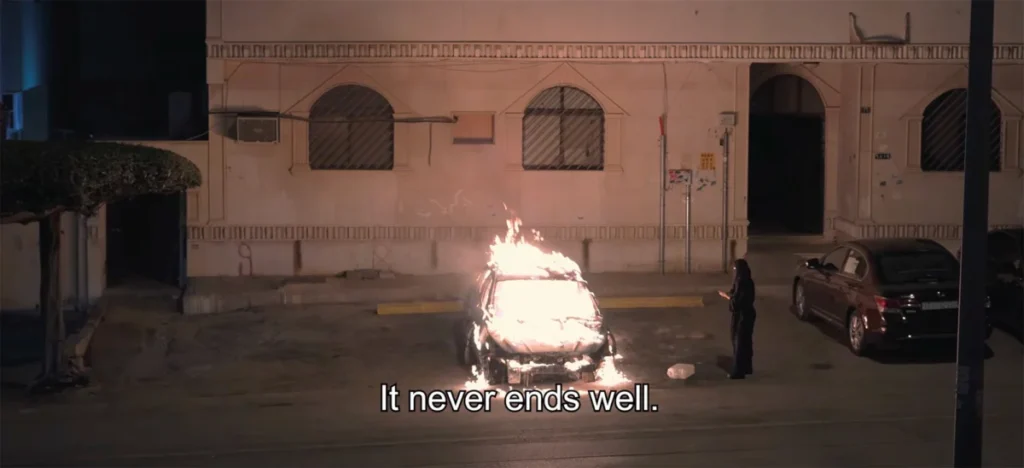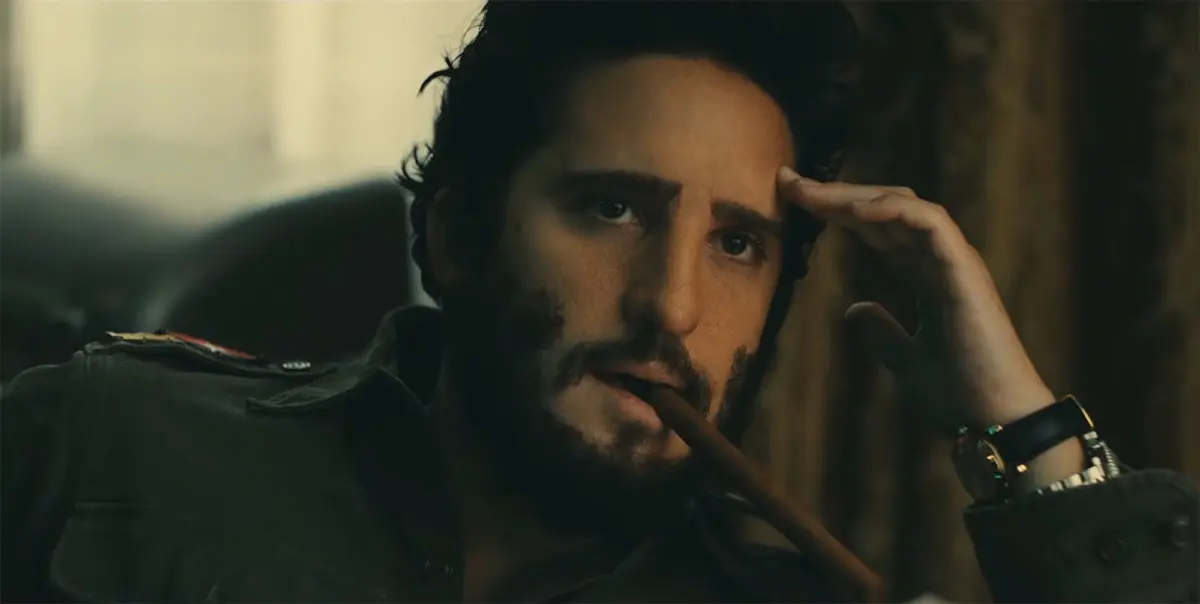
Lionsgate has released the final official trailer and promotional poster for Killing Castro, an upcoming historical political thriller directed by Eif Rivera. Set against the volatile geopolitical backdrop of the Cold War in 1960 New York City, the feature film dramatizes the intense convergence of state intelligence agencies, organized crime syndicates, and revolutionary figures during Fidel Castro’s historic visit to the United States. The film is scheduled for a dual release, arriving in select domestic theaters on December 11, before expanding to video-on-demand (VOD) platforms on December 18, 2026.
The narrative centers on a high-stakes conspiracy involving the Federal Bureau of Investigation (FBI), the Central Intelligence Agency (CIA), and the American Mafia, all of which allegedly sought to neutralize the newly empowered Cuban leader before he could address the United Nations General Assembly. Featuring an expansive ensemble cast that includes Diego Boneta as Fidel Castro, Al Pacino as a mysterious CIA operative, and Kendrick Sampson as Malcolm X, the film aims to unpack a tense, multi-layered historical episode defined by espionage, surveillance, and civil rights activism.
Main Facts and Plot Overview
At its core, Killing Castro chronicles the convergence of global superpowers and domestic friction points in the autumn of 1960. Following his rise to power in Cuba earlier that year, Fidel Castro traveled to New York City to participate in the United Nations General Assembly, an event that instantly triggered a massive security and intelligence crisis for the United States government.
The situation escalated dramatically when Castro rejected the accommodations initially prepared for him and unexpectedly relocated his entourage to the historic Hotel Theresa in Harlem. This move came at the direct invitation of civil rights leader Malcolm X, who sought to forge solidarity with the Cuban revolution and challenge the racial and political status quo of the United States.

The decision to stay in Harlem placed Castro at the epicenter of both Black nationalist movements and heavy federal surveillance. According to the film’s premise, a complex web of actors becomes unwittingly or deliberately embroiled in a covert assassination plot. Alongside high-ranking intelligence handlers and mob bosses, the story highlights ground-level perspectives, including a young translator portrayed by Xolo Maridueña and a hotel worker played by KiKi Layne. These fictionalized or composite characters navigate the tightening circle of threat actors, turning a tense diplomatic visit into a pressure cooker of conflicting agendas.
Historical Context of the 1960 New York Summit
To understand the weight of the narrative adapted by screenwriters Thomas V. DeGrezia and Leon Hendrix III—building upon an initial script by Colin Bateman—it is essential to examine the actual historical climate of September and October 1960.
During this period, the Cold War was entering one of its most dangerous phases. The Cuban Revolution, which successfully overthrew the U.S.-backed regime of Fulgencio Batista in January 1959, had rapidly nationalized American-owned properties and aligned itself closer to the Soviet bloc. Consequently, Washington viewed Castro’s arrival at the United Nations not merely as a diplomatic visit, but as an existential threat on American soil.
The choice of the Hotel Theresa in Harlem served as a profound political statement. Harlem in 1960 was the intellectual and cultural capital of Black America, dealing with systemic poverty, segregation, and rising civil rights activism. When Malcolm X welcomed Castro to the hotel, it created an iconic and polarizing spectacle. World leaders such as Soviet Premier Nikita Khrushchev, Indian Prime Minister Jawaharlal Nehru, and Egyptian President Gamal Abdel Nasser visited Castro at the hotel, effectively turning the uptown establishment into an alternative diplomatic hub that deeply unnerved the Eisenhower administration, J. Edgar Hoover’s FBI, and the CIA.
Simultaneously, the American Mafia, which had lucrative financial and criminal investments in pre-revolutionary Havana casinos and hotels, held massive grievances against the Castro administration following the confiscation of their properties. The convergence of these hostile entities forms the historical bedrock of the film’s thriller elements.

Chronology of Production and Distribution
The path to the screen for Killing Castro has been marked by strategic development and high-profile industry backing. Executive produced by prominent cultural figures including Curtis "50 Cent" Jackson and DJ Khaled, the project brings together commercial entertainment sensibilities with a prestige historical setting.
The production marks a significant feature film milestone for director Eif Rivera, who established his reputation helming visually striking music videos and directing episodes across the expansive "Power" television universe. Principal photography utilized period-accurate set designs and location shooting in New York to recreate the distinct visual atmosphere of Manhattan in 1960.
Lionsgate acquired distribution rights for the film, opting for a hybrid theatrical and digital rollout strategy. The promotional campaign began earlier in the year with a brief teaser trailer that established the basic premise and introduced the ensemble cast. The final trailer, unveiled in November 2026, offers a more comprehensive look at the intersecting plots, ratcheting tension, and high-stakes surveillance operations that define the feature.
Cast and Character Dynamics
Killing Castro boasts a star-studded ensemble that spans multiple generations of talent. Diego Boneta leads the cast as Fidel Castro, capturing the revolutionary fervor and polarizing presence of the young Cuban leader. Opposite him, screen legend Al Pacino portrays a shadowy CIA operative, adding gravitas to the intelligence apparatus closing in on the target.

Kendrick Sampson steps into the pivotal role of Malcolm X, highlighting the crucial intersection between international anti-imperialist politics and the domestic American civil rights movement. The supporting cast features a diverse lineup of recognized talent, including Xolo Maridueña as a young translator, KiKi Layne as a Hotel Theresa worker, Alexander Ludwig, Ron Livingston, Nicole Beharie, Titus Welliver, Frankie Faison, Paul Ben-Victor, and Logan Marshall-Green.
This diverse array of characters allows the film to examine the historical event from multiple vantage points—ranging from the highest echelons of statecraft and covert operations to the everyday workers caught in the crossfire of geopolitical turbulence.
Industry Analysis and Market Implications
The release of Killing Castro arrives at a time when audiences and studios have shown a sustained appetite for sophisticated, mid-budget political thrillers and historical dramas that interrogate lesser-known facets of twentieth-century history. By blending the conventions of the spy thriller genre with real-world historical tensions, the film aims to capture both commercial audiences and awards-season attention.
From an analytical standpoint, the film’s success will likely hinge on its ability to balance factual historical context with the fast-paced narrative necessities of a Hollywood thriller. The intersection of the CIA, FBI, Mafia, and the Civil Rights Movement within a single narrative framework represents a complex storytelling challenge. However, the involvement of seasoned producers such as Christina Weiss Lurie and Brad Feinstein, alongside the commercial backing of Lionsgate, indicates a strong institutional confidence in the project’s market viability.
As the theatrical release date of December 11 approaches, followed closely by its VOD premiere on December 18, 2026, industry observers will be watching to see how viewers respond to this cinematic deep-dive into one of the Cold War’s most volatile flashpoints.