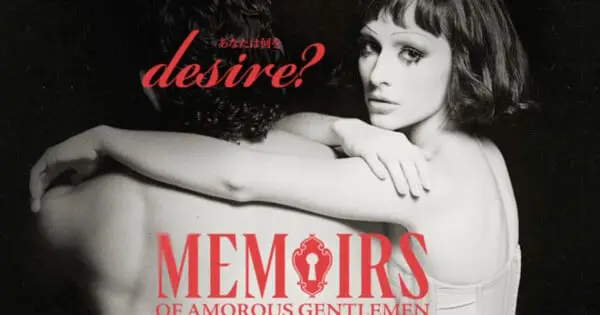
The New York City theatrical landscape has officially expanded its horizons to include the first manga-based musical in the off-Broadway circuit, a production adapted from Moyoco Anno’s acclaimed manga, Memoirs of Amorous Gentlemen. Staged at the "Night Egg" venue within The Culture Club, this ambitious project arrives at a time when the intersection of Japanese source material and Western stage production is experiencing a significant resurgence. While audiences in London have recently enjoyed high-profile adaptations such as My Neighbor Totoro on the West End and the recurring Death Note musical at the Barbican, the New York debut of Memoirs of Amorous Gentlemen marks a definitive shift in the American theater scene’s appetite for international graphic literature.
A Legacy Defined by Finality
The production has garnered heightened scrutiny and emotional gravity due to the untimely passing of its composer, Duncan Sheik, just weeks before the commencement of previews. Sheik, a Tony and Grammy Award-winning artist widely revered for his work on the seminal musical Spring Awakening, left behind a body of work that continues to resonate with theatergoers and industry professionals alike. The transition from the rehearsal room to the stage without the composer’s final oversight is a factor that industry analysts point to when evaluating the show’s structural inconsistencies.
In professional theater, the preview period is essential for "locking" a show, where pacing, sound design, and narrative beats are refined based on audience response. Because Sheik passed before the final refinements were fully realized, the production currently presents a unique dichotomy: it is a work of immense creative ambition that simultaneously highlights the vital role of a composer in the final, iterative stages of a musical’s life.
Narrative Architecture and Thematic Dissonance
The source material, authored by Moyoco Anno, is known for its intricate exploration of sex work in a historical, stylized Parisian setting. Adapting this for the stage, book writer Leah Nanako Winkler has attempted to balance the dark, often cynical realities of the brothel environment with the internal, emotional journey of the protagonist, Colette.
The musical’s narrative architecture faces challenges in tonal consistency. Scenes involving clients of the establishment are often staged with a penchant for broad, slapstick-adjacent comedy, which frequently clashes with the more somber, melodramatic arc of Colette’s obsession with her toxic romantic partner, Léon. This oscillation creates a disjointed experience for the viewer, as the production struggles to reconcile the literary depth of Anno’s original manga with the demands of a high-energy, commercial musical format.
Critics have noted that while the juxtaposition of dark humor and genuine pathos can work in short bursts—such as when a client’s confession reveals a deeper, universal sadness—the overall cohesion of the narrative remains unpolished. The portrayal of Léon, in particular, has been cited as a point of frustration; while the script attempts to illustrate the destructive nature of the relationship, the character’s lack of redeeming qualities occasionally renders Colette’s attachment difficult for the audience to rationalize until the final acts of self-examination.
Characterization and Performance Highlights
Despite the challenges in script development, the production is anchored by a powerhouse performance from Sophia Anne Caruso. Known for her previous work in Beetlejuice on Broadway and her role as Miss Goldenweek in the live-action adaptation of One Piece, Caruso delivers a nuanced portrayal of Colette. Her vocal range serves as the production’s primary emotional engine, elevating the material through technically demanding solos that Sheik crafted specifically for her range.
The supporting cast, including Elsa Keefe as the character Carmen, provides a glimpse into the tragic undercurrents of the story. Keefe’s performance is notable for its range, though the narrative arc surrounding her character’s fate—which involves a sudden, harsh departure from the previously romanticized atmosphere of the brothel—remains a point of contention. The abruptness of this shift leaves little room for the audience to process the gravity of the consequences, impacting the tonal consistency of the final act.
Technical Craft and Venue Utilization
The "Night Egg" venue serves as a character in its own right. Designed as a theater-in-the-round, the space maximizes audience immersion. The production team, led by costume designer Catherine Zuber—whose previous work on Moulin Rouge! set a high bar for thematic visual storytelling—has successfully translated the visual language of Anno’s manga into tangible, period-appropriate aesthetics.
The set design is innovative, utilizing a system where props and set pieces are deployed from the ceiling, effectively altering the environment without the need for extensive stage crew intervention. This fluid approach to staging allows for a dynamic flow of choreography, which remains one of the show’s strongest technical assets. However, the venue faces persistent sound mixing issues; the live band, while talented, frequently competes with the actors, occasionally burying the lyrics and dialogue in the deeper sections of the auditorium.
Broader Implications for Manga Adaptations
The arrival of Memoirs of Amorous Gentlemen in New York is more than a standalone theatrical event; it represents a test case for the viability of manga as a staple of the American musical theater repertoire. The success of Japanese intellectual properties in Western media—from the runaway success of One Piece to the cultural footprint of Studio Ghibli—has paved the way for more niche, adult-oriented graphic novels to be considered for stage adaptations.
However, the "unpolished" nature of this production underscores the inherent difficulties in translating serialized manga into a two-hour theatrical format. The necessity of condensing complex character arcs and world-building into a cohesive script requires a level of collaborative oversight that is rarely easy to achieve. The industry will likely watch the performance metrics and critical reception of this show closely to determine whether future manga adaptations should lean toward more streamlined, high-concept narratives or stick to the intricate, character-driven storytelling seen in this production.
Conclusion and Industry Outlook
Memoirs of Amorous Gentlemen stands as a poignant, if imperfect, milestone. It is a work that manages to capture the spirit of Moyoco Anno’s writing while serving as a final, bittersweet farewell to one of the most influential composers of the modern musical theater era.
For the average theatergoer, the show offers a visually stunning experience, bolstered by high-caliber acting and a compelling score that occasionally transcends the limitations of its book. While it may not yet reach the level of polish seen in established, long-running productions, its presence in the Off-Broadway scene is a clear indicator that the appetite for diverse, international source material in American theater is growing. Whether this production undergoes further revisions or serves as a foundational experiment for future manga-based musicals remains to be seen, but its place in the 2024-2025 theatrical season is firmly established as a bold, if flawed, creative endeavor.