Studiocanal has officially unveiled a brand-new trailer for its upcoming 4K Ultra HD restoration of Richard Attenborough’s 1992 biographical drama Chaplin, shedding fresh light on a film that serves as both a defining milestone in cinema history and a watershed moment for one of Hollywood’s most enduring stars, Robert Downey Jr. Based on Charles Chaplin’s My Autobiography and David Robinson’s authoritative biography Chaplin: His Life and Art, the film explores the meteoric rise, turbulent personal life, and revolutionary artistic contributions of the iconic silent-film creator known worldwide as the Little Tramp.
The announcement of the high-definition restoration includes the release of a newly minted promotional trailer showcasing the crisp visual upgrade of the feature. While the title is currently slated for a physical media release rather than a wide theatrical re-release, the initiative offers film historians, classic cinema enthusiasts, and modern audiences an opportunity to reexamine a massive production that has steadily grown in critical stature over the decades since its initial theatrical run.
Main Facts and the 4K Restoration Release
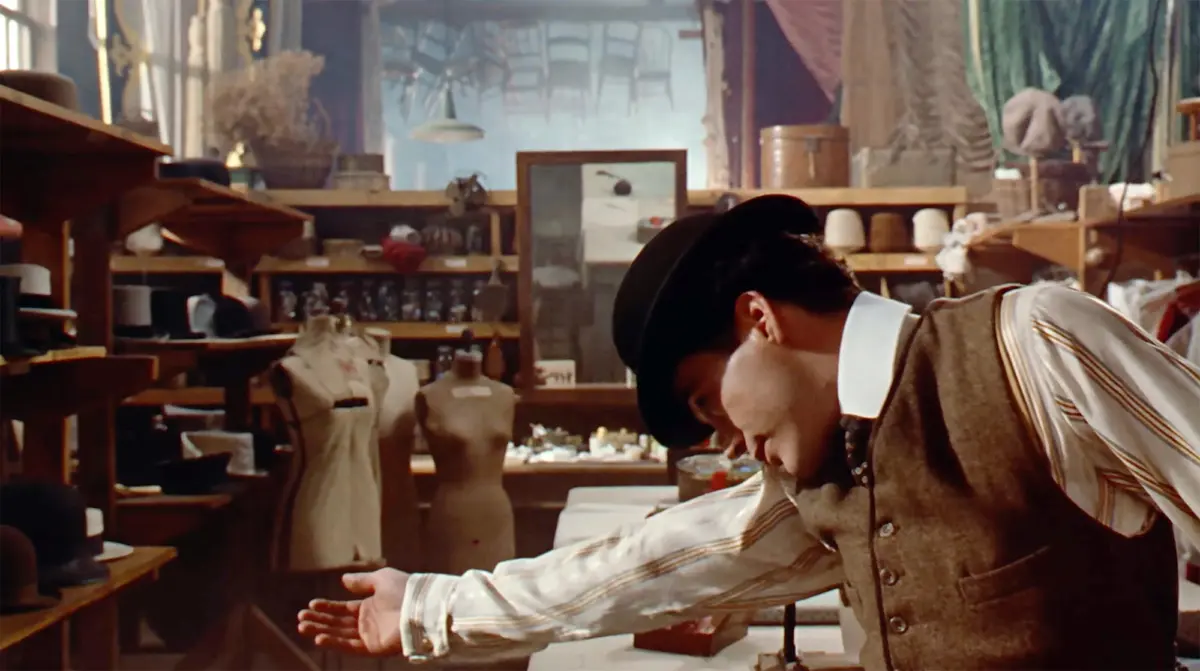
The newly released 4K restoration trailer highlights the painstaking visual and audio remastering undertaken by Studiocanal to preserve the intricate cinematography and sweeping scope of the 1990s production. Featuring the soul-stirring, BAFTA-nominated musical score composed by the legendary John Barry, the restored film captures the grand theatricality of early Hollywood alongside the gritty, impoverished realities of Victorian and Edwardian London.

Unlike standard digital distribution rollouts, Studiocanal has structured this re-release primarily as a physical media event. The film is scheduled to arrive on 4K UHD Blu-ray in the United Kingdom this autumn, with pre-orders and retail listings active through major distributors such as HMV. The release package aims to bring the intricate period detail, costume design, and Oscar-nominated performances to home theaters in pristine ultra-high-definition resolution, marking a significant upgrade from previous standard-definition and Blu-ray iterations.
Chronology and Production Background
The genesis of Richard Attenborough’s cinematic biography spans decades of failed attempts by various Hollywood studios to bring the life of Charles Chaplin safely and comprehensively to the screen. By the late 1980s and early 1990s, Attenborough had established himself as a master of the biographical epic, having successfully directed Cry Freedom (1987) and Gandhi (1982), the latter of which swept the Academy Awards.
Production on Chaplin officially moved forward with a screenplay penned by an illustrious trio of writers: William Boyd, Bryan Forbes, and William Goldman, working from a story by Diana Hawkins. Principal photography demanded an expansive recreation of early 20th-century London, soundstages in California, and European locations to trace Chaplin’s trajectory from a destitute music hall performer to a founding architect of United Artists and a global cultural phenomenon.
When Chaplin opened in theaters in December 1992 through TriStar Pictures in the United States and international distributors abroad, it faced an uphill battle at the box office. Despite its massive budget, star-studded ensemble cast, and high-profile marketing campaign, the film underperformed commercially, failing to recoup its production costs during its initial theatrical window.

Critical Reception, Awards, and Historical Reappraisal
Upon its debut, Chaplin received a mixed-to-positive critical reception. Reviewers widely praised the ambitious scope of the narrative framework—which utilizes an aging Chaplin discussing his memoirs with his fictionalized editor to anchor a series of sweeping flashbacks—as well as the staggering physical transformation undertaken by its leading man.
At the 65th Academy Awards held in March 1993, the film garnered three competitive nominations. Robert Downey Jr. received his very first career Academy Award nomination in the category of Best Actor, a watershed validation of his dramatic range that cemented his status as a premier talent of his generation. Additionally, John Barry received a nomination for Best Original Score, and the production team earned a nod for Best Art Direction-Set Decoration. Despite these acknowledgments, the film did not win in any of its nominated categories, often overshadowed that year by heavy competition from films like Unforgiven and Scent of a Woman.
In the decades following its theatrical disappointment, Chaplin has undergone a significant critical reappraisal. Contemporary audiences and film critics on platforms such as Letterboxd—where the film maintains a strong average rating of 3.6 out of 5 stars—have lauded the production for its willingness to confront the darker, more controversial aspects of Chaplin’s private life, including his political persecution during the McCarthy era, his contentious relationships, and his exile from the United States.
An Ensemble of Hollywood Royalty

A primary factor in the enduring legacy of Richard Attenborough’s film is its monumental supporting cast, which reads as a who’s who of 1990s cinema talent and legendary veterans. The production served as a masterclass in ensemble acting, anchoring Robert Downey Jr.’s central performance with iconic figures from both classic and contemporary Hollywood.
Sir Anthony Hopkins anchors the framing narrative as George Hayden, the fictionalized editor tasked with helping Chaplin sift through the triumphs and scandals of his life for his autobiography. Kevin Kline delivers a memorable turn as master comedian Mack Sennett, the pioneering force behind the Keystone Cops who helped launch Chaplin’s film career. Dan Aykroyd stars as Mack Sennett’s business partner, Mack Swain, while Penelope Ann Miller portrays Edna Purviance, Chaplin’s frequent leading lady and romantic partner during his silent film heyday.
The cast further includes David Duchovny as film producer Rollie Totheroh, Moira Kelly in a dual role as both Hetty Hill (Chaplin’s tragic first love modeled after his mother) and Oona O’Neill (Chaplin’s fourth and final wife), and Marisa Tomei as silent screen icon Mabel Normand. Notably, the film also features Geraldine Chaplin, the real-life eldest daughter of Charlie Chaplin, stepping into the role of her own paternal grandmother, Hannah Chaplin, adding a poignant and authentic generational link to the screen biography.
The Broader Impact and Implications of the 4K Release
The decision by Studiocanal to invest in a 4K restoration of Chaplin highlights a growing industry trend: the preservation and re-evaluation of 1990s mid-budget prestige dramas that struggled at the box office upon release but possess enduring cultural and historical value. As physical media collectors increasingly seek out definitive versions of catalog titles, studios are looking beyond blockbuster franchises to curate high-end physical releases for critically complex films.

For Robert Downey Jr., whose career trajectory subsequently evolved through decades of personal redemption, massive blockbuster stardom in the Marvel Cinematic Universe, and an eventual Best Supporting Actor Oscar win for Oppenheimer in 2024, Chaplin remains a vital text. It stands as the earliest definitive proof of his chameleon-like ability to inhabit complex, historical personas—a performance that film historians argue laid the foundational groundwork for his current status as a cinematic legend.
By bringing this expansive biography back into the public consciousness via high-definition restoration, Studiocanal ensures that future generations of filmmakers and moviegoers can engage with the triumphs and tragedies of both Charlie Chaplin and the actor who dared to bring the Tramp back to life.