The North American box office experienced a weekend of stark contrasts as Universal Pictures’ horror feature Other Mommy secured the top spot despite a dismal reception, while Sony Pictures’ high-profile drama The Social Reckoning failed to meet expectations. The weekend gross for the domestic market reached approximately $88 million, according to data from Rentrak. While this represents a 23.6 percent increase over the corresponding frame in 2025, it highlights a broader industry trend where mid-budget prestige projects are struggling to find theatrical footing against established genre formulas.
A Controversial Lead for Other Mommy
Directed by Rob Savage, Other Mommy opened in 3,200 theaters to a weekend haul of $27.5 million. The performance, which exceeded the studio’s initial $20 million projection, serves as a testament to the enduring power of horror marketing. The film, produced on a modest $19 million budget, features Jessica Chastain as a supernatural entity terrorizing a young girl.
Despite the commercial victory, the film faced an onslaught of criticism. It secured a D+ CinemaScore, a ranking that places it among the lowest-rated wide releases of recent years. The critical consensus on Rotten Tomatoes sits at a precarious 19 percent approval rating, with many reviewers citing a lack of narrative depth. Richard Lawson, writing for The Hollywood Reporter, categorized the film as a "vacuous collection of jumpy bits."
Industry analysts attribute the film’s opening success to an aggressive promotional strategy, specifically a teaser trailer that debuted before Universal’s The Odyssey. The effectiveness of this campaign suggests that for horror audiences, the promise of a visceral, scary experience often outweighs pre-release critical sentiment.

The Social Reckoning: A Disappointing Follow-Up
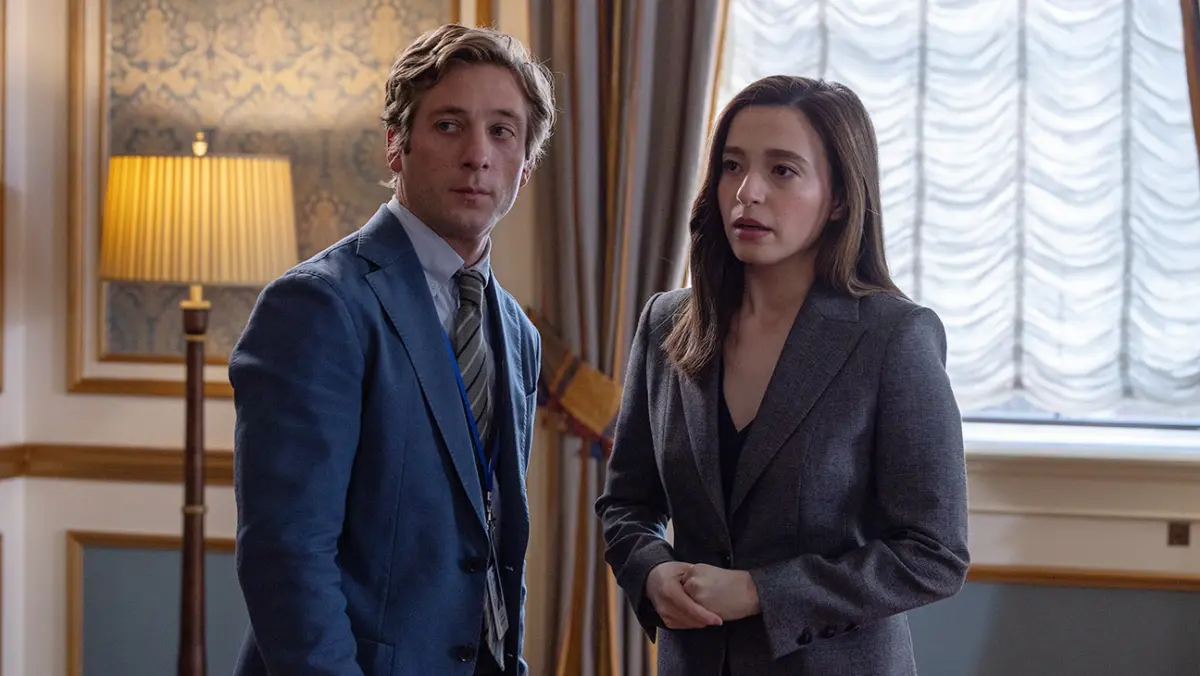
The landscape for prestige dramas proved significantly more hostile. Sony Pictures’ The Social Reckoning, helmed by Aaron Sorkin, debuted to $5.5 million against a projected $7 million. The film, which explores the internal ethical dilemmas of a major tech corporation, was positioned as a spiritual successor to Sorkin’s 2010 Academy Award-winning film, The Social Network.
Starring Mikey Madison, Jeremy Allen White, and Jeremy Strong, the film struggled to replicate the cultural phenomenon of its predecessor. While The Social Network opened to $22.4 million in 2010 and became a global sensation, The Social Reckoning arrived in 2,606 locations to a B- CinemaScore and a lukewarm 54 percent critical approval rating. The film’s failure to ignite at the box office has reignited debates regarding the viability of "tech-thrillers" in a post-pandemic theatrical market.
The Tech-Centric Content Dilemma
The underperformance of The Social Reckoning brings into focus the broader commercial challenges facing films centered on Silicon Valley figures and artificial intelligence. With upcoming projects like the Elizabeth Holmes documentary You Can See Everything and Luca Guadagnino’s OpenAI-focused feature Artificial, industry observers are questioning whether these narratives belong on the big screen or if they are better suited for streaming platforms.
David A. Gross, head of the box office consultancy FranchiseRe, noted that while these films may be well-crafted, they often lack the "cinematic" qualities—such as sweeping visuals or high-stakes emotional journeys—that typically drive theatrical attendance. "They seem to have a better home on streaming," Gross observed, noting that audiences are increasingly selective about which films warrant a trip to the cinema.
The recent box office performance of the Elon Musk documentary, titled Musk, further illustrates this trend. The film, released by Bleecker Street, earned $68,900 across four screens, averaging $17,225 per location. While strong for a limited release, it underscores the niche appeal of tech-centric nonfiction.

Market Overview and Comparative Data
The 2026 domestic box office surpassed the $8 billion milestone on Friday, reaching $8.077 billion by Sunday. This reflects a 19.6 percent improvement over the $6.7 billion recorded at the same point in 2025. However, context is vital; despite the year-over-year gains, the current market is trailing behind pre-pandemic averages. FranchiseRe estimates that the current weekend is approximately 27 percent below the combined average for the same period in 2017, 2018, and 2019.
The market remains propped up by a strong year for original horror content. Beyond Other Mommy, the genre has consistently outperformed other mid-budget categories throughout the year, suggesting that while prestige dramas face an uphill battle, audiences remain eager for high-concept, scary cinema.
Performance of Holdovers and Limited Releases
As the market digested the new arrivals, several holdovers maintained their presence in the top tier:
- Verity: Amazon MGM Studios’ adaptation of the Colleen Hoover novel dropped 64 percent in its second weekend, earning $11.4 million. Its domestic cume now stands at $53.8 million.
- Resident Evil: Sony’s reboot, directed by Zach Cregger, added $8.3 million in its fourth frame, bringing its domestic total to $138.5 million. The film has crossed $300 million globally, cementing its status as the highest-grossing entry in the long-running franchise.
- Heart of the Beast: The Paramount thriller starring Brad Pitt added $7.1 million to its coffers, reaching a three-week total of $49.6 million.
In the limited release sector, A24’s Misty Green, starring Adam Driver and Chris Rock, debuted with $85,716 from six locations. Critics have been largely receptive, with David Rooney praising it as a sign of Chris Rock’s maturation as a filmmaker. Meanwhile, the documentary NAZA earned $247,000 from 72 locations. The film, which examines military operations in Gaza, faced significant controversy, including a protest organized by the Israeli-American Council outside a Los Angeles screening on Friday.
Implications for the Remainder of the Year
The mixed performance of this weekend’s slate sets the stage for a critical final quarter of the year. With the industry still striving to close the gap between current revenues and pre-pandemic levels, studios are looking toward upcoming releases to revitalize interest.

The immediate future looks to be a blend of franchise revivals and literary adaptations, with titles like Street Fighter, Whalefall, and a new take on Sense and Sensibility scheduled for release next weekend. These films represent a shift back toward established intellectual property, a strategy that has served as a safe harbor for major studios throughout the 2026 calendar year.
For filmmakers like Aaron Sorkin and studios like Sony, the current climate serves as a sobering reminder that reputation and pedigree are no longer guarantees of commercial success. As consumer habits continue to evolve, the distinction between a "streaming-worthy" film and a "must-see" theatrical event is being drawn more sharply than ever before. The success of horror—a genre that prioritizes the shared, visceral experience—compared to the struggle of intellectual tech dramas highlights the primary driver of the current box office: the pursuit of an experience that is difficult to replicate in the living room.