As the iconic, boundary-pushing franchise approaches what may be its definitive curtain call with the release of Jackass: Best and Last, the mastermind steering the chaotic vessel remains remarkably grounded. Jeff Tremaine, the director and co-creator who has orchestrated more than two decades of engineered absurdity, finds himself reflecting on a cultural phenomenon that initially seemed destined for a swift cancellation. What began as a subversive, counter-culture skateboard video experiment evolved into a multi-generational cinematic empire, redefining modern physical comedy and earning unexpected critical reappraisal along the way.
Main Facts and Origins of the Franchise
The genesis of the Jackass phenomenon traces back to the late 1990s and the pages of Big Brother, a counter-culture skateboarding magazine where Tremaine served as art director and editor. Armed with a fine arts degree and a distinct appreciation for punk rock aesthetics, Tremaine curated a collective of eccentric personalities rather than purely elite athletes. Alongside co-creators Johnny Knoxville and Spike Jonze, the team captured spontaneous, highly dangerous, and fiercely comedic stunts on handheld cameras.
When Knoxville famously filmed himself shooting a handgun into a bulletproof vest for a magazine promotional video, the project transcended traditional skateboarding content. Pitched as a television series, Jackass debuted on MTV in October 2000, immediately capturing the zeitgeist of young audiences while sparking intense debate among parent advocacy groups and network censors. Despite expectations that the program would face immediate cancellation due to its hazardous and sophomoric nature, the show became a ratings juggernaut, spawning a transition to feature films in 2002 with Jackass: The Movie.
Chronology and Production Evolution
Over the past twenty-four years, the production scale of the franchise has undergone a dramatic transformation. In its early days, the enterprise operated with guerrilla-style efficiency: a single van carrying the cast, a skeleton crew, and Tremaine behind the wheel. The methodology relied heavily on spontaneity, capturing unpermitted public pranks and authentic reactions without the logistical weight of a major Hollywood studio.
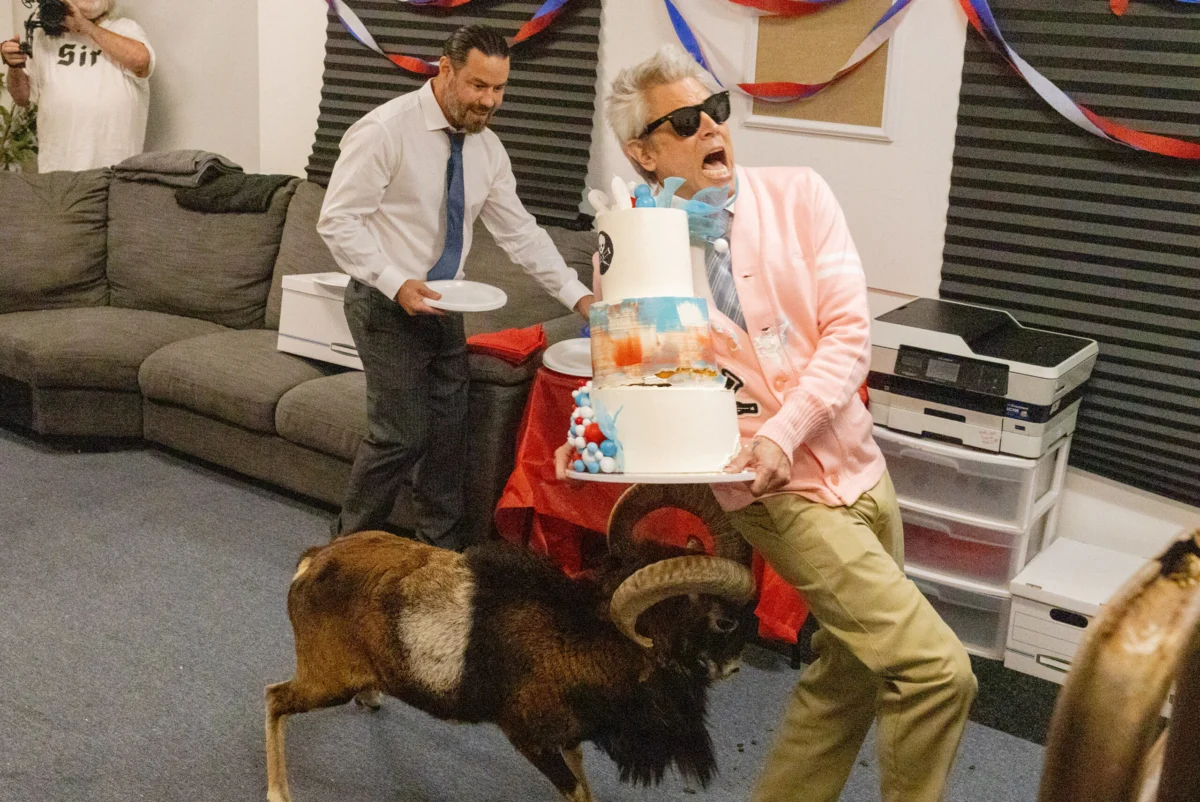
As the box office returns multiplied, the infrastructure expanded exponentially. The release of Jackass Number Two in 2006 and Jackass 3D in 2010 marked significant leaps in production value, introducing high-speed photography, 3D technology, and larger technical crews. However, this growth introduced new hurdles. Navigating studio permissions, insurance regulations, and MPAA ratings restrictions required Tremaine to fiercely guard the core spontaneity of the performances. Battles over content—such as negotiating acceptable durations for full-frontal nudity or managing catastrophic injuries on set, like Knoxville’s severe concussion and broken ribs during a bull-riding stunt in Jackass Forever (2022)—became routine operational challenges. Despite these structural hurdles, the leadership dynamic between Tremaine and Knoxville remained the ultimate editorial filter, greenlighting outrageous ideas ranging from "The High Five" to elaborate animal interactions.
Supporting Data and Commercial Impact
Financially, the Jackass franchise stands as one of the most remarkably consistent and lucrative properties in Paramount Pictures’ modern history. Operating on notoriously modest budgets for major studio releases, the film series has collectively grossed well over half a billion dollars worldwide.
- Jackass: The Movie (2002) opened at number one domestically, grossing over $79 million against a budget of roughly $5 million.
- Jackass Number Two (2006) matched this commercial success, pulling in approximately $84 million globally.
- Jackass 3D (2010) elevated the box office profile significantly, earning over $170 million worldwide and proving the viability of 3D technology outside of traditional narrative blockbusters.
- Jackass Forever (2022), released during a complex theatrical landscape recovering from global pandemic disruptions, outperformed expectations by grossing over $80 million worldwide on a $10 million budget.
These figures illustrate a rare trajectory in cinema: a long-running franchise that maintained, and in some cases grew, its box office potency across two decades without relying on traditional intellectual property or fictional storytelling.
Critical Reception and the MoMA Shift
For much of its early run, the franchise was universally dismissed by mainstream critics as lowbrow, dangerous, and devoid of artistic merit. However, a profound critical re-evaluation occurred around the theatrical release of Jackass 3D, punctuated by a retrospective screening gala at the Museum of Modern Art (MoMA) in New York City.
Cultural commentators and film scholars began to analyze the series through an academic lens, highlighting its underlying themes of genuine male intimacy, absolute loyalty, anti-homophobia, and the subversion of traditional cinematic structures. Critics argued that beneath the slapstick exterior lay an avant-garde performance art collective documenting the aging process, physical vulnerability, and profound camaraderie. While Tremaine has frequently expressed amusement and slight embarrassment regarding the intellectualization of his work, acknowledging that his primary objective remains "magnifying stupid," the shift in public perception marked the transition of the cast from cultural outlaws to recognized populist artists.
Broader Impact and Cultural Implications
The cultural footprint of Jackass extends far beyond box office receipts. The franchise inadvertently birthed an entire generation of user-generated content creators, paving the way for platforms like YouTube, Jackass-inspired internet challenge culture, and modern stunt-based reality programming. Yet, unlike digital content creators who operate in decentralized environments, Tremaine and his collaborators maintained a rigorous standard of safety protocols disguised as reckless abandon, ensuring that the genuine affection and safety of the ensemble remained paramount despite the visible hazards.
Furthermore, Tremaine’s creative portfolio extends into mainstream commercial spaces, most notably evidenced by his direction of a heavily stylized, musical-inspired safety demonstration video for American Airlines. This unexpected foray demonstrated his formal versatility, proving that his distinct editorial rhythm and aesthetic sensibilities could translate seamlessly into corporate and polished environments.
As Jackass: Best and Last prepares to close the chapter on this era of cinematic chaos, the legacy of Jeff Tremaine’s direction is secure. By honoring authenticity, rejecting pretension, and capturing the enduring bonds of healthy male friendship through the medium of high-velocity foolishness, Tremaine has crafted an indelible body of work that continues to challenge traditional definitions of cinematic art.