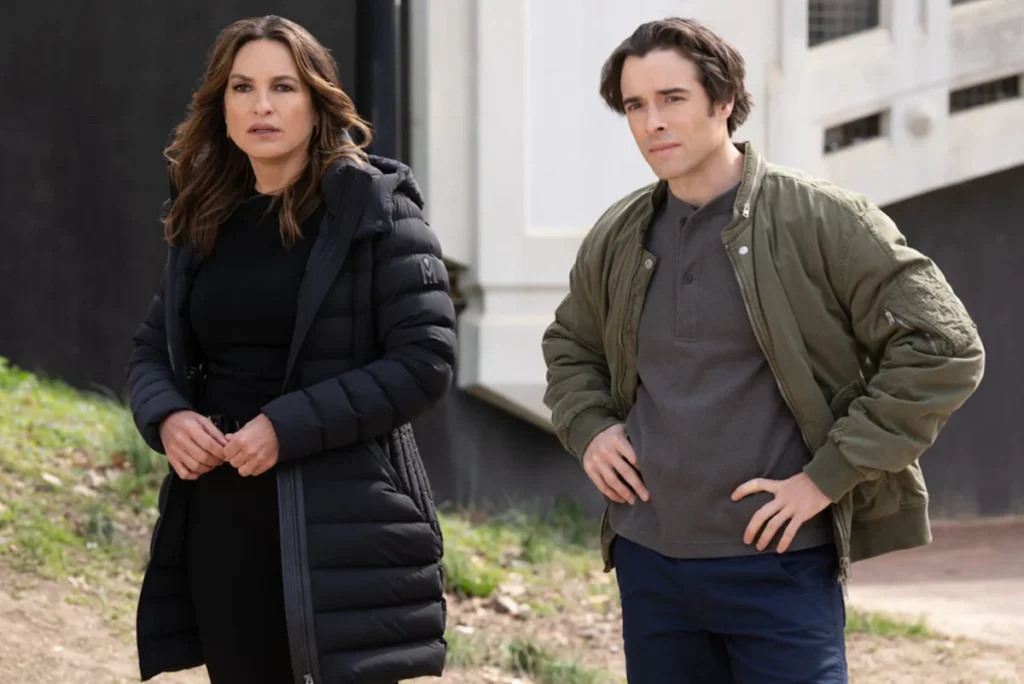
The second season of the ABC drama RJ Decker has officially premiered, marking a significant tonal and narrative shift for the series. Following a successful inaugural run that established the complex, often volatile dynamic between private investigator R.J. Decker, played by Scott Speedman, and Emi, portrayed by Jaina Lee Ortiz, the new season introduces a period of emotional recalibration. Set two months after the assassination of the antagonist and corrupt political figure Victor Ochoa (David Zayas), the premiere explores the fallout of a relationship defined by turbulence, legal complications, and the weight of past trauma.
Chronology of the Narrative Arc
The evolution of the central relationship between Decker and Emi has been a cornerstone of the series’ progression. Their history is marked by a series of precarious milestones:
- The Initial Encounter: The series began with the two characters sharing an intimate moment, which was followed immediately by Emi providing testimony in court that resulted in Decker’s incarceration.
- The First Season Finale: After a season of investigative tension and personal conflict, the pair appeared poised to transition into a more conventional, stable relationship.
- The Catalyst for Change: The murder of Emi’s father, Victor Ochoa, served as the primary disruptor, forcing the characters into a state of emotional withdrawal.
- Current Status: At the start of the second season, the narrative acknowledges the two-month gap since the murder. Emi has sought space to process her grief, leading Decker to shift his strategy from romantic pursuit to a tentative attempt at friendship—a dynamic they have never previously explored.
Character Motivations and Strategic Narrative Shifts
Scott Speedman, in recent statements regarding the show’s direction, emphasized that the decision to "pull them apart" at the onset of the season was a deliberate creative choice. According to the actor, the goal was not necessarily to terminate the romantic potential of the characters, but to provide a more "refreshing and unique" avenue for storytelling. By forcing the characters to navigate their lives independently in the wake of the Ochoa murder, the writers have created a foundation that may lead to a more "real" connection should they decide to rekindle their romance in future episodes.
From a character development perspective, this trajectory is grounded in the necessity of Emi’s recovery. The intrusion of public scrutiny—stemming from her father’s high-profile death—has necessitated a support system that Decker, in his capacity as a friend, is beginning to provide. The inclusion of Catherine, Decker’s ex-wife (Adelaide Clemens), as a mediator who encourages this platonic support, adds a layer of domestic complexity that distinguishes this season from the procedural-heavy focus of the first.
The Production Scope and Cross-Promotional Integration
The Season 2 premiere notably utilized a high-production-value sequence to establish the series’ new, more energetic atmosphere. By airing immediately following the network’s flagship competition series, Dancing With the Stars, the show integrated professional dancers Jenna Johnson and Val Chmerkovskiy into a narrative-driven flash mob.
The scene, set to the Backstreet Boys’ "Everybody (Backstreet’s Back)," served as a backdrop for a sequence involving a cameo by Joey Graziadei. This integration of reality television talent into a scripted drama represents a broader industry trend of maximizing cross-platform viewership. Production reports indicate that the scene was filmed in Fort Lauderdale, with the sheer scale of the choreography providing a stark contrast to the more grounded, intimate scenes that comprise the remainder of the episode.
Case-of-the-Week: Legal and Ethical Stakes
The episode’s episodic arc—involving a gang of bank robbers who utilize a "no-pants" distraction technique—functions as a vehicle to test Decker’s moral compass. The involvement of Steven, a former prison acquaintance who previously saved Decker’s life, creates an immediate conflict of interest.

Decker is forced to navigate the thin line between personal loyalty and his responsibilities as a private investigator. His decision to initially withhold information from FBI agent Mel, played by Sasheer Zamata, highlights the character’s propensity for acting on impulse. This choice carries significant weight: as a previously convicted individual, Decker faces the constant threat of recidivism. If his actions were to be interpreted as obstruction of justice or complicity in a felony, the potential for a lengthy prison sentence is high. The discovery that the robbers are found deceased serves to escalate the stakes, transitioning the plot from a manageable favor to a serious criminal investigation.
Analytical Overview: Implications for the Series
The decision to pair Decker with an FBI agent—and the revelation of their "bad" history—suggests that the series intends to broaden its scope beyond the local mysteries of the first season. By incorporating federal law enforcement, the writers are positioning the show to handle larger, more systemic threats, while maintaining the focus on Decker’s personal history.
Data regarding viewership for the premiere remains pending, but the strategic placement of the episode following a major network event indicates that ABC is prioritizing the expansion of the franchise. For a show like RJ Decker, which relies heavily on the "will they/won’t they" trope, the risk of "pulling them apart" is substantial; however, if the writers succeed in developing the characters through their friendship, the payoff for the audience may be more significant than a standard romantic reconciliation.
Official Context and Future Outlook
The production team has signaled that the investigation into Victor Ochoa’s murder will remain a slow-burn mystery, unfolding alongside the episodic cases. This structure allows for a dual-narrative approach: the case-of-the-week provides immediate gratification and high-energy sequences, while the overarching arc regarding the Ochoa family provides the necessary depth to keep the audience invested in the long-term stakes.
As the season progresses, the key indicator of success will be whether the audience remains engaged with the, at times, unconventional choices made by the protagonist. Decker’s tendency to "act before he thinks" is a classic noir archetype, and the series appears to be leaning into this trope to justify his often reckless decision-making.
In summary, the second season of RJ Decker is attempting to balance the high-octane, spectacle-driven demands of modern television with the more intimate, character-driven storytelling that defined its debut. By forcing the central duo into a platonic space and introducing complex legal dilemmas, the show is establishing a more robust framework for future storytelling, ensuring that while the characters may be pulled apart, the narrative remains firmly anchored in the consequences of their shared history.
With new episodes airing on Tuesdays, the series is positioned as a pivotal part of the network’s prime-time schedule, aiming to capture both the procedural audience and those seeking a more complex, character-focused drama. The coming weeks will reveal if the "friendship" route is a sustainable narrative device or merely a temporary detour before the inevitable return to the complications of their romantic past.