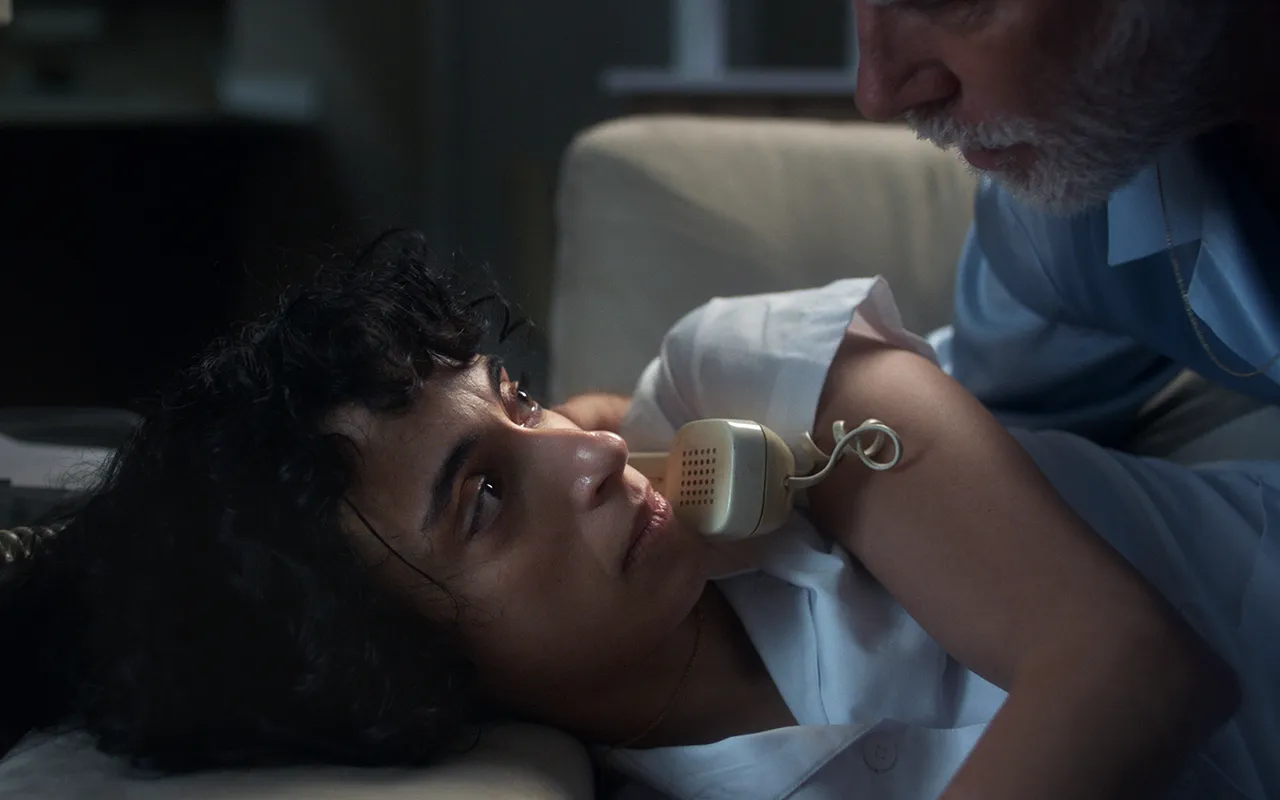
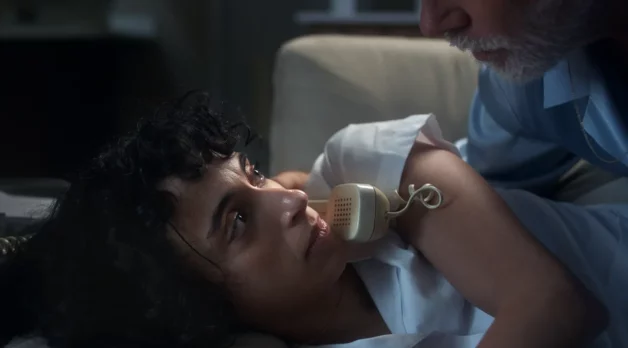
Night Nurse stands as a stark anomaly within the traditional programming of the Sundance Film Festival, where mainstream selections frequently favor conventional narratives. Premiering in the festival’s prestigious NEXT competition, Georgia Bernstein’s feature-film directorial debut challenges standard cinematic conventions by plunging audiences into an unsettling, morally ambiguous world of overnight care facilities and illicit exploitation. The narrative centers on Eleni, played by Cemre Paksoy, a novice nurse working the overnight shift in a memory-care unit. Eleni forms a volatile and unorthodox bond with Douglas, portrayed by Bruce McKenzie, a resident currently undergoing evaluation for early-onset Alzheimer’s disease. Rather than maintaining professional boundaries, the pair slip into a twisted partnership, orchestrating phone scams targeted at elderly victims by posing as distressed grandchildren demanding urgent financial assistance.
The psychological framework of the film draws clear inspiration from the cerebral psychosexuality of Atom Egoyan and the transgressive, complex power dynamics associated with Catherine Breillat. These thematic elements are transplanted into the slow-paced, isolated environment of a retirement community where standard temporal markers dissolve. The production process itself reflects an unconventional approach to independent filmmaking, relying on tight collaboration, local community resources in Chicago, and practical shooting locations. As the film approaches its scheduled wide release via IFC on July 10, industry analysts and critics have closely examined its unique genesis, production methodology, and the broader thematic implications of its controversial subject matter.
Production Chronology and Academic Integration
The journey of Night Nurse from concept to screen is deeply intertwined with Bernstein’s extensive background in the Chicago independent film scene. Having previously served as a producer on Alex Phillips’s features All Jacked Up and Full of Worms in 2022 and Anything That Moves in 2025, Bernstein developed professional networks that proved essential for launching her own directorial career. Following the completion of Anything That Moves, Chicago-based producer Eddie Linker sought a practical subject for a university course he was scheduled to teach at Northwestern University. Linker reviewed Bernstein’s completed script for Night Nurse and proposed using the project as a real-world curriculum for his students.
Collaborating alongside fellow producer Veronica Barbosa, Bernstein and Linker structured the Northwestern class around the preproduction phase of the film. Enrolled students received hands-on education in the operational mechanics of independent cinema, including establishing a limited liability company, drafting detailed financial budgets, navigating state tax credit applications, and organizing logistical schedules. By the conclusion of the academic quarter, the students and production team had successfully executed core preproduction objectives. This unique pedagogical approach not only provided foundational labor for the film’s early stages but also cemented a collaborative community infrastructure that sustained the production through principal photography.
Aesthetic Influences and Spatial Constraints
To achieve the film’s distinct visual palette, Bernstein recruited cinematographer Lidia Nikonova, whose previous work on Lucy Kerr’s Family Portrait showcased a compatible artistic sensibility. United by a shared admiration for the methodical pacing and desaturated color grading found in David Cronenberg’s 1996 feature Crash, the director and cinematographer sought to replicate a specific brand of suburban bleakness. Rather than utilizing commercial soundstages or expensive rented facilities, the production made the practical decision to shoot almost entirely within Bernstein’s grandmother’s residential home.
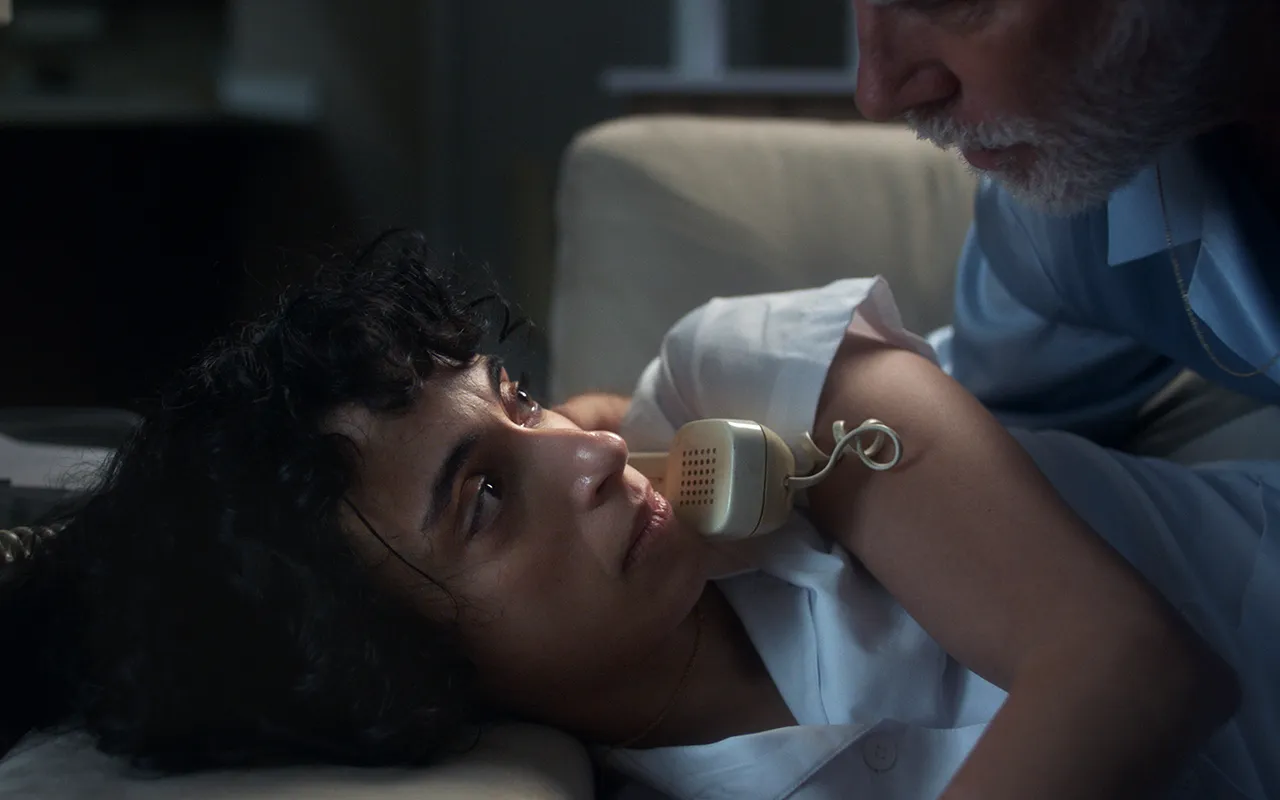
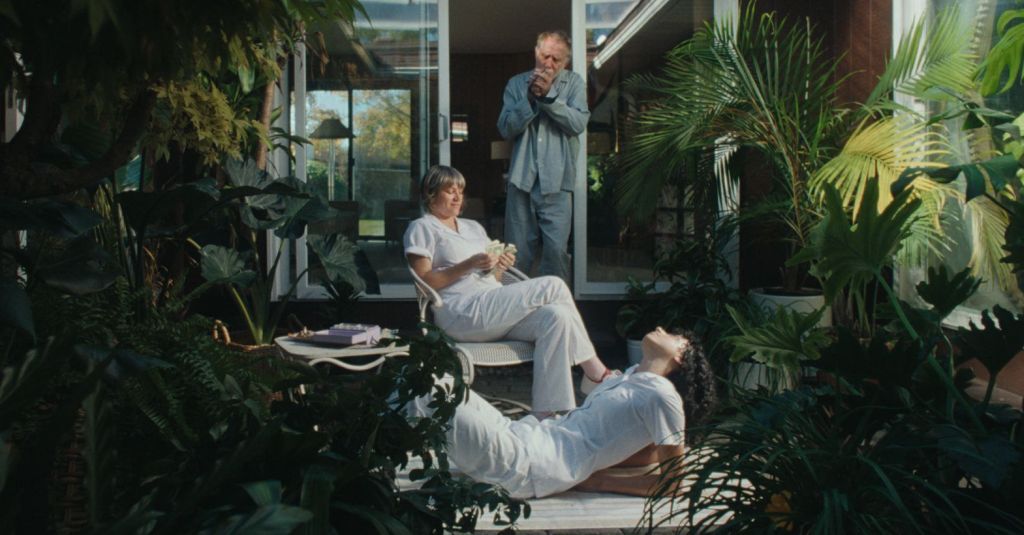
The physical architecture of the house directly influenced the screenplay. Scenes were meticulously written around specific architectural layouts, tracing movement from room to room through an existing atrium. This decision inadvertently reinforced the narrative’s central theme of temporal disorientation. Retaining the home’s original 1970s wallpaper alongside outdated landline telephones and vintage currency—such as older-generation one-hundred-dollar bills—created an ambiguous timeline that actively resists modern technological markers like smartphones.
Technically, Bernstein rejected the industry standard of handheld stabilization or Steadicam setups, which she felt would undermine the film’s intended weight. Instead, the crew engineered a slow-moving dolly track system capable of navigating the narrow residential corridors. The physical limitations of the small home required rigorous spatial choreography. Alongside actors Cemre Paksoy and Bruce McKenzie, Bernstein spent days rehearsing movements and framing shots prior to filming. The production scheduled all intimate and high-stakes sequences during the opening week of principal photography, setting a demanding yet disciplined tone for the remainder of the shoot.
Musical Composition and Auditory Atmosphere
The auditory landscape of Night Nurse plays a critical role in reinforcing the narrative’s claustrophobic atmosphere. Composers Steven B. Jackson and Samm Clapp, who previously collaborated with Bernstein on her produced features, were brought on to score the film. The composition team employed a traditional methodology, writing and recording musical cues directly to the edited picture with the support of external instrumentalists.
Drawing explicit inspiration from Francis Ford Coppola’s 1974 psychological thriller The Conversation, the score heavily features piano and flute melodies. The musical arrangement was intentionally designed to evoke a cyclical sensation, sonically mirroring the central metaphor of residents walking in endless circles around a retirement home pool. By establishing a central, recognizable theme and allowing musicians to improvise variations, Jackson and Clapp constructed an evolving soundscape that complements the narrative’s slow, deliberate pacing.
Thematics of Dependency and Power Dynamics
At the heart of Night Nurse lies a profound exploration of human dependency and moral degradation. The central psychological hook of the narrative is summarized through dialogue delivered by the character Mona, played by Éléonore Hendricks: "It’s amazing to be needed, isn’t it? It feels good to mean something to somebody." The film investigates the extreme psychological lengths to which individuals will go to fulfill this fundamental craving for validation, regardless of the ethical fallout.
In their criminal enterprise, Eleni and Douglas find not only financial compensation but a powerful sexual and emotional thrill. When Eleni experiences moments of moral hesitation, her accomplices rationalize the exploitation by framing their actions as a restorative intervention for otherwise isolated victims. Mona reassures Eleni regarding one of their targets, stating, "He was numb to life before today. You gave him purpose. You helped him."
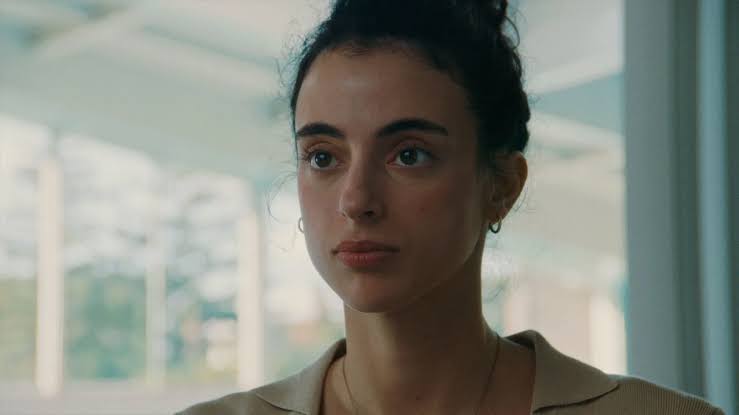
This exploration of power dynamics intentionally subverts traditional cinematic tropes involving young women and older men, most notably associated with the filmography of Catherine Breillat. By introducing layers of medical uncertainty—specifically regarding Douglas’s cognitive status and potential dementia—Bernstein deliberately obscures the boundaries of authority. The audience is left questioning who holds true control: the professional caregiver bound by institutional duty, or the vulnerable patient navigating cognitive decline who weaponizes his charm.
Implications for Independent Cinema and Distribution
The acquisition and upcoming wide release of Night Nurse by IFC Films on July 10 signal a growing commercial appetite for challenging, uncompromising independent cinema that defies standard genre classifications. Premiering in a major festival section like Sundance’s NEXT competition provides independent features with critical momentum, bridging the gap between localized, academic-supported production models and mainstream theatrical visibility.
The film’s reception highlights a broader industry shift toward regional filmmaking hubs outside of traditional coastal production centers. By utilizing Chicago-based talent, academic partnerships, and unconventional primary locations such as private residential homes, the production model demonstrates financial viability for first-time feature directors working with restricted budgets. Furthermore, the deliberate pacing, resistance to digital aesthetics in favor of physical dolly tracks, and refusal to provide neat moral resolutions position Night Nurse as a significant contribution to contemporary psychosexual drama. As the film prepares for its wider theatrical rollout, it stands as an empirical example of how structural resourcefulness and thematic audacity can successfully intersect within the modern independent film landscape.