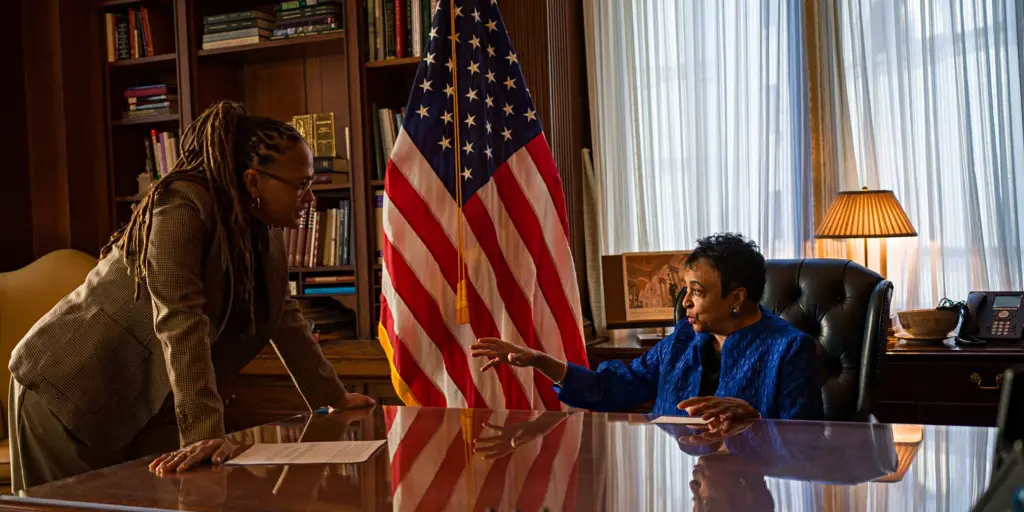
In the ongoing discourse regarding civil rights, constitutional interpretation, and the limits of state power in the United States, few legal instruments hold as much foundational weight as the Fourteenth Amendment. Ratified in the wake of the American Civil War in 1868, the amendment sought to integrate formerly enslaved individuals into the fabric of American society by establishing sweeping guarantees of citizenship, due process, and equal protection under the law. Today, this cornerstone of American democracy is facing renewed scrutiny, political contestation, and legislative challenges.
In her latest feature-length documentary, titled 14th, acclaimed filmmaker Ava DuVernay turns her critical lens toward this vital constitutional pillar. Serving as director, DuVernay assembles an expansive roster of legal scholars, historians, politicians, and commentators to explore the turbulent history, current vulnerabilities, and far-reaching implications of the Fourteenth Amendment. With a brisk running time of 100 minutes, the film positions itself as both an essential historical retrospective and an urgent warning regarding the erosion of civil liberties in contemporary American society.
The documentary arrives precisely one decade after DuVernay’s Academy Award-nominated film 13th, which scrutinized the intersection of race, justice, and mass incarceration through the lens of the Thirteenth Amendment’s exception clause for penal labor. While 13th focused primarily on the criminal justice system, 14th broadens its aperture to encompass the entirety of the amendment’s equal protection clause, examining how its protections extend far beyond the Black community to impact virtually every marginalized demographic in the United States.
Historical Genesis and Legislative Evolution
To understand the architecture of 14th, one must examine the historical circumstances surrounding the drafting and ratification of the amendment itself. Following the conclusion of the Civil War in 1865, the United States entered the tumultuous era of Reconstruction. The federal government faced the immense challenge of reintegrating the Confederate states and defining the civil status of millions of newly emancipated African Americans.
In response to discriminatory "Black Codes" enacted by Southern states to restrict the freedom of Black Americans, the 39th United States Congress drafted the Fourteenth Amendment. Formally ratified on July 9, 1868, the amendment introduced several critical provisions that fundamentally altered the relationship between the federal government and state jurisdictions. Most notably, its Citizenship Clause established that all persons born or naturalized in the United States, and subject to the jurisdiction thereof, are citizens of the United States and of the State wherein they reside.
Furthermore, the amendment introduced the Due Process Clause and the Equal Protection Clause, which prohibited states from denying any person within their jurisdiction the equal protection of the laws. Over the ensuing decades, these clauses served as the legal bedrock for landmark Supreme Court decisions addressing racial segregation, gender discrimination, reproductive rights, marriage equality, and voting access. However, as DuVernay’s documentary illustrates, the realization of these rights has been marked by continuous resistance, judicial rollback, and political manipulation.
Chronology of the Project and Production Overview
The development of 14th represents a continuation of DuVernay’s broader cinematic mission to interrogate the structural flaws within American institutions. Production on the documentary spanned several years, a timeline that allowed the filmmakers to capture the escalating polarization surrounding constitutional interpretations during the political shifts of the late 2010s and early 2020s.
The film features an eclectic ensemble cast that bridges partisan divides and academic disciplines. Prominent figures appearing in the documentary include former Georgia State Representative Stacey Abrams, historians Eric Foner and Donald T. Critchlow, legal scholars Robert S. Chang and Adam Domby, political figures such as former Senator Jeff Flake and Representative Alexandria Ocasio-Cortez, as well as cultural commentators including Hasan Piker, Librarian of Congress Carla Hayden, and historic preservationist Devon Henry.
Behind the camera, DuVernay collaborated once again with veteran editor Spencer Averick, whose contributions are integral to the film’s narrative momentum. Averick’s precise splicing of historical footage with contemporary commentary establishes a seamless dialogue between past and present, underscoring the documentary’s central thesis: that contemporary political conflicts are deeply rooted in unresolved historical grievances.
Structural Breakdown and Cinematic Approach
Structured into two distinct stylistic and thematic halves, 14th functions initially as an accessible educational primer before descending into a stark critique of modern political regression.
The first half of the film adopts the conventions of a sophisticated video essay. Through carefully orchestrated interviews and didactic pacing, the featured experts methodically break down the specific clauses of the Fourteenth Amendment. The narrative distills 150 years of complex constitutional history into easily digestible segments, emphasizing the mechanics of how the amendment was constructed to curb state-sanctioned discrimination. This pedagogical approach serves a dual purpose: it honors the intelligence of the viewer while explicitly addressing the perceived shortcomings of traditional American civics education.
As the narrative transitions into its second half, the tone shifts from instructional to alarming. The documentary traces the lineage of Confederate iconography and propaganda, illustrating how symbols of the antebellum South have been systematically weaponized in modern political discourse. From there, the film directs its focus toward the systematic challenges mounted against birthright citizenship and civil rights protections over the past decade.
Particular emphasis is placed on the political rhetoric and administrative policies of the Donald Trump presidency, during which proposals to unilaterally end birthright citizenship via executive order were frequently floated. The documentary argues that these policy proposals are not isolated anomalies, but rather the culmination of a sustained ideological campaign designed to restrict the definition of who truly belongs in the American polity.
Stylistic Elements and Critical Reception
While 14th has largely drawn praise for its comprehensive scope and emotional resonance, critics have noted certain stylistic divergences within the film. DuVernay incorporates diverse artistic choices, ranging from politically charged stand-up comedy routines to evocative archival photography.
However, some visual choices have elicited mixed responses from reviewers. Notably, the decision to animate certain historical photographs—presumably utilizing artificial intelligence or digital rendering techniques—has been cited as a jarring departure that momentarily pulls the viewer out of the historical immersion. Similarly, recurring visual motifs, such as a repeated emphasis on hand imagery, occasionally border on redundancy.
Despite these minor stylistic friction points, the core documentary footage remains deeply impactful. The synergy between archival evidence and contemporary expert testimony creates a cumulative weight that leaves audiences confronting the fragility of modern democratic norms.
Socio-Political Implications and Broader Impact
The release of 14th occurs at a critical juncture in American jurisprudence. In recent years, the composition and rulings of the federal judiciary have demonstrated a willingness to overturn long-standing legal precedents, raising anxieties among civil rights advocates regarding the security of fundamental constitutional guarantees.
Birthright citizenship, explicitly protected under the Citizenship Clause of the Fourteenth Amendment, remains a frequent target of political debate. Critics of birthright citizenship argue that the clause encourages unlawful immigration, while constitutional scholars maintain that any attempt to alter its application through statutory legislation or executive action would face insurmountable judicial hurdles, requiring instead a constitutional amendment ratified by three-fourths of the states.
Beyond citizenship, the Equal Protection Clause faces mounting pressure in areas concerning voting rights, affirmative action, and LGBTQ+ protections. By contextualizing these contemporary legal battles within the broader arc of post-Civil War history, DuVernay’s documentary offers a timely framework for understanding the mechanisms of legal erosion.
Ultimately, 14th serves as both a historical accounting and a proactive warning. By connecting the ideological conflicts of the 19th century to the political polarization of the 21st, the film underscores the reality that constitutional rights are not self-executing; rather, they require constant vigilance, civic participation, and an informed citizenry willing to defend the foundational tenets of equality and belonging in the United States.