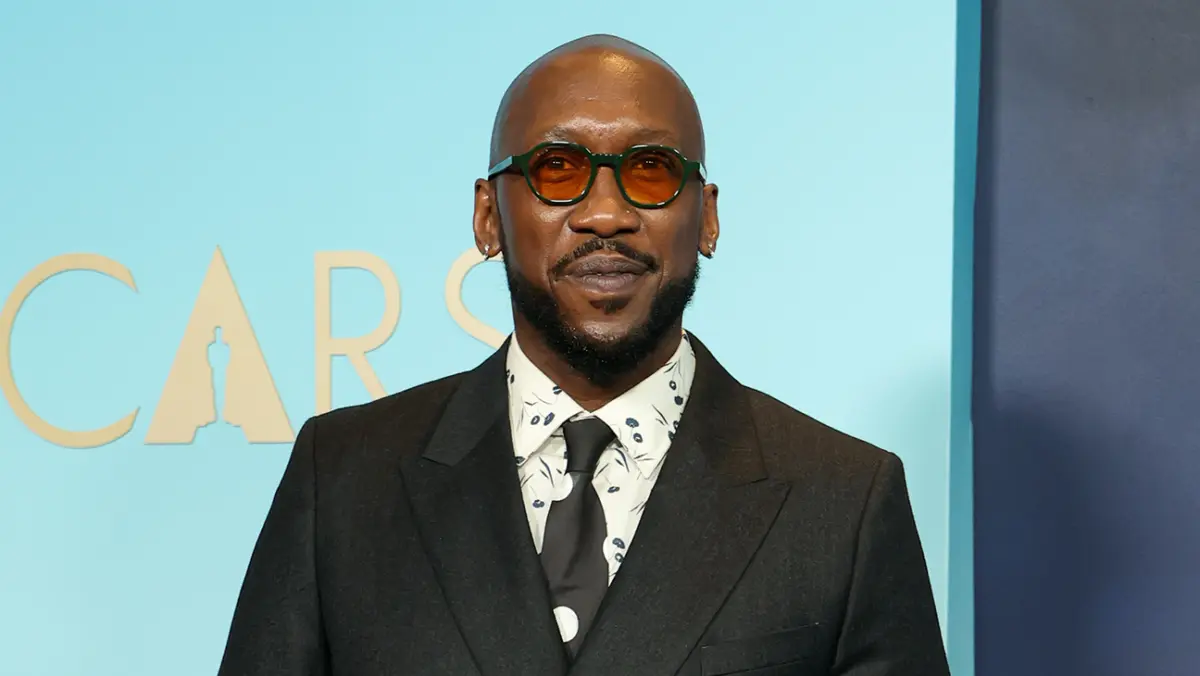
Despite a storied career that has cemented his place as one of the most respected performers of his generation, Mahershala Ali is highlighting a stark reality of the entertainment industry: even the most prestigious accolades do not shield an actor from the systemic scarcity of meaningful material. The two-time Academy Award winner, who secured statues for his powerful performances in 2016’s Moonlight and 2018’s Green Book, recently engaged in an expansive conversation on the 7PM in Brooklyn podcast with hosts Carmelo Anthony and Kazeem “Kaz” Famuyide. During the discussion, Ali dismantled the common perception that winning Hollywood’s highest honor provides a golden ticket to an endless supply of high-caliber scripts.
For Ali, the challenge is not a lack of talent, but a fundamental imbalance between the sheer number of skilled performers and the limited availability of high-quality, nuanced storytelling. His insights arrive at a time when the film and television industry is grappling with profound shifts in production, studio mandates, and the future of diversity, equity, and inclusion (DEI) initiatives.
The Myth of Oscar-Driven Career Security
The common narrative surrounding Academy Award winners suggests that once an actor enters the “Oscar club,” they are granted autonomy over their career trajectory. Ali, however, argues that this is a misconception. He posits that even with dual recognition from the Academy, he is subject to the same rigorous selection process as any other actor in a crowded marketplace.
“There’s a lot of great actors that don’t have Oscars, who are also looking for good material,” Ali stated during the interview. He emphasized that the industry suffers from a surplus of capability but a deficit of substantive writing. “There’s more good actors than there is good material.”
This dynamic creates a competitive environment that transcends awards status. Ali explained that the vast majority of projects currently being greenlit by major studios simply do not contain roles tailored for him, or for actors with similar profiles. The specificity of casting—the need for a character to fit a specific vision or demographic requirement—often leaves high-profile actors waiting for the rare project that aligns with their professional sensibilities. “If someone is not writing something for you or greenlighting something with you in mind, you’re like everybody else waiting and looking and searching,” he noted.
The Economic and Cultural Landscape of Greenlighting
The process of getting a film or television series off the ground is a multi-layered logistical undertaking. Decisions regarding which projects receive funding are often influenced by internal corporate culture and the demographics of the executive suites. Ali’s perspective on the current political climate—specifically the recent rollback of DEI initiatives across various sectors, including media—adds a critical layer to the discussion.
Ali expressed concern that without institutional pressure to reflect the diversity of the modern world, companies may default to their internal biases. “If certain companies are allowed to not feel a pressure to be reflective of the world we live in, they’ll just keep centering who they see in their offices, and it ain’t a bunch of us in those offices,” he said.
This observation is supported by broader industry data. According to reports from the UCLA Hollywood Diversity Report, while progress has been made in the representation of people of color in lead roles, the disparity remains significant in decision-making roles such as showrunners, directors, and studio executives. When the “gatekeepers” lack diversity, the stories that are prioritized for production often reflect a narrow worldview, inherently limiting the breadth of roles available for Black actors and other marginalized groups.
The Burden of Representation and the "Diversity Project"
A significant portion of the conversation focused on how Black actors are categorized within the industry. Famuyide inquired about the notion that Black actors are only “validated” once they reach the pinnacle of award recognition. Ali dismissed this, characterizing it as superficial discourse that fails to account for the lived experience of the artist.
He expressed a strong desire to move past the classification of projects as “diversity projects.” For Ali, the goal is to pursue compelling material as an actor first, rather than being viewed as an “exotic other” or a representative of a demographic quota. He argued that this focus on “the best Black actors” as a distinct category can be reductive, overshadowing the universality of the stories they tell.
“You don’t want to find yourself in a situation where, oh, that’s ‘the diversity project,’” Ali remarked. “You just want to do great material as a Black person. You’re not thinking of yourself as this exotic other, per se. You just are living your life.”
The Shift Toward Independent Production
Recognizing the hurdles inherent in relying on existing studio pipelines, many actors, including Ali, are increasingly turning to self-production. By taking on the mantle of producer, actors gain greater control over the development phase, ensuring that the stories they want to tell are brought to the screen.
However, Ali was quick to point out the temporal and financial costs of this pivot. Transitioning from performer to creator is a grueling, often multi-year process. “That’s a five-year journey itself,” he noted, highlighting the immense workload involved in securing financing, development, and distribution. While this route offers more creative agency, it is not a simple alternative to traditional casting; it is a fundamental shift in career path that requires a different set of resources and risks.
Broader Industry Implications and Data
The industry’s struggle to bridge the gap between “good material” and “good actors” is not new, but it is becoming more visible. In the wake of the 2020 social justice movements, many studios made public commitments to increase representation. However, as of 2024, industry analysts have noted a “correction” phase. With the rise of streaming services consolidating and traditional box-office models facing disruption, many studios have tightened their belts, often leading to a more conservative approach to content development.
Research by the Geena Davis Institute on Gender in Media suggests that when characters are diverse, the content is often more commercially viable. Yet, the disconnect persists. Projects featuring lead characters of color are often greenlit with lower budgets or restricted to specific genres, which limits the opportunities for actors like Ali to explore diverse, high-stakes narratives that do not necessarily center on themes of race or historical trauma.
A Call for Structural Evolution
Mahershala Ali’s comments reflect a broader frustration among established Black talent who have reached the top of their field but still encounter the same structural ceilings they faced earlier in their careers. The implication is clear: individual achievement, even at the level of a two-time Academy Award winner, is not enough to dismantle the deep-seated habits of an industry that has historically struggled to see beyond its own reflection.
As the industry moves forward, the pressure to maintain DEI momentum is being met with both economic skepticism and creative demand. Ali’s perspective serves as a reminder that the health of the film industry depends not just on the prestige of its awards ceremonies, but on the breadth of the stories it chooses to fund and the systemic willingness to include a wider array of voices in the rooms where those decisions are made.
Ultimately, Ali’s message is one of artistic autonomy. He is looking for the freedom to present his “offering” to the world without the weight of expectations regarding how a Black actor “should” be utilized. Whether the industry is ready to accommodate that desire—by diversifying its executive ranks and broadening its definition of “good material”—remains a central question for the future of Hollywood. For now, the reality remains that for even the most celebrated among us, the search for the next great role is a constant, often uphill battle.